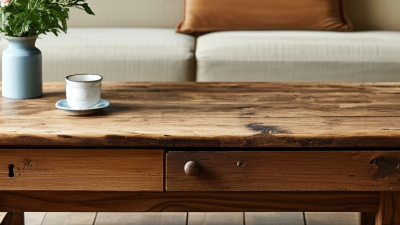
2026 Top Vintage Coffee Table Styles for Global Buyers
The 2026 market for Vintage Coffee Table design is moving toward character, repairability, and flexible living. Buyers increasingly want pieces with visible grain, softened edges, and genuine construction details. A walnut table with brass caps can feel more valuable than a flawless replica. That difference matters.
Grand View Research valued the global furniture market at approximately USD 516.6 billion in 2023. Its report forecasts continued growth through 2030, supported by urban housing and interior upgrades. However, major reports rarely isolate vintage coffee tables as a separate category. This limitation deserves attention. The 1stDibs 2024 Interior Design Trends Survey offers useful adjacent evidence, showing strong designer interest in antiques, natural materials, and collected interiors. The 2025 Houzz Emerging Summer Trends Report also points toward warmer, more personal residential spaces.
Judith Miller, a respected antiques authority, advises buyers to “buy the best you can afford.” Her principle suits Vintage Coffee Table sourcing, especially when age, provenance, and restoration quality vary. A professional inspection should examine veneer lifting, joint movement, woodworm damage, and uneven refinishing. Small flaws can confirm age. They can also signal expensive repairs.
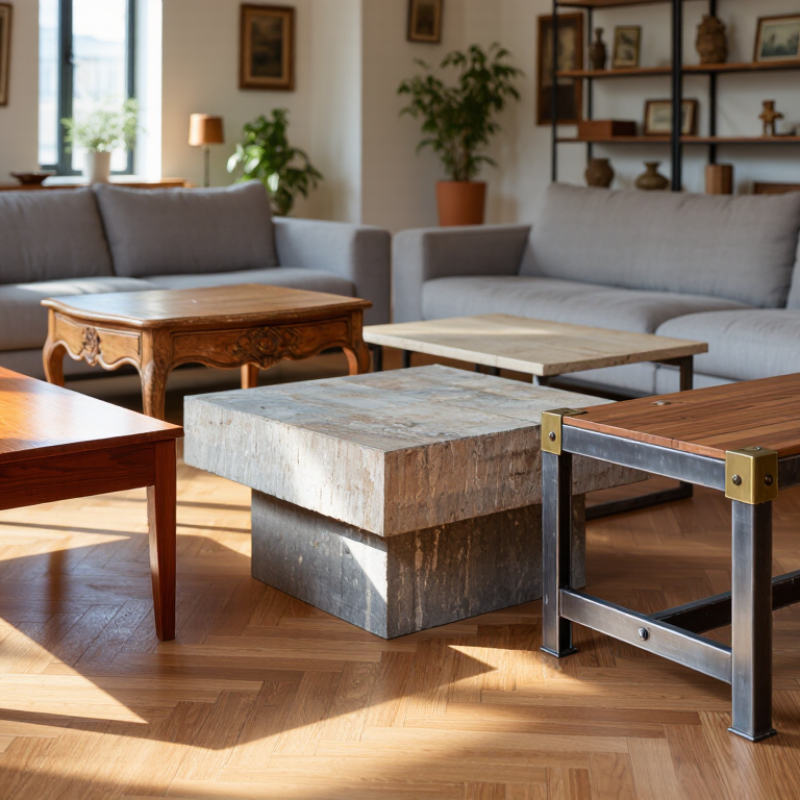
For global buyers, 2026 styles will likely include mid-century teak, French provincial oak, brutalist stone, and industrial metal designs. Dimensions will remain practical. Low profiles suit contemporary sofas, while nesting tables support smaller apartments. Sustainability claims require evidence, not attractive wording. Buyers should request material details, restoration records, photographs, and export documentation before purchasing. Trends are helpful, but authenticity remains the stronger investment.
What Defines a Vintage Coffee Table in 2026
In 2026, a vintage coffee table is defined less by age than by visible history. Buyers look for honest materials, balanced proportions, and repairable construction. A 1970s table may qualify, but so can a newer piece built with period methods and reclaimed timber. That distinction matters. It prevents age from becoming the only selling point. Look closely at the underside. Hand-cut joints, uneven patina, and softened corners often reveal years of use. Artificial distressing can look too regular. Sometimes, the table is simply old, not exceptional.
For global buyers, function now shares importance with provenance. A practical vintage table should leave 40 to 45 centimeters around seating paths. Its height usually sits between 35 and 45 centimeters, depending on the sofa. Solid wood, stone, rattan, and metal each age differently. Waxed timber may show small scratches; natural stone can carry mineral variation. These marks are not defects automatically. Ask for close photographs, material details, restoration records, and packed dimensions. Vague answers often signal weak product knowledge. Still, photographs can flatter surfaces.
The strongest 2026 styles combine mid-century simplicity, sculptural bases, and warm, muted finishes. Rounded edges feel safer in compact living rooms. Low profiles suit modern interiors without erasing vintage character. Buyers should inspect stability, odor, moisture damage, and loose fasteners. Careful restoration should preserve evidence of age, not repaint every irregularity. This is where judgment becomes difficult. Too much perfection can make a vintage table feel strangely lifeless. Reliable sellers explain what changed, what remains original, and what still needs attention.
Leading Vintage Coffee Table Styles for Global Buyers
For global buyers, leading vintage coffee table styles in 2026 balance character, function, and reliable construction. Mid-century tables remain popular because their tapered legs and walnut tones suit compact living rooms. Many buyers also prefer Scandinavian-inspired designs with pale wood, rounded edges, and simple silhouettes. They make small spaces feel less crowded.
Industrial vintage tables add stronger visual weight through aged metal frames, reclaimed wood, and visible joinery. Rustic farmhouse styles appeal to buyers who value textured surfaces, knots, and hand-finished edges. Art Deco tables offer a more formal look with geometric shapes, dark timber, and subtle brass details. From my experience assessing furniture, surface condition often matters more than decoration. Deep stains, loose joints, or uneven legs can become expensive problems after international delivery.
Measure carefully. A practical coffee table usually leaves enough walking space around seating. Buyers should check wood moisture, finish durability, leg stability, and repair history before ordering. Packaging also deserves attention, especially for tables with glass, marble, or delicate veneer. I once underestimated a table’s shipping volume; the design was excellent, but the freight cost changed the decision. That mistake still matters. Vintage furniture is rarely perfectly uniform, and small repairs may add honest character. However, sellers should clearly document scratches, replaced hardware, odors, and structural weaknesses with detailed photographs and written measurements.
2026 Top Vintage Coffee Table Styles for Global Buyers – Leading Vintage Coffee Table Styles for Global Buyers
| Vintage Style | Typical Production Period | Signature Design Features | Common Materials | Typical Dimensions | Finish and Color Direction | Best Interior Applications | Indicative 2026 Price Range (USD) | Global Buyer Considerations |
|---|---|---|---|---|---|---|---|---|
| Mid-Century Modern | 1945–1969 | Clean geometric profile, tapered legs, balanced proportions, and limited ornamentation. | Teak, walnut, oak, glass, and molded plywood. | 110–140 cm L × 50–70 cm W × 38–45 cm H | Warm wood tones, satin oil finish, walnut brown, teak honey, or muted black. | Contemporary living rooms, minimalist spaces, hospitality lounges, and home offices. | $350–$2,200 | Confirm veneer condition, leg stability, repaired joints, and original or replaced hardware. |
| Scandinavian Vintage | 1950s–1970s | Soft organic shapes, slender angled legs, practical storage, and visually light construction. | Teak, oak, beech, birch plywood, and occasionally smoked glass. | 100–135 cm L × 50–75 cm W × 40–46 cm H | Natural matte wood, pale oak, medium teak, and low-sheen clear coatings. | Nordic interiors, compact apartments, coastal homes, and modern residential projects. | $300–$1,800 | Suitable for space-conscious buyers; verify flat-pack or assembled shipping requirements. |
| French Provincial | Late 19th century–1950s | Turned legs, cabriole profiles, carved details, curved aprons, and traditional proportions. | Oak, walnut, pine, wrought iron, and painted hardwood. | 100–140 cm L × 55–80 cm W × 42–50 cm H | Distressed white, cream, muted blue, honey oak, or aged natural wood. | Country homes, boutique hotels, classic dining-living areas, and transitional interiors. | $280–$1,600 | Inspect for woodworm treatment, structural repairs, uneven floors, and paint-layer stability. |
| Art Deco | 1920s–1930s | Symmetrical geometry, stepped forms, strong contrast, rounded corners, and decorative inlay. | Walnut, mahogany, veneer, chrome, brass, lacquer, and glass. | 105–135 cm L × 55–75 cm W × 40–48 cm H | Gloss lacquer, dark wood, black and cream contrast, brass accents, or mirrored surfaces. | Luxury apartments, formal lounges, restaurants, and statement-focused interiors. | $600–$3,500 | Check veneer lifting, lacquer crazing, metal corrosion, and whether decorative elements are replacements. |
| Industrial Vintage | 1900s–1970s | Functional workshop influence, exposed hardware, robust frames, casters, and utilitarian construction. | Reclaimed wood, steel, cast iron, galvanized metal, and distressed leather. | 100–150 cm L × 55–85 cm W × 38–48 cm H | Raw steel, aged black, rust patina, reclaimed brown, or clear protective coating. | Loft apartments, cafés, studios, retail displays, and high-traffic living rooms. | $220–$1,200 | Assess weight, edge safety, rust sealing, floor protection, and lifting requirements during delivery. |
| Bauhaus-Inspired | 1920s–1940s; later revivals | Minimal ornament, tubular forms, functional geometry, and clear separation of structure and surface. | Chrome-plated steel, glass, bentwood, plywood, and lacquered timber. | 90–130 cm L × 50–70 cm W × 38–45 cm H | Black, white, primary-color accents, clear glass, and satin or polished metal. | Modern offices, galleries, minimalist homes, and design-led commercial spaces. | $300–$2,000 | Review glass thickness, chrome pitting, weld quality, and protective packaging for international transport. |
| Rattan and Wicker Vintage | 1950s–1980s | Open woven surfaces, rounded silhouettes, lightweight frames, and relaxed tropical character. | Natural rattan, wicker, cane, bamboo, timber, and tempered glass. | 85–125 cm L × 50–75 cm W × 38–45 cm H | Natural straw, honey, tobacco brown, whitewash, or painted pastel finishes. | Sunrooms, resorts, coastal interiors, conservatories, and informal seating areas. | $180–$1,000 | Keep away from prolonged moisture; check weave tension, odor, breakage, and humidity-related movement. |
| Campaign and Trunk Style | 19th century–mid-20th century | Portable furniture cues, recessed handles, corner protectors, storage compartments, and box construction. | Hardwood, brass, leather, canvas, metal fittings, and plywood. | 90–125 cm L × 50–70 cm W × 40–48 cm H | Dark stained wood, aged brass, olive, navy, leather brown, or travel-worn patina. | Eclectic homes, libraries, media rooms, hotel suites, and storage-focused spaces. | $250–$1,700 | Confirm lid clearance, internal storage condition, hardware operation, and overall packed weight. |
Note: Dimensions and prices are indicative ranges for vintage and vintage-inspired coffee tables in international markets. Final values vary according to age, authenticity, condition, restoration quality, materials, provenance, shipping, duties, and local demand.
Materials, Finishes, and Construction Methods
For 2026, vintage coffee tables are moving toward honest materials and visible craftsmanship. Grand View Research valued the global furniture market at approximately USD 766.2 billion in 2023. It also forecasts a 5.7% compound annual growth rate through 2030. This supports demand for durable, character-rich pieces. Reclaimed oak, walnut, and teak remain strong choices for international buyers. Their knots, mineral streaks, and small repairs create a convincing aged appearance.
Finishes should protect the surface without hiding the wood. Low-sheen hardwax oil gives a warm touch and allows local repairs. Water-based lacquer offers stronger resistance to coffee rings and daily cleaning. Shellac can suit authentic restoration, but it needs more careful maintenance. The U.S. Environmental Protection Agency identifies volatile organic compounds as a key indoor-air concern. Buyers should request finish specifications and testing details. “Natural” alone proves very little.
Construction separates decorative copies from dependable vintage-style tables. Kiln-dried timber, moisture levels near 8–12%, and reinforced corner joints help reduce seasonal movement. Mortise-and-tenon frames feel substantial, while properly fitted dowels can provide efficient stability. Steel brackets may strengthen wide tops, though exposed hardware can weaken the period character. I have found that uneven edges often look beautiful, but excessive warping becomes a shipping problem. Quality control should check flatness, joint tightness, drawer movement, and packaging protection before export. Real vintage character needs restraint.
How to Choose the Right Size and Shape
In 2026, vintage coffee tables are becoming stronger focal points in living rooms. Their success depends less on decoration and more on correct proportions.
Grand View Research valued the global furniture market at US$516.66 billion in 2022, with a projected 5.2% annual growth rate through 2030.
Statista Market Insights estimated roughly US$766 billion for 2024.
These figures use different market definitions, but both show sustained international demand for home furnishings.
Measure twice. Start with the sofa.
A coffee table usually works best when its length reaches about two-thirds of the sofa width. Keep 40–45 centimeters between the table and seating for comfortable movement. Its height should sit near the sofa cushion, usually within five centimeters. For narrow rooms, choose an oval or rounded rectangle. Curved edges soften traffic paths and reduce sharp visual breaks. Square tables suit sectional seating, while round tables balance rooms with many straight lines.
Shape changes how a vintage piece feels. A heavy rectangular table can anchor a spacious room, but it may crowd a compact apartment.
Leave breathing room. I once selected a beautiful low table that looked elegant in photographs, yet its thick legs blocked foot placement. That mistake still matters.
Check door widths, lift access, floor protection, and the table’s actual weight before importing. The American National Standards Institute and furniture safety guidance emphasize stability and load performance, although vintage products may not share modern testing records.
Buyers should inspect joints, surface damage, and uneven legs personally. Age adds character, but it does not excuse poor function.
Sourcing, Quality Standards, and Import Considerations
Global buyers increasingly want vintage coffee tables with visible grain, softened edges, and repairable construction. Sourcing is harder than styling. UN Comtrade’s 2024 database places tables within HS 9403 furniture categories, not a dedicated vintage code. Ask suppliers for dimensions, wood species, age evidence, restoration records, and high-resolution underside photographs. Vague provenance is a warning.
Inspect joints, veneer bubbles, warped tops, odor, pests, and loose hardware before payment. Measure moisture against the destination climate; a dry showroom reading may mislead tropical buyers. EN 12521 and EN 1730 provide practical benchmarks for stability, strength, and durability. They do not replace local product rules. The FAO Global Forest Resources Assessment 2020 reports 4.06 billion hectares of forest worldwide. Reclaimed timber is not automatically legal or responsibly sourced. Request species confirmation and chain-of-custody evidence when available.
Import planning needs equal attention. The IPPC’s ISPM 15 standard requires compliant treatment and marking for many solid-wood pallets and crates. Protected timber may trigger additional CITES controls, depending on species and destination. Confirm tariff classification, certificates, labeling, and insurance with a customs broker. Add packing, inland delivery, inspection, duties, and damage allowances to landed cost. A beautiful table can still become expensive after one cracked corner. I would allow a small uncertainty reserve. No checklist catches everything.
Related Posts
-
Why Choose a Vintage Coffee Table for Your Home?
-
What is the Significance of Selecting the Best Outdoor Chaise Lounge for Your Business
-
Unlocking the Joy of Outdoor Living with Patio Dining Sets Benefits
-
Innovative Solutions for Choosing the Best Leather Chair for Ergonomic Comfort
-
How to Choose the Best Glass Dining Table in 2026?
-
What is the Best Leather Dining Chairs for Your Home Decor Needs