2026 Best Glass Tables for Home and Office Buyers
Choosing a Glass Table in 2026 starts with a practical question: what will happen on it every day? Will it hold a laptop, dinner plates, or just a lamp and a stack of books? The right table should suit the room, not merely photograph well. Architect and furniture designer Ludwig Mies van der Rohe’s famous phrase, “Less is more,” offers a useful design principle: a clear top can make a crowded room feel more open. Yet minimal looks are not automatically practical.
This guide compares styles for home and office buyers, from compact side tables to larger dining and conference designs. It considers tabletop thickness, base stability, edge finishing, dimensions, and the effort required to keep fingerprints and dust in check. Small details matter. A metal frame can feel crisp and modern, while a wood base may soften a glass surface. Before buying, measure doorways and walking space, and check the maker’s stated weight capacity and care guidance. For work areas, consider glare, monitor placement, and whether the table can handle everyday equipment. For family spaces, think about sharp corners and how the table will be used around children or pets. No single model suits every room. Glass can show smudges more readily than many buyers expect, and a beautiful table may feel too delicate for a busy household. The recommendations ahead weigh those trade-offs, rather than treating transparency as a substitute for comfort, durability, or sound construction.
What Defines a Glass Table and How Is It Built?
A glass table is a table whose top is made mainly from glass, supported by legs, a frame, or a central pedestal. The glass may be clear, tinted, frosted, or textured. Its transparency lets light pass through, which can make a compact room feel less crowded. A smooth top is easy to wipe, but fingerprints and dust show quickly. Looks are only part.
The tabletop’s material and construction determine how it performs. Many tables use tempered glass, which is heat-treated for strength and breaks into smaller, less sharp pieces if it fails. Some designs use laminated glass, with layers bonded together to help hold fragments in place. These materials are not interchangeable, so check the maker’s specifications rather than judging by thickness alone. Edges should be finished smoothly, and supports should distribute weight evenly. A wobbly base can make even thick glass feel unstable. There is no perfect build: a heavy top may feel reassuring, yet be harder to move or position.
Tips: Run your hand carefully along the edge before buying, and check that the frame sits level. Ask what glass type is used and follow the stated load limit. Leave room for chairs to slide without striking the tabletop.
What Materials, Shapes, and Features Affect Daily Use?
Glass tables can make a compact room feel brighter, but material details matter in daily use. Tempered glass is designed to break into smaller pieces than ordinary glass, though it is not unbreakable. Check the edges for smooth finishing and choose a stable base that does not wobble on your floor. Clear tops show fingerprints quickly. Smudges are part of the deal.
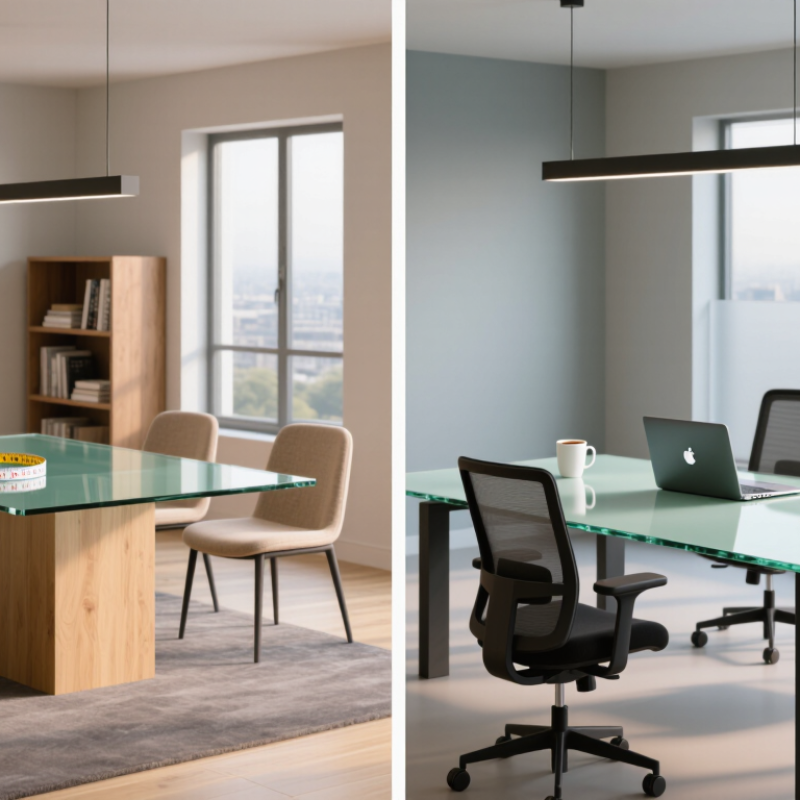
Shape affects how people move around the table. Round tops can ease traffic in tight corners, while rectangular tables often suit shared work or dining areas. Measure the room with chairs pulled out, not tucked in. For office use, consider screen glare and whether cables can reach outlets without crossing walkways. A metal base may feel sturdy, but sharp feet can mark delicate flooring. Honestly, the most elegant table may become irritating if it is hard to clean or awkward to sit beside.
Tips: Wipe glass with a soft cloth to limit fine scratches. Use coasters and felt pads, and check that the base remains level. Before buying, inspect the table from a seated position; reflections can be distracting, and product photos rarely show that clearly.
2026 Best Glass Tables for Home and Office Buyers
How material and tabletop thickness affect estimated weight—and everyday moving and support needs.
Estimates use typical material densities and the thicknesses shown: soda-lime glass at 2,500 kg/m³ and 10 mm; engineered quartz at 2,400 kg/m³ and 20 mm; hardwood at 750 kg/m³ and 25 mm. Actual weight varies by composition, dimensions, and construction. A heavier top may need sturdier support and can be harder to move.
How Should Buyers Compare Safety, Durability, and Maintenance?
A glass table should feel steady before it looks elegant. Press gently near each corner and watch for rocking or shifting joints. Check whether the top is tempered glass, and ask for its load rating rather than guessing from thickness. Tempered glass is designed to break differently from ordinary glass, but it is not unbreakable. Edges matter. Rounded or polished edges can reduce sharp contact points, especially in narrow rooms or busy family spaces.
Durability depends on the whole table, not just its surface. Inspect the frame connections, feet, and supports; a heavy top on a weak base can still wobble. Look for clear care and safety information from the seller, and measure doorways before delivery. That last detail is easy to miss. A showroom test also has limits: a table that feels stable on a level floor may shift on uneven boards, so adjustable feet can help.
Maintenance is simple, but not effortless. Dust can act like fine grit, so wipe the surface with a soft microfiber cloth before using a damp one. Mild soap and water usually handle fingerprints; dry the edges to prevent residue near joints. Skip abrasive pads, which may leave visible marks. I would not choose solely by a spotless display—the surface can look flawless under bright lights, while everyday smudges show quickly at home.
How Can You Choose the Right Glass Table for Home or Office?
Choosing the right glass table starts with the room, not the catalog. Measure the available floor space, then leave enough clearance for chairs, drawers, and walking paths. A dining chair needs room to slide back without striking a wall. In a compact office, a narrow rectangular desk may fit better than a round table. Check the table’s height against your chair, too. Even a few centimeters can affect comfort during long work sessions.
Think about the glass, frame, and daily use. Tempered glass is a practical choice for many homes and offices because it is designed to break into smaller pieces if damaged. Look for smooth, finished edges and a stable base that does not wobble on your floor. If children or pets use the room, rounded corners may be easier to live with. Glass keeps a space visually open, but it shows fingerprints and dust quickly. I still underestimate how often it needs wiping. Consider how much upkeep you will actually tolerate, and check the maker’s care and load guidance before buying.
Tips:
Bring your measurements when shopping. Compare the table height with your chair. Test the base for movement, and inspect the edges in good light.