Top 10 Outdoor Lounge Chairs for Global Buyers
Choosing the right Outdoor Lounge Chairs requires more than attractive photographs and quick price comparisons. Global buyers must consider climate, body comfort, materials, shipping conditions, and long-term maintenance. A chair that performs beautifully beside a Mediterranean pool may struggle under tropical rain or freezing winter temperatures.
Richard Frinier, a respected outdoor furniture designer, once said, “Outdoor living is not a trend; it is a lifestyle.” His observation remains useful when evaluating outdoor seating for hotels, resorts, terraces, gardens, and private balconies. The best choices should support real routines, including morning coffee, afternoon reading, and long conversations after sunset.
This guide examines ten Outdoor Lounge Chairs selected for international purchasing needs. Each option is considered through practical details, such as corrosion-resistant frames, quick-drying cushions, UV-stable fabrics, adjustable backrests, and replacement-part availability. Teak, aluminum, stainless steel, and synthetic wicker each offer different advantages. None is perfect.
Comfort also depends on seat depth, lumbar support, arm height, and cushion density. These details are easy to overlook online. They matter immediately in use.
We also consider packaging quality, assembly requirements, warranty clarity, and supplier communication. Certifications can strengthen trust, but they should be checked against current documentation rather than accepted blindly. Product images can mislead. Even strong chairs may show fabric fading, loose fittings, or water retention without proper care.
The ranking is not absolute. A coastal resort, an urban apartment, and a family garden may need different solutions. Buyers should compare specifications with local weather, expected traffic, and available maintenance support. Practical judgment remains essential.
Outdoor Lounge Chair Types and Their Main Uses
Top 10 Outdoor Lounge Chairs for Global Buyers
Outdoor Lounge Chair Types and Their Main Uses
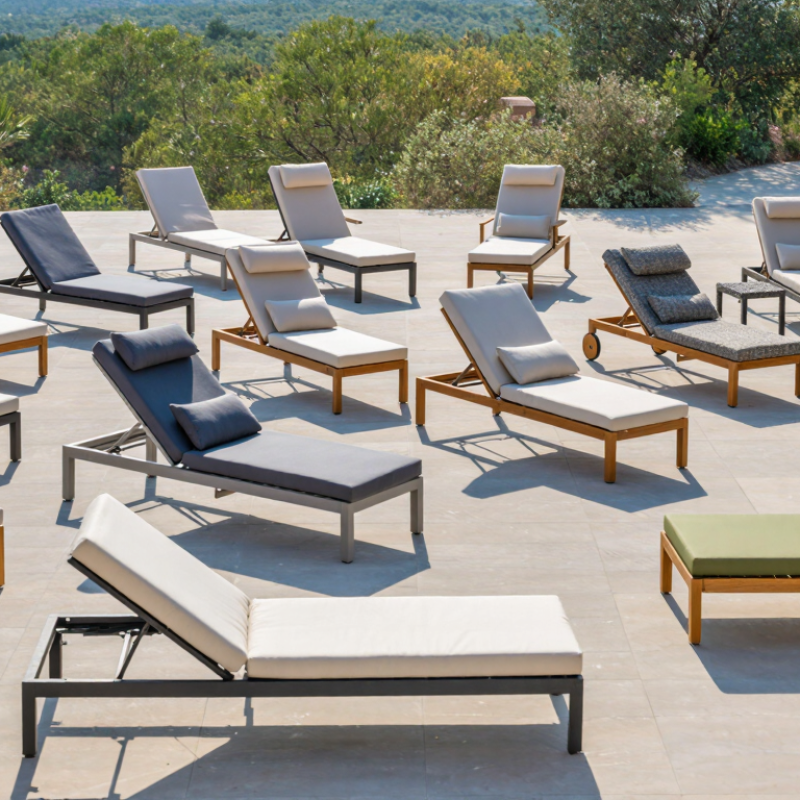
Outdoor lounge chairs serve different comfort, space, and weather needs. A reclining chair suits poolside reading, afternoon naps, or quiet balcony use. Adjustable backrests help users change posture without moving the chair. A zero-gravity chair supports a relaxed, weight-balanced position. It works well for patios, gardens, and recovery areas. Folding lounge chairs are practical for small homes, hotels, and seasonal outdoor events. They store easily, but hinges need regular inspection.
A chaise lounge offers extended leg support beside pools or on terraces. Its wide frame feels comfortable, though it may occupy valuable floor space. A sling chair dries quickly after rain and suits humid climates. However, stretched fabric can lose tension over time. Adirondack-style chairs provide deep seating and broad armrests for gardens and fire-pit areas. Their angled design is comfortable, but some users may find standing difficult. Rocking lounge chairs add gentle movement to porches and shaded verandas. They need a stable, level surface.
A hanging chair creates a soft retreat for reading and conversation. It requires secure overhead support and careful installation. Modular outdoor loungers can form sofas, beds, or separate seats. They fit hospitality settings where layouts change often. Stackable chairs support efficient storage in restaurants and resorts. In my experience, buyers sometimes focus too heavily on appearance. That can be an expensive mistake. Check frame materials, drainage, fabric performance, user weight limits, and replacement-part access. Even the best design can fail when local weather is ignored.
Top 10 Outdoor Lounge Chairs for Global Buyers
Outdoor Lounge Chair Types and Their Main Uses
Adirondack Chair: Relaxed backyard seating and fire-pit areas.
Chaise Lounge: Pool decks, patios, sunbathing and reclining.
Sling Chair: Lightweight patio seating and easy seasonal storage.
Zero-Gravity Chair: Adjustable reclining for balconies, gardens and relaxation.
Rocking Chair: Covered porches, verandas and gentle seated movement.
Egg or Pod Chair: Privacy-focused seating for patios and resort-style spaces.
Outdoor Daybed: Extended lounging beside pools, gardens and terraces.
Cabana Chair: Shaded hospitality areas, resorts and poolside settings.
Poolside Recliner: Upright-to-reclined seating around swimming pools.
Folding Lounge Chair: Portable outdoor use, events, campsites and beaches.
The chart compares typical seat-height ranges commonly used in outdoor furniture specifications. Lower seats generally support deeper, more relaxed lounging, while higher seats make sitting down and standing up easier. Actual dimensions vary by design, cushion thickness and intended market.
How the Top 10 Chairs Are Evaluated for Global Buyers
Top 10 Outdoor Lounge Chairs for Global Buyers
Global buyers should evaluate outdoor lounge chairs through measurable evidence, not attractive photography.
Grand View Research estimated the global outdoor furniture market at approximately USD 23.6 billion in 2023, with continued growth expected through 2030. This demand increases the need for consistent testing. Each chair should be checked for frame strength, static load capacity, recline stability, and repeated-use durability. A chair that feels stable on a showroom floor may wobble on uneven stone.
Material performance deserves close attention.
The evaluation should record aluminum alloy, treated steel, hardwood, woven fiber, and fabric specifications. ISO 4892-3 offers a framework for accelerated weathering tests using fluorescent UV lamps. However, laboratory exposure does not perfectly reproduce coastal salt, tropical rain, or freezing conditions.
That limitation matters. Buyers should request outdoor aging results, corrosion observations, and care instructions in clear English. Cushions also need inspection. Water-resistant fabric is not automatically waterproof, and quick-dry foam can still retain moisture in humid climates.
Shipping and user safety complete the scorecard.
The chair should pass stability checks, include rounded edges, and provide reliable assembly instructions. Packaging should protect joints and finished surfaces without excessive empty space. The International Trade Centre reports that logistics costs and delivery reliability strongly influence international purchasing decisions.
Therefore, evaluation should include carton dimensions, replacement-part availability, and documented inspection records. No scorecard is perfect. A practical buyer may still test one sample outdoors for several weeks before approving a larger order.
Materials, Weather Resistance, and Construction Quality
For global buyers, the best outdoor lounge chairs begin with material discipline, not attractive photographs. In warehouse inspections, I check aluminum frames for clean welds, even powder coating, and sealed joints. Teak and other dense hardwoods feel warm, but they need controlled moisture and regular oiling. Synthetic woven fibers can resist sunlight well when they contain UV stabilizers. Cheap fibers often fade first. That detail matters.
Weather resistance depends on the whole chair.
Stainless steel hardware should resist rust, while drainage channels should prevent water from pooling under cushions. Quick-dry foam helps in humid regions, yet its cover must also release moisture. For coastal projects, I prefer raised feet and corrosion-resistant fasteners. In cold climates, flexible materials matter because brittle plastic can crack after repeated freezing. Test the seams, too. They often reveal weak construction before the frame does.
When comparing ten lounge chairs, buyers should inspect load ratings, joint movement, stitching, and replacement-part access. A chair may feel solid in a showroom but loosen after months of outdoor use. I have seen attractive frames fail because hidden screws were undersized. That experience changed my checklist. Still, no material is maintenance-free. Even strong finishes need cleaning, shade, and seasonal storage in severe conditions. Product records should state coating methods, foam density, fabric performance, and testing conditions clearly. Vague claims deserve questions.
Comfort, Size, Maintenance, and Regional Climate Considerations
Choosing among the top 10 outdoor lounge chairs requires more than attractive photographs. Comfort begins with seat depth, back angle, and cushion firmness. For most adults, a seat height near 40–48 centimeters supports easier sitting and standing. Measure your balcony, patio, or poolside space before ordering. A chair that feels generous indoors may block a narrow walkway outdoors.
Climate changes the maintenance routine. In humid coastal areas, choose quick-drying cushions, rust-resistant frames, and breathable covers. Salt air can still damage hardware, so rinse exposed surfaces with fresh water regularly. In hot, dry regions, ultraviolet-resistant fabric helps reduce fading and brittleness. Wood needs periodic cleaning and protective treatment, although excessive coating may trap moisture. Cold climates require dry storage or raised, covered placement during freezing weather.
I usually test a chair by sitting for ten minutes, not one minute. Notice pressure behind the knees and support across the lower back. Wide arms are useful, but they can increase the chair’s footprint. This detail is easy to overlook. Maintenance instructions also deserve careful reading; “weather resistant” does not mean maintenance free. One practical weakness remains: online size charts may not show the real sitting posture. Checking user measurements and requesting exact dimensions can prevent an expensive mismatch.
Pricing, Shipping, Safety, and International Buying Factors
Top 10 Outdoor Lounge Chairs for Global Buyers
When comparing the top 10 outdoor lounge chairs, calculate the landed cost, not only the listed price. Include packaging, freight, insurance, customs duties, and possible storage fees. A chair priced at 90 dollars may exceed 160 dollars after delivery. Request tiered quotations for samples, small orders, and full containers. Confirm currency, payment terms, production time, and refund conditions in writing. Prices can change quickly with aluminum, fabric, and freight costs. A low quote may still look attractive, but that judgment is often wrong.
Shipping details deserve careful attention. Measure the packed chair, not the display model. Oversized cartons can increase shipping charges sharply. Ask about moisture protection, corner guards, stacking limits, and tracking information. Check whether the destination accepts the materials used, especially treated wood, foam, or coated metals. Safety records should include load testing, stability checks, sharp-edge inspection, and outdoor durability evidence. Requirements differ by country, so local compliance advice is valuable. Documents can be incomplete.
Tips: Compare landed costs in one spreadsheet. Request a sample before bulk purchasing. Photograph packaging defects immediately. Check the chair on an uneven patio. Small details matter. Also, leave room for mistakes. Delivery delays, color variation, or damaged cartons may occur despite careful planning. A reliable supplier explains these risks clearly and offers practical solutions.