
Skip to content

Why Choose a Cosmetic Bed for Your Salon?

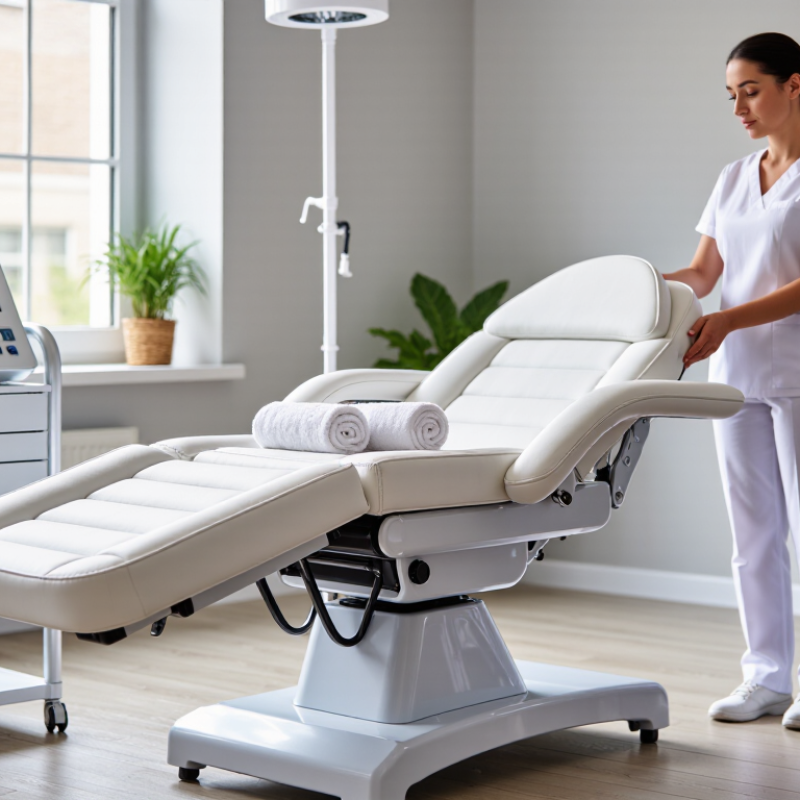
Choosing the right equipment can shape a client’s entire salon experience. A Cosmetic Bed is more than a stylish fixture beside the treatment trolley. It supports comfort, hygiene, positioning, and the therapist’s daily workflow.

During a facial, the client may remain reclined for nearly an hour. Firm padding can create pressure around the shoulders. Poor back support may leave the neck tense. A well-designed Cosmetic Bed usually offers adjustable sections, stable construction, and surfaces that can be cleaned between appointments. These details feel small. Clients notice them.

For professionals, ergonomics matter just as much. An adjustable height can reduce repeated bending while applying masks, performing skincare treatments, or examining the face closely. A strong frame should remain steady during movement. Smooth upholstery helps staff disinfect the bed efficiently, although cleaning instructions must come from the manufacturer. Materials that look luxurious may not always tolerate strong cleaning products. That point is easy to miss.

A reputable supplier should provide clear dimensions, weight capacity, warranty information, and maintenance guidance. Salon owners should also consider room size, treatment type, therapist height, and client accessibility. One model may suit a compact beauty studio but feel restrictive in a busy clinic. No bed solves every operational problem.

The best choice balances appearance with evidence and everyday experience. Test the adjustment controls. Sit on the bed yourself. Check whether towels, tools, and equipment remain within easy reach. A Cosmetic Bed should support professional service, not merely decorate the treatment room. Its value becomes clearest after hundreds of appointments. That is where comfort, reliability, and practical design truly prove themselves.
Why Choose a Cosmetic Bed for Your Salon?

Define a Cosmetic Bed: Its Role in Modern Facial and Body Treatments

Why Choose a Cosmetic Bed for Your Salon?

A cosmetic bed is a padded, adjustable platform for facial and body treatments. It supports the client while the practitioner performs detailed work. Common features include a reclining backrest, adjustable height, and a washable surface. Some models also include leg sections or face openings for better positioning. These details matter during cleansing, massage, waxing, skincare applications, and other non-invasive services.

A well-designed bed improves comfort and working posture. The client can remain still without unnecessary pressure on the neck or lower back. Meanwhile, the practitioner can adjust the working height and reduce awkward bending. In daily salon practice, this may help maintain consistent treatment quality. Hygiene is equally important. Smooth, non-porous upholstery allows careful cleaning between appointments. However, comfort should not replace proper training or treatment assessment. The bed supports the service; it does not perform the service.

Tips: Check the bed’s weight capacity, height range, and adjustment method before purchasing. Test the cushioning for at least fifteen minutes. Notice pressure around the shoulders and knees. Confirm that all surfaces can withstand approved cleaning products. Keep disposable covers available for treatments involving oils or moisture. A useful bed should fit the room, staff, and treatment menu. It may not be perfect for every service. That limitation deserves honest review.

Establish Market Relevance: Global Spa Economy Hit $93.9B in 2022 (GWI)

Why Choose a Cosmetic Bed for Your Salon?

The global spa economy reached $93.9 billion in 2022, according to the Global Wellness Institute. This figure signals strong demand for personal care experiences, not only occasional beauty treatments. Clients increasingly notice comfort, hygiene, and professional presentation. A cosmetic bed supports all three during facials, waxing, consultations, and skin treatments.

It also improves daily workflow. Adjustable height can reduce awkward bending during detailed procedures. Stable cushioning helps clients remain relaxed for longer sessions. Easy-clean upholstery supports consistent sanitation between appointments. In the United States, the International Spa Association reported $21.3 billion in spa industry revenue during 2023. That market rewards salons that make treatment quality visible from the first appointment.

Small details matter.

A well-designed bed can create a calmer room, especially when clients feel nervous before their first treatment. It may also help staff maintain better posture across a busy schedule. However, purchasing the most expensive model does not guarantee better service. I have seen attractive equipment become impractical when it occupies too much space or lacks useful adjustment. Measure the room, review treatment habits, and test the bed before committing. Market relevance comes from matching equipment with real client expectations, not simply following industry growth.

Quantify Demand: U.S. Spa Visits Reached 182M in 2023 (ISPA)

Why Choose a Cosmetic Bed for Your Salon?

U.S. spa demand is substantial and measurable. The International Spa Association’s 2024 U.S. Spa Industry Study recorded 182 million spa visits in 2023. It also valued the industry at approximately $21.3 billion. These figures show consistent customer demand, not a temporary trend. A cosmetic bed helps salons handle that demand with greater control. Adjustable height supports safer working posture during facials, waxing, and skincare treatments. A stable surface also helps clients relax while professionals maintain precise movements.

Small details affect daily capacity. A wipe-clean surface can shorten reset time between appointments. Quiet adjustment features may improve the client’s experience. Storage beneath the bed can keep towels, bowls, and tools within reach. Every minute matters.

The Global Wellness Institute’s 2024 Global Wellness Economy Monitor valued the worldwide wellness economy at $6.3 trillion in 2023. Wellness spending continues to influence beauty services, but demand alone cannot fix poor equipment choices. A bed that feels impressive may still be difficult to clean or uncomfortable after an hour. I have seen salons focus on appearance first, then regret weak padding and limited adjustment. Test the working height, check the weight capacity, and measure the treatment room before purchasing. A cosmetic bed should support service quality, not simply fill empty floor space.

Compare Ergonomics and Hygiene with OSHA and CDC Practice Benchmarks

Why Choose a Cosmetic Bed for Your Salon?

A cosmetic bed should support both technician posture and client safety. OSHA does not prescribe one specific bed design, but its workplace safety principles favor reducing avoidable strain and hazards. Adjustable height helps keep shoulders relaxed during detailed treatments. Stable side supports can reduce awkward reaching. A firm, washable surface also makes repositioning more controlled.

Hygiene deserves equal attention. CDC practice guidance emphasizes hand hygiene, cleaning, and appropriate disinfection between clients. Choose a bed with sealed, nonporous upholstery and minimal seams. Wipe visible soil first, then use a suitable disinfectant for its stated contact time. A rushed wipe is not the same as disinfection. If a treatment may involve blood or other potentially infectious material, OSHA’s bloodborne pathogens practices require stronger exposure controls, training, and proper waste handling. The exact procedure should match the service risk.

Tips:

Keep clean linens in a closed container. Place used linens in a separate, labeled hamper. Inspect hinges and upholstery daily.

Record cleaning checks when several technicians share the room. A perfect checklist can still fail during a busy appointment. Review it honestly after spills, rushed changes, or client complaints. Floor clearance matters, too. Cords near the bed can create preventable trip hazards.

Evaluate Salon ROI Through Capacity, Rebooking, and Treatment Consistency

Why Choose a Cosmetic Bed for Your Salon?

A cosmetic bed can improve salon ROI through capacity, rebooking, and consistent treatment delivery. Its adjustable height reduces setup time and supports smoother therapist movement. That matters when every appointment has a narrow turnover window.

The 2024 Beauty and Wellness Benchmark Report found that top-performing salons rebook clients at roughly three times the average rate. A comfortable, professional bed can support that result by making treatments feel more consistent. Harvard Business Review also reports that a 5% retention increase may raise profits by 25% to 95%. These figures are not guarantees. Service quality, pricing, and staff habits still matter. A beautiful bed alone will not repair weak follow-up.

Capacity improves when one bed suits several services. Facial care, waxing, and consultation-led treatments can share the same room. Staff spend less time adjusting unstable equipment. Clients notice small details, including noise, wobbling, and awkward access.

Tips: Track room turnover, rebooking rates, and treatment duration for four weeks. Compare results before and after installation. Ask therapists where the bed slows them down. Their feedback may challenge your assumptions. Also, calculate cleaning time honestly. The spreadsheet may look better than reality.

A practical review should include maintenance, staff training, and client comfort. I would avoid judging ROI from bookings alone. A full diary can still hide poor margins.

Why Choose a Cosmetic Bed for Your Salon? Evaluating Salon ROI Through Capacity, Rebooking, and Treatment Consistency
ROI Area Operating Metric Standard Treatment Table Adjustable Cosmetic Bed Estimated Monthly Impact Calculation Basis
Capacity Usable treatment hours per day 7.0 hours 7.5 hours +0.5 hour/day Less repositioning and faster client setup between services.
Capacity Treatment appointments per day 6 appointments 7 appointments +22 appointments/month Based on a 60-minute average service plus a 10-minute turnover period.
Capacity Room utilization 78% 88% +10 percentage points Scheduled treatment time divided by available room time.
Revenue Average treatment value $85 $85 No change assumed Keeps pricing constant to isolate the effect of equipment and workflow.
Revenue Additional monthly service revenue $0 $1,870 +$1,870/month 22 additional appointments × $85 average treatment value.
Rebooking Same-day rebooking rate 58% 66% +8 percentage points Improved comfort and a smoother checkout conversation can support future booking decisions.
Rebooking Expected repeat visits per 100 clients 58 visits 66 visits +8 repeat visits Calculated from the same-day rebooking rate.
Rebooking Estimated monthly repeat-visit revenue $4,930 $5,610 +$680/month Based on 80 monthly clients × rebooking rate × $85 average visit value.
Consistency Standardized client positioning Variable High consistency Lower variation Height, backrest, leg support, and working angle can be adjusted to a repeatable setup.
Consistency Setup-related service delays 10 minutes/service 6 minutes/service Approximately 88 minutes saved/month 4 minutes saved × 22 working days; actual results depend on treatment mix.
Client Experience Comfort-related service complaints 4.0 per 100 visits 2.5 per 100 visits 37.5% fewer complaints Operational benchmark for improved ergonomic support; track with salon feedback records.
Staff Efficiency Manual lifting or bending events per service 8 events 5 events 37.5% reduction Adjustable height and powered positioning can reduce repeated manual adjustments.
Investment Illustrative equipment investment $0 $3,500 One-time cost Planning assumption only; compare quotations, warranty, delivery, and installation costs.
Payback Estimated monthly incremental contribution $0 $1,410 $1,410/month Additional service revenue of $1,870 less an assumed 25% variable service cost.
Payback Estimated simple payback period Not applicable 2.5 months Fast recovery scenario $3,500 equipment investment ÷ $1,410 monthly incremental contribution.
Planning assumptions: 22 operating days per month, 80 monthly clients, $85 average treatment value, 25% variable service cost, and one treatment room. These figures are illustrative industry-planning benchmarks rather than company or brand results. Replace them with the salon’s own booking, rebooking, pricing, labor, and utilization data before making an investment decision.
Key takeaway: A cosmetic bed can improve ROI when it creates measurable capacity, supports higher rebooking, reduces setup variation, and delivers enough incremental contribution to recover the equipment investment within the target payback period.