What Are the Top Types of Selectorized Machines?
Selectorized Machines use a pin-adjusted weight stack to provide controlled resistance without requiring users to load plates. They are common in commercial gyms, rehabilitation settings, and home training spaces. The right model can make strength work feel approachable. But “best” depends on the person, the movement, and the available space.
This guide explores the top types of selectorized machines, including chest press, lat pulldown, leg extension, seated leg curl, and multi-station systems. Each serves a different purpose. A chest press supports pressing practice, while a lat pulldown trains the upper back through a guided pulling path. Leg machines let users target specific muscles with less setup than many free-weight exercises. Small details matter: check whether the seat adjusts smoothly, the range of motion feels comfortable, and the weight stack changes without sticking.
There is no perfect machine for every body. Frame dimensions, handle positions, and starting resistance can affect comfort and control. A machine that suits one gym member may feel awkward to another. Try the movement with a light setting, and follow the manufacturer’s instructions. For persistent pain or specific rehabilitation needs, seek guidance from a qualified professional. Selectorized Machine options can support structured training, but equipment alone does not guarantee good results. That part deserves a closer look.
How Selectorized Machines Use Weight Stacks and Guided Resistance
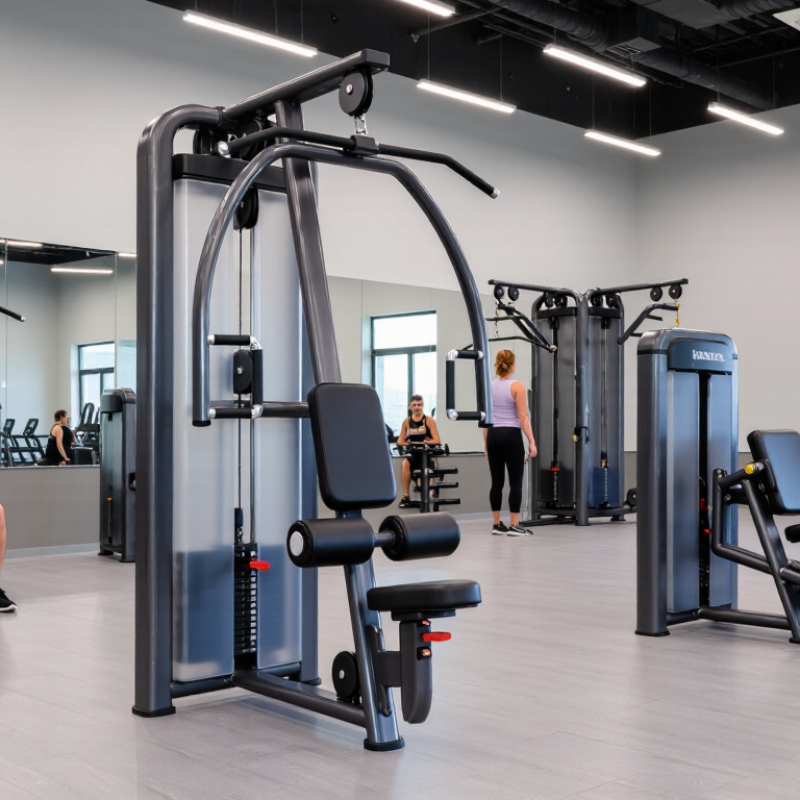
Selectorized machines use an enclosed stack of metal plates, linked to a handle by a cable or belt. A pin selects how many plates move. Each plate adds resistance in a clear, repeatable step. No plates to carry.
As you pull or press, the selected stack rises along guide rods. The rods keep the plates aligned, while pulleys route force through the machine. This guided path can make movement easier to control, especially when learning an unfamiliar exercise. The cable also helps resistance stay connected through much of the repetition, though the force may feel different near the start and end.
The numbers on the stack show a setting, not an exact measure of effort across every machine. Pulley arrangements, friction, and the length of the lever can change how heavy a load feels. It feels simple. But simple is not always identical. Adjust the seat and starting position so the handles line up comfortably with your body, then use a controlled range of motion. If the stack jerks, the pin seems loose, or the machine makes unusual noise, stop and ask qualified facility staff to check it.
Upper-Body Press and Pull Machines: Chest Presses, Rows, and Pulldowns
Upper-body selectorized machines make pressing and pulling easier to learn and adjust. A chest press guides the handles forward from chest height; a seated row draws them toward the ribs; a pulldown brings an overhead bar toward the upper chest. Pin-loaded resistance lets users change the load quickly. The fixed path can also feel restrictive, especially when seat settings do not match someone’s proportions.
These stations can support gradual strength training, but smooth reps matter more than moving a heavy stack. Set the seat so the handles align comfortably with your chest or shoulders. Keep the wrists neutral, control the return, and avoid bouncing at the end of each repetition. ACSM’s 2025 Worldwide Fitness Trends survey ranked traditional strength training fifth among 45 trends. The survey collected responses from 2,000 fitness professionals; it signals broad interest in strength work, not proof that machines outperform free weights. That distinction is easy to overlook.
Tips: Start light. Adjust one setting at a time. If a shoulder pinches, stop and reassess your position or range of motion. A machine can guide movement, but it cannot judge whether the setup feels right.
What Are the Top Types of Selectorized Machines? — Upper-Body Press and Pull Machines: Chest Presses, Rows, and Pulldowns
| Machine Type | Movement Pattern | Primary Muscles Worked | Typical Setup | Main Movement | Useful Adjustment or Training Note |
|---|---|---|---|---|---|
| Seated Chest Press | Horizontal push | Pectoralis major, triceps, and anterior deltoids | Sit with the handles around mid-chest height and keep the back supported. | Press the handles forward, then return them under control. | Adjust the seat so the hands begin near chest level. Keep wrists aligned with the forearms. |
| Incline Chest Press | Upward-angled push | Upper portion of the pectoralis major, anterior deltoids, and triceps | Sit against the backrest with the handles positioned slightly below shoulder level. | Press upward and forward, then slowly return to the starting position. | Use a comfortable range of motion and avoid letting the elbows travel far behind the torso. |
| Seated Row | Horizontal pull | Latissimus dorsi, rhomboids, middle trapezius, and elbow flexors | Sit upright with feet supported and reach for the handles without rounding the back. | Pull the handles toward the torso, then extend the arms in a controlled manner. | Keep the torso steady and draw the shoulder blades back without shrugging. |
| Low Row | Low-angle horizontal pull | Latissimus dorsi, rhomboids, trapezius, and biceps | Position the seat and chest support, if provided, so the handles can be reached comfortably. | Pull toward the lower ribs or waist, following the machine’s handle path. | Maintain a neutral spine and avoid using momentum to move the weight. |
| Lat Pulldown | Vertical pull | Latissimus dorsi, teres major, biceps, and other elbow flexors | Sit under the thigh pad and take an overhand or neutral grip on the bar or handles. | Pull the bar or handles toward the upper chest, then let the arms rise under control. | Keep the torso mostly upright; pull in front of the body rather than behind the neck. |
| Assisted Pull-Up / Dip Machine | Vertical pull or vertical push, depending on the exercise | Pull-up: lats and elbow flexors. Dip: triceps, chest, and anterior deltoids. | Place the knees or feet on the assistance platform and select an assistance load. | Perform a pull-up or dip while the counterweight reduces the effective body load. | On most designs, more selected assistance makes the exercise easier; check the machine’s instructions. |
Lower-Body Selectorized Machines: Leg Presses, Extensions, and Curls
Lower-body selectorized machines make leg training easier to measure: a weight stack sets resistance, while pads guide the movement. The leg press trains the hips and knees together; leg extensions emphasize knee straightening, and leg curls bend the knees against resistance. Adjust the seat and pads before starting. Your knees should track comfortably with your feet, and the machine should not force a painful range.
The American College of Sports Medicine’s 2009 position stand recommends 8–12 repetitions for many healthy novice and intermediate adults, with resistance training two or three days weekly. That is a useful starting point, not a rule for every body or every machine. Start light enough to control each repetition, then add weight gradually when your form stays steady. On a leg press, keep your lower back supported as you lower the platform; avoid locking your knees at the top. Small details matter.
Tips: Set the machine before loading it. Use a smooth pace, and stop if you feel sharp pain. Record the seat setting and load, since small adjustments can change how a movement feels. Even experienced lifters may need to rethink their setup when switching machines.
ACSM source: “Progression Models in Resistance Training for Healthy Adults,” Medicine & Science in Sports & Exercise, 2009.
Cable Stations and Multi-Gyms: Exercise Options Across Multiple Stations
Cable stations and multi-gyms expand selectorized training beyond a single fixed movement. On a cable station, an adjustable pulley can move from low to high, letting users perform rows, presses, curls, and controlled rotations. The weight stack changes in measured increments, while the cable’s angle changes the feel of each exercise. That range matters.
A useful setup leaves enough room to step away from the pulley without pulling the stack off balance. Users should check the pin is fully inserted and the cable moves smoothly before starting. Small details count. A handle that sits too high can alter shoulder position, while a rushed adjustment may disrupt form.
Multi-gyms combine several stations, often including a chest press, lat pulldown, leg extension, and low row. This can make strength training easier to organize, especially where floor space is limited. But shared equipment brings trade-offs: changing stations takes time, and the movement path may not fit every body equally well. Try the seat and range of motion before choosing a load. The layout is not always elegant. A few exercises may feel awkward, and that is a reason to adjust the setup or choose another movement—not to force the repetition.
ACSM’s 8–12-Repetition Guidance for Strength Training on Selectorized Machines
What Are the Top Types of Selectorized Machines?
ACSM’s 8–12-Repetition Guidance for Strength Training on Selectorized Machines
ACSM’s 8–12-repetition range is a practical starting point for many adults training to improve strength. It is guidance, not a rule that fits every person or exercise. On a selectorized machine, choose a load you can lift for at least eight controlled repetitions, but not much more than twelve. The last repetitions should feel challenging while your movement stays steady. No swinging. If you can complete twelve easily, consider a small weight increase next session. If you cannot reach eight with good control, reduce the load.
Set the seat and pads before lifting. Your joints should line up comfortably with the machine’s pivot points, and the handles should be within easy reach. Move through a comfortable range without letting the weight stack crash between repetitions. Rest long enough to repeat the set with sound technique; rushing can turn a useful workout into a sloppy one. Small details matter. Keep a simple log of the machine setting, weight, and repetitions, since seat position can change how a lift feels. Progress is rarely perfectly tidy. Pain, fatigue, and unfamiliar equipment can all affect performance, so adjust rather than forcing the target range. People with health concerns or persistent pain should seek individualized advice from a qualified professional.
Common Selectorized Machines: ACSM’s 8–12-Repetition Guidance
The highlighted range shows a general repetition target per set—not a ranking of machine popularity.
ACSM guidance commonly recommends 8–12 repetitions per set for novice-to-intermediate adults seeking strength improvements. Appropriate loads and repetition targets vary with training experience, goals, and individual needs.