
Skip to content

What Are the Top Types of CBD Vape Products?

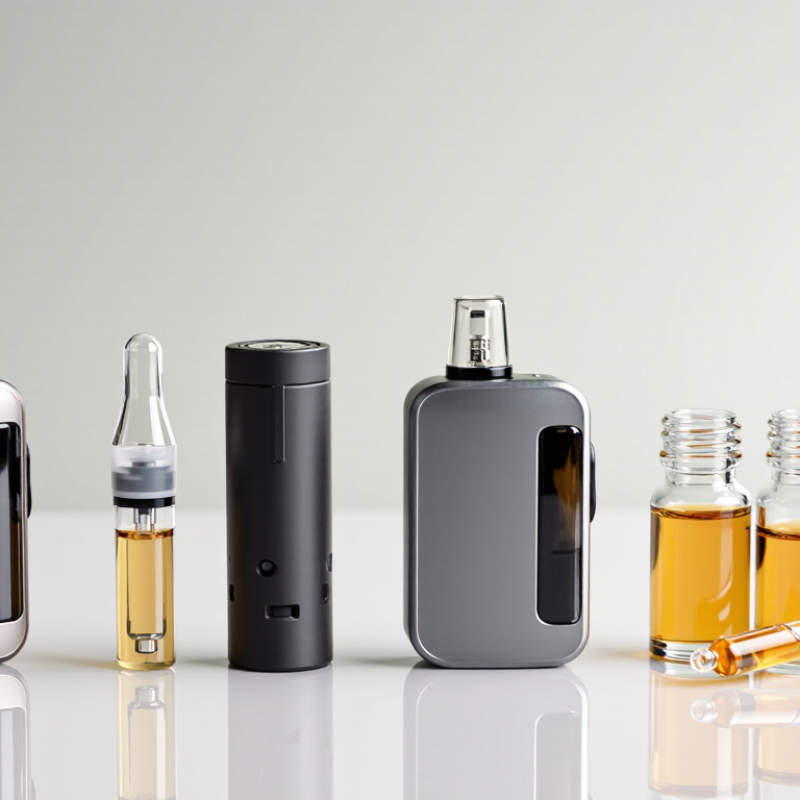
Cbd Vape products come in several formats, and each offers a different setup rather than a guaranteed health benefit. Common categories include disposable devices, prefilled cartridges, refillable pod systems, and bottled e-liquids designed for compatible vaporizers. A disposable device combines the battery and liquid in one unit. A cartridge usually attaches to a separate battery, while refillable systems require more handling and careful device compatibility checks. Small details matter.

When comparing these types, look beyond flavor and convenience. Check the ingredient list, the amount of CBD per serving, manufacturer information, and whether a recent, independent laboratory report matches the product’s batch. A label can look clear. Sometimes, it isn’t. Testing and labeling practices vary, so uncertainty can remain even after a careful review. CBD products are not proven treatments for medical conditions, and vaping may irritate or harm the lungs. People who take medication, have health concerns, or are pregnant should seek advice from a qualified healthcare professional before considering CBD. Product availability and requirements also differ by location; check current local rules and choose only products permitted where you live. This guide compares the main formats, explains practical differences, and points out questions worth asking before making an informed choice.
What Are the Top Types of CBD Vape Products?

CBD Vape Basics: U.S. Hemp Is Defined by a 0.3% Delta-9 THC Limit

What Are the Top Types of CBD Vape Products?

CBD vape products commonly come as prefilled cartridges, disposable devices, or refillable e-liquids. Their format does not establish their legal status or composition. In the United States, the 2018 Farm Bill defined hemp as cannabis containing no more than 0.3% delta-9 THC by dry weight. That threshold describes the hemp definition; it is not a guarantee that every product is lawful or accurately labeled.

Small number. Big consequences.

The USDA’s 2023 National Hemp Report estimated the value of U.S. hemp production in 2022 at

$238 million.

That figure covers hemp production, not CBD vape sales, so it should not be read as evidence of vape-product quality or safety. For a cartridge or e-liquid, check whether the maker provides a recent, batch-specific laboratory report showing cannabinoid content and screening results for contaminants. A threshold alone tells you very little about what is in the device. State and local rules can also differ, so check current requirements before buying or using a product. This detail is easy to overlook.

CBD Vape Cartridges: 510-Thread Formats and Oil Formulations

CBD vape cartridges usually pair a small, prefilled chamber with a compatible battery. A 510-thread connection is a widely used screw format, but a matching thread does not guarantee proper operation. Voltage, airflow, and cartridge resistance matter too. Oil formulations can differ in thickness and ingredients. Some contain carrier ingredients or flavorings, which may affect how the oil flows and tastes. Read the product details carefully; oil intended for oral use is not automatically suitable for inhalation.

Tips: Check the cartridge’s listed compatibility and ingredients before use. Look for current, independent test results that identify the contents and screen for contaminants. If the information is vague, pause. A clear label is useful, but it cannot answer every question about inhalation safety.

Use only products explicitly formulated for inhalation, and follow the device maker’s instructions. Stop if you notice irritation or feel unwell, and seek medical advice when needed. People with health conditions or those taking medication can ask a qualified healthcare professional before considering CBD. Evidence about inhaled CBD’s long-term effects remains limited, so confidence should have limits too.

What Are the Top Types of CBD Vape Products? - CBD Vape Cartridges: 510-Thread Formats and Oil Formulations

Product type Common connection or format Typical formulation What to check
CBD distillate cartridge Often a replaceable 510-thread cartridge; compatibility depends on the battery and cartridge design. CBD-rich hemp extract, sometimes blended with terpenes to adjust flavor and viscosity. Check the ingredient list, CBD amount, testing information, and whether the cartridge is intended for inhalation.
Broad-spectrum CBD cartridge Commonly sold in a 510-thread format, though formats vary by product. Hemp extract containing CBD and potentially other hemp compounds, processed to remove THC; “THC-free” should be verified by a current lab report. Look for a batch-specific certificate of analysis (COA) that reports cannabinoid results and THC testing.
CBD isolate cartridge May use a standard 510-thread connection or an integrated device. Formulated around purified CBD; other ingredients may be added to make the liquid suitable for the device. “Isolate” describes the CBD ingredient, not necessarily the entire finished product. Review all added ingredients and test results.
Full-spectrum CBD cartridge Often offered as a 510-thread cartridge; device fit and recommended settings are product-specific. Hemp extract may contain CBD, other cannabinoids, terpenes, and trace THC. Check the COA for THC content. THC rules differ by jurisdiction, and trace amounts may still matter for some users or drug tests.
Terpene-infused CBD cartridge Commonly available in 510-thread form, but the cartridge’s airflow and resistance can vary. CBD extract combined with added terpenes; the source and concentration of terpenes vary. Confirm that the formulation is specifically made for inhalation. Terpenes and other ingredients can irritate the airways.
Closed-pod or disposable CBD vape Uses an integrated battery or a device-specific pod; it is generally not interchangeable with a 510-thread cartridge. May contain CBD distillate or a CBD e-liquid formulation, depending on the device. Check whether the pod is refillable, which device it fits, and how the manufacturer identifies ingredients and batch testing.

Safety note: A 510-thread connection describes the screw fitting, not the oil formulation or its safety. Do not vape CBD tinctures or other products intended for oral use. Avoid products with unclear ingredients, and consult a healthcare professional if you have questions about vaping or CBD use.

Disposable CBD Vapes: All-in-One Designs and CDC’s EVALI Findings

Disposable CBD vape devices combine a battery, heating element, and prefilled liquid in one compact unit. Users do not refill them; when depleted, the whole device is discarded. The format can feel simple: a small pen slips into a pocket and activates with a button or inhalation. Convenience has limits. A sealed design also makes the contents and internal condition difficult for a buyer to inspect.

During the 2019–2020 EVALI outbreak, CDC investigations linked most reported cases to THC-containing vaping products, especially products from informal sources. CDC also found vitamin E acetate in lung fluid samples from many patients; it was strongly associated with the outbreak. These findings did not show that CBD itself caused EVALI, nor do they establish that CBD inhalation is safe.

For disposable CBD vapes, ingredients, manufacturing quality, and heating behavior can vary. Labels alone cannot answer every safety question. Aerosol may irritate lungs, and long-term effects of inhaled CBD remain uncertain. I would not treat “CBD” or “disposable” as a safety guarantee. Choosing whether to inhale any product deserves more scrutiny than its small size suggests.

Refillable CBD Vape Pens: Compare E-Liquid Strength in Milligrams per Milliliter

Refillable CBD vape pens let users choose an e-liquid and compare its labeled strength. The key figure is milligrams per milliliter (mg/mL), not the total CBD in the bottle. A 30 mL bottle labeled 10 mg/mL contains 300 mg CBD overall. Check the arithmetic. Divide the total CBD by the liquid volume to verify the concentration. Labels can be easy to misread, especially when the front highlights total milligrams. Concentration alone does not show how much CBD reaches you with each puff.

Coil design, airflow, power settings, and puff length affect aerosol output. So mg/mL is a comparison point, not a precise dose guide. Read the device instructions and ingredient list. Look for a recent, independent lab report that confirms CBD content and screens for contaminants; check that its product details match the bottle. Avoid liquids with unclear ingredients or oils not intended for inhalation. This matters. People with health conditions, those taking medicines, and anyone unsure about inhaled products should consult a qualified health professional. Store the liquid sealed and out of reach of children and pets. A stronger label is not automatically better; clear labeling and suitable ingredients matter, too.

CBD Vape Concentrates: Distillate, Isolate, and Third-Party Lab Results

CBD vape concentrates commonly use distillate or isolate. Distillate is refined oil that may retain minor cannabinoids and aromatic compounds, depending on processing. Isolate is more purified CBD, often crystalline before formulation. Neither type guarantees better quality. In a cartridge, viscosity and heat stability matter too. A thin liquid may leak; a thick one may wick unevenly. Small details matter.

A third-party certificate of analysis (COA) should match the product’s batch. It should report CBD potency and relevant contaminants. For inhaled products, check residual solvents, pesticides, and heavy metals. Check the lab name, sample date, and units, such as milligrams per gram or percent. Don’t treat a QR code as proof by itself. A 2017 JAMA study tested 84 online CBD products. Only 31% were labeled accurately within 10%; 26% contained less CBD than stated, and 43% contained more (Bonn-Miller et al.). The study was not vape-specific, so it does not estimate accuracy for vape concentrates. A COA cannot confirm every ingredient or prove a product harmless. Paperwork has limits.

CBD Vape Concentrates: Distillate, Isolate, and Third-Party Lab Results

Typical CBD concentration ranges (%)

These are indicative ranges, not regulated specifications or guarantees; actual concentrations vary by product and batch. Check the batch-specific third-party certificate of analysis (COA) for cannabinoid potency and contaminant screening. A COA reports test results—it is not a concentrate type.