
Top Car Rooftop Tent Manufacturers for Global Buyers
Choosing a Car Rooftop Tent manufacturer involves more than comparing prices or attractive product photos. Global buyers need to assess construction, usability, supplier reliability, and the support available after purchase. A tent may look ready for any journey, yet its real value depends on details such as fabric weight, seam finishing, ladder design, and packed dimensions.
Small details matter.
This guide introduces manufacturers serving different buyer needs, from established outdoor brands to specialized production partners. It considers materials, weather protection, mounting systems, quality-control practices, customization options, and communication during sampling and production. Buyers should also check each tent’s specifications against their vehicle’s roof-load limits and mounting equipment, using the vehicle and product makers’ guidance rather than assumptions. Product claims deserve careful review. Clear test information, warranty terms, and responsive technical answers can help distinguish dependable suppliers from those relying mainly on broad promises.
No single manufacturer suits every market. Import requirements, shipping costs, preferred designs, and after-sales capacity can change the best choice. Even a strong factory may not be the right partner if lead times or replacement-part support do not fit a buyer’s plans. This overview offers a practical starting point, not a substitute for inspecting samples or verifying current specifications. A little caution is useful. The best decision is usually the one supported by evidence, clear communication, and a realistic understanding of what customers will use outdoors.
What Rooftop Tent Manufacturers Make and How Their Products Differ
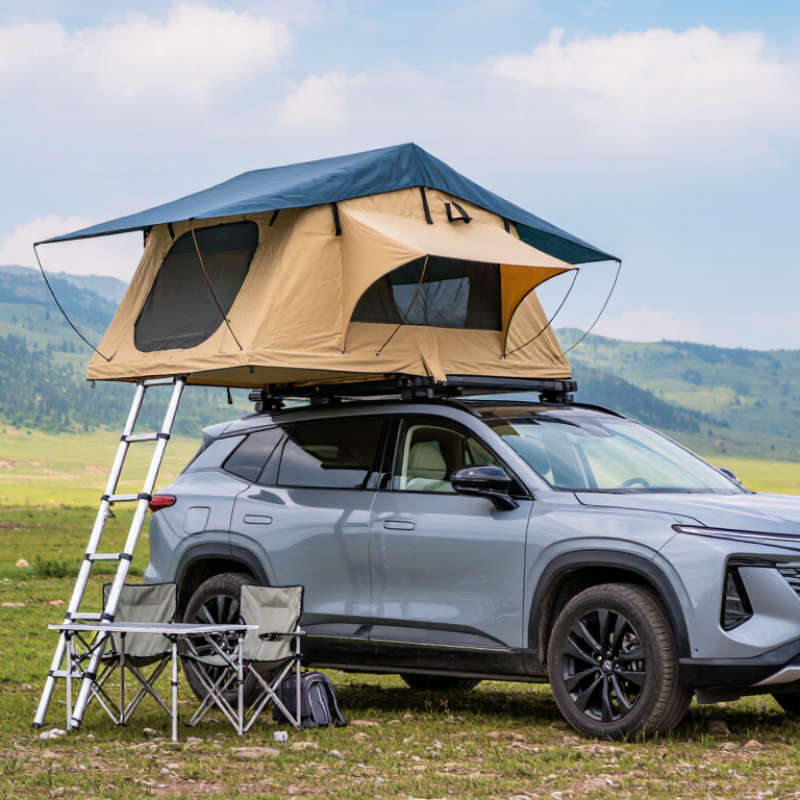
Rooftop tent manufacturers turn coated fabric, structural panels, hinges, ladders, and mattresses into a compact sleeping system. Their main differences show up in shell construction and opening design. Soft-shell models fold out from a fabric-covered base, often creating a larger sleeping area. Hard-shell models use rigid lids, which can open quickly and protect packed bedding. They may also add weight and raise the vehicle’s center of gravity. Trade-offs matter.
Materials shape durability and daily use. Aluminum shells resist corrosion when properly finished, while molded composite shells can reduce weight or cost. Fabric specifications, seam sealing, ventilation, and rainfly coverage affect comfort during wet nights. A sturdy ladder feels reassuring on uneven ground. Yet payload ratings, packed height, and vehicle compatibility deserve equal attention; a tent that looks spacious in a showroom may feel awkward on a small roof.
Market reports offer context, but not a direct measure of tent demand. The Outdoor Industry Association’s 2024 Outdoor Participation Trends report counted 175.8 million U.S. outdoor participants in 2023. Grand View Research estimated the global camping equipment market at about $22.5 billion in 2023. This is adjacent evidence, not rooftop-tent sales data. For buyers comparing manufacturers, ask for verified product weights, load ratings, fabric specifications, and warranty terms. Small inconsistencies in published specs are worth questioning.
Top Car Rooftop Tent Manufacturers for Global Buyers - What Rooftop Tent Manufacturers Make and How Their Products Differ
| Manufacturer Product Focus | Typical Tent Construction | Opening and Setup | Common Capacity Range | Vehicle and Rack Considerations | Key Product Differences | Best-Suited Use | Buyer Checks |
|---|---|---|---|---|---|---|---|
| Hard-shell clamshell tents | Rigid top and base connected by fabric sidewalls; the shell is commonly made from molded polymer or aluminum. | The lid opens on a hinge, raising one side of the tent. Gas struts are commonly used to assist opening. | Often designed for 2 people, with some models offering more sleeping room. | Check the tent’s closed dimensions, installed weight, rack load rating, and vehicle roof-load limits. | Generally compact when closed and quick to deploy; the sloped or hinged layout can limit usable interior space in some designs. | Frequent travelers and buyers prioritizing quick setup and a low-profile closed form. | Compare shell material, hinge and strut design, mattress dimensions, ventilation, and replacement-part availability. |
| Hard-shell pop-up tents | Rigid upper and lower shells with fabric walls that extend as the top lifts. | The roof rises to create a box-like sleeping space; opening mechanisms vary by design. | Commonly 2–3 people, depending on the interior footprint and mattress layout. | Confirm the roof rack’s permitted dynamic load for travel and the vehicle maker’s roof-load guidance. | The raised roof can provide more headroom than many clamshell layouts, while the closed shell protects the folded tent fabric. | Buyers seeking a rigid enclosure and a roomier interior shape. | Check the opening system, shell height when closed, interior clearance, fabric coverage, and loaded travel height. |
| Soft-shell folding tents | A fabric tent body folds over a base and is usually covered by a travel cover when closed. | The cover is removed and the folded platform is opened; some designs use a ladder to support the extended section. | Often available for 2–4 people, with larger footprints generally requiring more vehicle space. | Check the footprint when deployed, mounting-bar spacing, ladder position, and the combined weight of tent and accessories. | Folding layouts can provide a relatively large sleeping area; packing and setup typically involve more steps than many hard-shell designs. | Families or groups needing a larger sleeping platform and buyers comparing a range of tent sizes. | Review the travel-cover material, seams, mattress size, hinge points, ladder rating, and the process for securing the tent for travel. |
| Hybrid or wedge-style tents | A rigid panel or shell combines with a hinged frame and fabric walls; specific constructions vary by manufacturer. | One end or side lifts to form a wedge-shaped sleeping space, often with a comparatively direct opening sequence. | Most commonly configured for 2 people; capacity depends on the internal dimensions. | Check mounting hardware compatibility, closed height, overall weight, and whether the opened tent clears nearby vehicle components. | Combines a rigid component with a fabric sleeping enclosure; interior shape, weather protection, and opening method differ widely by design. | Buyers looking for a balance between a rigid travel enclosure and a simple hinged layout. | Compare the size of the rigid panel, fabric coverage, ventilation, weather details, and access to the sleeping area. |
| OEM and private-label manufacturers | May produce hard-shell, soft-shell, or hybrid designs for other businesses; materials and specifications are set by the product program. | Opening mechanisms depend on the selected platform and the buyer’s specification. | Capacity is determined by the chosen model and mattress dimensions. | Confirm that the finished product’s mounting system and documented load information match the target market and vehicle requirements. | May offer customization of fabrics, colors, accessories, packaging, and branding; available options depend on tooling and production capability. | Importers, retailers, and distributors sourcing products for a defined market or sales channel. | Request product drawings, material specifications, test documentation, warranty terms, spare-parts plans, and written production tolerances. |
Product categories and capacity ranges are general market descriptions, not specifications for a particular manufacturer or model. Actual dimensions, weights, capacities, materials, and vehicle compatibility vary by product; verify the product documentation and vehicle manufacturer’s load guidance before purchase.