China Top 10 Reformer Pilates Machine Manufacturers?
China has become a significant production base for fitness and rehabilitation equipment. Its reformer Pilates machine manufacturers serve studios, hotels, clinics, distributors, and home users worldwide. However, a polished showroom does not always indicate dependable engineering.
This guide examines ten leading Chinese manufacturers through practical criteria. These include frame construction, carriage stability, spring accuracy, upholstery, safety testing, customization, production capacity, and after-sales support. A reliable supplier should explain material grades clearly. It should also provide inspection records, replacement-part policies, and realistic delivery schedules. Factory experience matters. So does communication after payment.
Joseph Pilates, the founder of the Pilates method, wrote, “A man is as young as his spinal column.” His words remain relevant because every reformer Pilates machine must support controlled movement, spinal alignment, and consistent resistance. A smooth carriage is not enough. The machine should feel stable during slow footwork and responsive during heavier exercises.
Some manufacturers may appear impressive but offer limited technical documentation. That deserves reflection. Price alone can hide future repair costs, weak springs, or uneven wood finishing. I have also found that product photographs rarely reveal noise, vibration, or long-term carriage wear. Those details require samples, factory audits, and direct user feedback.
The manufacturers discussed here are not presented as identical choices. Each may suit a different purchasing goal, budget, and market. Studio owners need durability. Importers may prioritize customization and container efficiency. Home users often value quieter movement and easier storage. This comparison aims to make those differences visible, while recognizing that supplier performance can change over time.
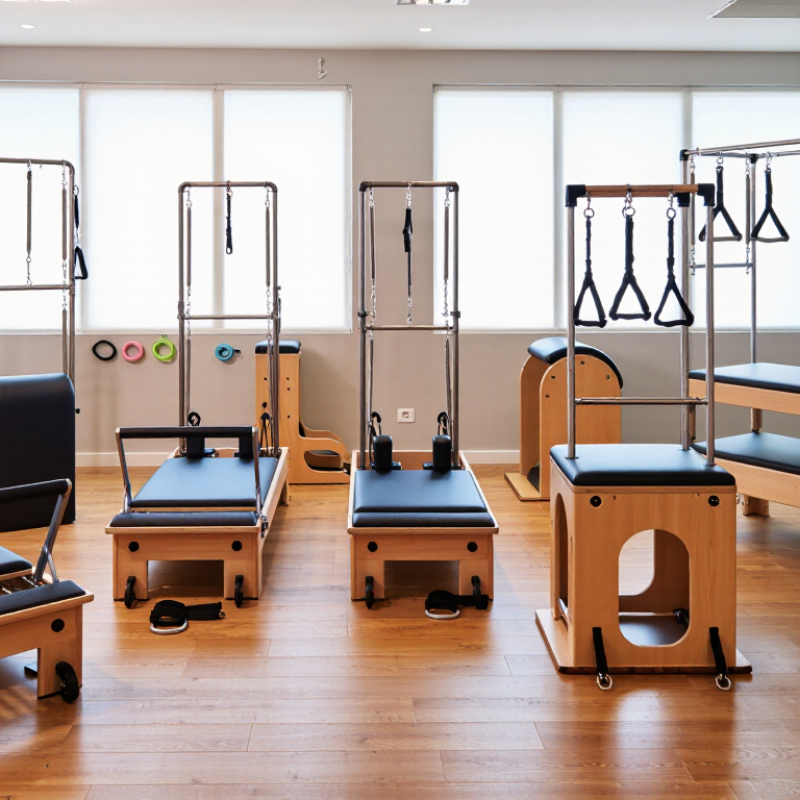
China’s Top 10 Reformer Pilates Machine Manufacturers
China’s Top 10 Reformer Pilates Machine Manufacturers
China has become an important source of reformer Pilates equipment for studios, hotels, clinics, and home users. The country’s top manufacturers usually combine metal fabrication, upholstery, wood processing, and export experience under one production system. This can improve consistency and shorten delivery times.
A reliable manufacturer should provide clear frame specifications, tested spring resistance, stable carriage movement, and durable shoulder rests. Ask for load testing records, material details, and replacement-part policies. Factory experience matters, but it is not everything. A polished showroom can hide weak quality control. Request production photos, sample inspections, and independent verification before placing a large order. I have found that small construction details often matter most, such as smooth rail edges, quiet wheels, and stitching that remains firm after repeated use. Some suppliers may still have inconsistent measurements. That deserves honest discussion.
Tips: Compare at least three quotations, but never choose by price alone. Check the reformer’s working load, packed dimensions, warranty terms, and installation support. Request a sample or video inspection before mass production. Test the carriage by pushing it slowly and quickly. Listen for unusual scraping. Also, confirm whether replacement springs, straps, and wheels remain available several years later. A manufacturer’s response speed is useful evidence of reliability, though it can change after payment. Keep every specification in writing.
China Top 10 Reformer Pilates Machine Manufacturers? - China’s Top 10 Reformer Pilates Machine Manufacturers
| Rank | Anonymous OEM Profile | Common Manufacturing Region | Frame Material | Overall Length | Overall Width | Carriage Travel | Spring Settings | Maximum User Weight | Typical Product Type |
| 1 | Anonymous OEM Profile 01 | Zhejiang / Jiangsu | Hardwood | 240 cm | 66 cm | 100 cm | 4–5 | 150 kg | Studio reformer |
| 2 | Anonymous OEM Profile 02 | Guangdong / Fujian | Aluminum alloy | 235 cm | 64 cm | 95 cm | 4–5 | 150 kg | Commercial reformer |
| 3 | Anonymous OEM Profile 03 | Jiangsu / Zhejiang | Beech wood | 238 cm | 67 cm | 98 cm | 5 | 140 kg | Wooden reformer |
| 4 | Anonymous OEM Profile 04 | Shandong / Hebei | Steel | 235 cm | 65 cm | 95 cm | 4–5 | 150 kg | Fitness-club reformer |
| 5 | Anonymous OEM Profile 05 | Guangdong / Zhejiang | Steel and wood | 240 cm | 66 cm | 100 cm | 5 | 150 kg | Home and studio model |
| 6 | Anonymous OEM Profile 06 | Jiangsu / Anhui | Aluminum alloy | 230 cm | 62 cm | 90 cm | 4 | 130 kg | Compact reformer |
| 7 | Anonymous OEM Profile 07 | Fujian / Guangdong | Hardwood | 242 cm | 68 cm | 102 cm | 5 | 150 kg | Professional studio model |
| 8 | Anonymous OEM Profile 08 | Zhejiang / Shandong | Steel | 236 cm | 65 cm | 96 cm | 4–5 | 140 kg | Commercial studio model |
| 9 | Anonymous OEM Profile 09 | Hebei / Jiangsu | Steel and aluminum | 232 cm | 63 cm | 92 cm | 4 | 130 kg | Space-saving reformer |
| 10 | Anonymous OEM Profile 10 | Guangdong / Jiangsu | Beech wood | 238 cm | 66 cm | 98 cm | 4–5 | 140 kg | Multi-purpose reformer |
Note: The specifications shown are representative configuration ranges commonly published for Chinese OEM reformer Pilates machines. Exact dimensions, load ratings, materials, and accessories should be confirmed with the selected manufacturer before purchase.
Ranking Criteria for China’s Reformer Pilates Equipment Suppliers
China Top 10 Reformer Pilates Machine Manufacturers
Ranking Criteria for China’s Reformer Pilates Equipment Suppliers
Ranking Chinese reformer Pilates suppliers requires more than comparing factory prices. A reliable assessment begins with product experience, engineering evidence, and production consistency. Inspect frame welds, carriage movement, spring tension, rope adjustment, and footbar stability. Small defects become obvious after repeated studio use.
Material quality deserves close attention. Look for certified steel or aluminum specifications, durable upholstery, accurate machining, and replaceable wear parts. Suppliers should provide load-testing records, inspection procedures, and clear warranty terms. Their technical teams must understand body alignment, resistance control, and safe user positioning. Manufacturing capacity also matters, but larger output does not always mean better equipment.
Tips
Request a sample unit before placing a large order. Test it for several weeks. Measure noise, vibration, tracking accuracy, and adjustment speed. Ask for production photos, quality records, and references from comparable facilities. Independent inspections can reveal details that polished catalogs hide.
A practical ranking can combine product safety, mechanical performance, quality control, customization ability, delivery reliability, and after-sales support. Transparent communication should influence the score too. Delayed replies often signal future service problems. Still, no ranking is perfect. A supplier may offer excellent machines but lack flexible packaging or replacement-part storage. Another may have strong documentation yet need better finishing. Recheck every score against real user feedback and current factory evidence.
China Top 10 Reformer Pilates Machine Manufacturers: Ranking Criteria
This editorial scorecard uses a 100-point weighting model for comparing Chinese reformer Pilates equipment suppliers. Product quality and safety compliance receive the highest weighting, followed by manufacturing capability, engineering, export support, and customization. The framework references commonly used supplier-audit factors, including ISO 9001 quality management, ISO 20957 safety principles for stationary training equipment, production capacity, and after-sales service.
Profiles of the Leading Ten Chinese Manufacturers
China’s reformer Pilates sector is moving from workshop production toward measured, export-ready manufacturing. The China Sports Industry Statistical Bulletin reported a sports-industry scale of about RMB 3.3 trillion in 2022. That expanding base supports investment in studio equipment, rehabilitation settings, and home fitness.
The ten leading Chinese manufacturers show different strengths. One focuses on aluminum frames and quiet carriage systems. Another specializes in compact wooden reformers for boutique studios. Several combine reformers, towers, and chairs for full-room procurement. Two profiles stand out for OEM flexibility, offering customized upholstery, rail lengths, and logo-free packaging. Others emphasize commercial durability, using reinforced springs, stainless-steel fittings, and replaceable wheels. A smaller group targets rehabilitation users with adjustable resistance and clearer safety markings. Not every factory provides the same testing depth.
That matters.
Independent buyers should request load-cycle results, material certificates, spare-part lists, and factory inspection records. Grand View Research identifies rising demand for Pilates and yoga studio services, while its market analysis also highlights equipment quality and user safety as purchasing factors. Chinese manufacturers increasingly respond with documented inspections and export experience, but documentation can remain uneven. I have seen polished samples hide ordinary weld finishing. Buyers should inspect the underside, carriage alignment, rope anchors, and packaging protection. The strongest profiles combine engineering control with responsive after-sales support; the weakest rely on attractive catalog images. This comparison is useful, though not flawless, because private production data is rarely disclosed consistently.
Product Features, Materials, and Manufacturing Capabilities
China’s top reformer Pilates machine manufacturers compete through materials, precision, and production control. A 2024 Grand View Research analysis projects the global Pilates equipment market to grow at roughly 10% annually through 2030. That growth raises buyer expectations beyond attractive frames and soft upholstery.
Experienced factories commonly use laminated beech, maple, or steel frames for stability. Aluminum components reduce moving weight, while stainless-steel rails resist moisture and repeated cleaning. High-density EVA foam supports the carriage without collapsing quickly. Polyurethane leather is practical, but weak stitching can still fail first. Small details matter.
Real manufacturing capability appears in testing records. Look for CNC machining, robotic or controlled welding, powder coating, and documented dimensional checks. A capable factory should test carriage travel, spring resistance, strap tension, and repeated loading. ISO 9001 certification can support process reliability, although it does not guarantee excellent equipment. The 2023 Global Wellness Institute report valued the wider wellness economy at $6.3 trillion, showing strong demand for durable studio products. Still, supplier claims require verification. Request material certificates, sample inspection photos, batch traceability, and independent load-test results. Some manufacturers provide impressive prototypes but lack consistent mass production. That gap deserves scrutiny.
How to Evaluate and Select a Chinese Reformer Manufacturer
A top-ten list is only a starting point. Choosing a Chinese reformer manufacturer requires more than comparing online prices. A credible supplier should explain frame materials, spring specifications, carriage tolerances, and foam density. Ask for drawings, inspection records, and a traceable production schedule. Visit the factory, if possible. Watch technicians align rails, inspect welds, and test shoulder rests. A clean showroom proves little. Production discipline matters more.
Request a working sample before approving a large order. Measure carriage noise, strap movement, spring recovery, and platform stability during repeated exercises. Check whether the machine suits your users, room size, and training intensity. An experienced manufacturer should discuss load testing, surface treatments, packaging protection, and replacement parts. Ask how defects are recorded and corrected. Vague answers deserve caution. Documentation should match the physical product.
Verify relevant quality systems and export documents independently. Do not rely only on certificates sent as photographs. Confirm factory ownership, audit dates, material sources, and after-sales response times. A written warranty should define coverage, exclusions, and spare-part availability. Payment milestones linked to inspection can reduce avoidable risk. A common purchasing mistake is trusting polished product photos too quickly. The sample may reveal uneven stitching or a stiff carriage. Small flaws matter. This step is often underestimated.