Top 10 Garment Label Manufacturers in China
China’s garment-label industry brings together specialist mills, print houses, and trim suppliers. The best partner is not always the largest. A dependable manufacturer should explain its material options, sampling process, color controls, and production tolerances clearly. Ask to inspect woven edges, printed care text, and finished label samples under ordinary light. Small defects can matter: a scratchy edge may irritate skin, while faint lettering can become hard to read after washing.
Textile researcher Dr. Subramanian Senthilkannan Muthu has written extensively about textile sustainability. A useful principle drawn from that work is: “Consider a textile product’s impacts across its life cycle.” This is a paraphrase, not a verbatim quotation. Applied to Garment Labels, it means checking fiber content, inks, durability, and disposal considerations—not just price or appearance. Details vary by product, and a label that works for a T-shirt may not suit a delicate blouse.
This guide compares ten Chinese manufacturers through practical sourcing questions: What can they produce? How do they handle customization? Can they provide consistent samples and communicate lead times? Company claims still deserve verification; a polished catalog is not proof of reliable production. Some comparisons may miss local differences, too. Use the shortlist as a starting point, request physical samples, and confirm specifications before placing an order.
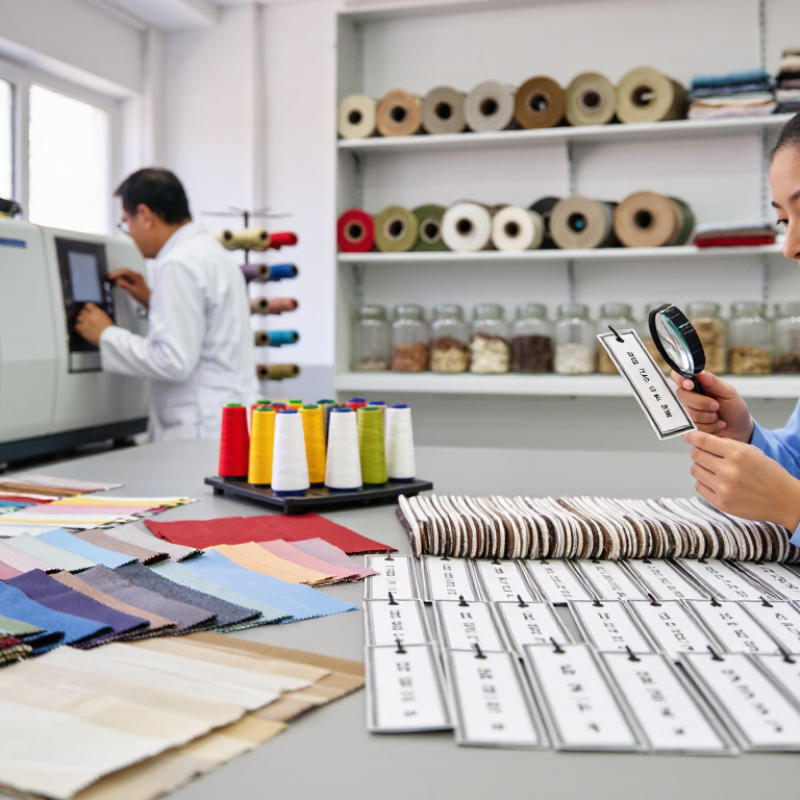
What Garment Labels Are and How They Are Used
Garment labels are small textile or printed components that identify a garment and help people understand how to wear and care for it. They may show a size, fiber content, care instructions, or a maker’s information. Common forms include woven labels, satin labels, heat-transfer prints, and care labels sewn into an inner seam. Each feels different against the skin.
Placement depends on the garment. A neck label sits near the collar, while a care label is often placed inside a side seam. A woven label can offer crisp detail, but a rough edge may irritate sensitive skin. Satin feels smoother, though fine text can blur if the print or finish is poorly controlled. Small details matter.
Choosing a label involves more than appearance. Check whether the text stays readable after washing, whether colors transfer, and whether stitching holds under normal wear. Ask for a physical sample and test it on the actual fabric; a label that feels soft alone may behave differently once sewn in. Not every option fits every garment. A practical choice balances comfort, durability, legibility, and cost, with the intended use in mind. Sometimes the simplest label works best.
Garment Care Labels: Standard Wash Temperature Options
Care labels tell users how to wash and care for a garment. This chart shows temperature options used in standardized wash-care symbols; the appropriate setting depends on the garment and its care instructions.
Temperature options shown are based on ISO 3758 care-symbol conventions. Always follow the instructions on the specific garment.
How to Assess Garment Label Manufacturers in China
Assessing a garment label manufacturer in China starts with the label’s intended use. A soft neck label needs different materials and finishing from a durable care label. Ask about fabric options, printing methods, edge finishes, and how text stays legible after washing. Small details matter. Request samples made to your specifications, not just standard swatches.
Compare samples under natural and indoor light, and check color, texture, dimensions, and cut edges. Ask how the manufacturer checks incoming materials and finished batches. If wash performance matters, request relevant test information and clarify the conditions used. A polished sample is useful, but it cannot prove every production run will match. That deserves a follow-up question.
Communication is part of quality control. Share artwork files, measurements, tolerances, and packaging requirements in writing, then see whether the supplier confirms them clearly. Ask about sample timing, production capacity, inspection steps, and how defects are handled. Vague answers may signal a process gap, though they are not proof of poor work. Compare written quotes carefully; a low price can omit setup, sampling, or packing costs. Keep a dated sample and approved specifications for comparison when bulk goods arrive.
Profiles of Ten Leading Garment Label Manufacturers in China
China’s garment label sector includes specialists in woven, printed, heat-transfer, and care labels. These ten manufacturer profiles highlight different production strengths rather than promise a universal ranking. Actual capacity and quality can vary by order size, material, and season.
One maker may excel at fine woven lettering, while another handles bright printed designs. A third offers soft labels for sensitive skin; a fourth focuses on recycled fibers. The fifth produces durable satin labels. The sixth supports small custom runs. The seventh combines labels with hangtags, and the eighth emphasizes rapid sampling. The ninth serves large-volume orders with automated production. The tenth provides detailed color matching and inspection records. Small differences matter.
When comparing suppliers, request a sample made with your intended fabric and wash conditions. Check edge finishing, legibility, color consistency, and attachment strength under normal use. Ask how defects are recorded and corrected. A polished sample is useful, but it does not prove every batch will match. That part deserves scrutiny. Confirm lead times, minimum quantities, and material specifications in writing, then compare like with like.
Label Types, Materials, and Customization Capabilities
Garment labels do more than display a size or care instruction. Their material, construction, and finish affect how they feel and hold up during wear. Common options include woven labels, printed labels, heat-transfer labels, and satin labels. Woven designs suit logos with clear, durable detail. Printed labels can fit dense text, while heat transfers avoid a sewn-in edge. Small choices matter.
Manufacturers may offer polyester, cotton, satin, and blended materials. Polyester often handles repeated washing well, while cotton can feel softer against skin. Satin gives a smooth surface, but its sheen may not suit every garment. Ask for physical samples. A screen image cannot show texture or accurately predict color.
Customization can include label dimensions, folded edges, thread colors, print methods, attachment options, and artwork placement. Share the garment type and intended use when requesting a quote. Then check samples for legibility, rough edges, and color consistency. If care information must remain readable, test a sample through washing and drying. There is no perfect material for every product. Even a well-made label can feel scratchy if its placement is poorly considered.
How to Compare Suppliers on Quality, Compliance, and Delivery
When comparing garment label manufacturers in China, judge the production process, not just a polished sample. Ask for material specifications, color tolerances, and inspection steps. Check woven or printed labels for legible text, clean edges, and consistent dimensions. Then test samples after washing and rubbing; ink transfer or fraying can appear only after use. A neat sample helps, but it does not prove every production batch will match.
Tips: Request a pre-production sample, written quality criteria, and photos of packed goods. Confirm which compliance documents apply to your product and sales markets, and verify that documents match the materials being supplied. Ask how the factory tracks revisions and handles rejected items. Small details matter.
Delivery is part of supplier quality. Compare quoted lead times with actual production schedules, and ask when raw materials must be approved. Clarify order minimums, packaging, shipping terms, and how delays are reported. A supplier that gives specific updates is easier to plan with than one offering broad promises. I would not treat one successful order as proof of reliability; repeat orders reveal more. Keep records of sample approvals and agreed specifications, since memory is a poor quality-control system.