How to Source Festive Lanterns in 2026?
Sourcing a Festive Lantern for 2026 takes more than comparing prices and choosing attractive colors. Buyers need to balance appearance, durability, safety, and delivery timing. A lantern that glows warmly in a product photo may look different under bright retail lighting. Ask suppliers for clear images, material details, and a sample before approving a large order. Small checks matter.
Start by defining where the lanterns will be used: indoor displays, covered patios, or outdoor events. Paper, fabric, bamboo, and metal each create a different look and require different handling. Confirm how the product is assembled, packed, and tested. If it includes electrical parts, request relevant product documentation and verify that it matches the exact model being purchased. Requirements can vary by destination, so confirm them with qualified local professionals rather than relying on a supplier’s general assurance.
Then assess the supplier’s production capacity, quality-control process, and communication habits. Request a written specification covering dimensions, colors, materials, packaging, and acceptable variations. Compare samples against that specification, including seams, edges, hanging loops, and finish. Ask for realistic production and shipping schedules, with room for delays around peak seasons. A low quote is not always a saving.
Even a careful plan can miss a detail. I would check one more time. A reliable sourcing decision comes from evidence, clear expectations, and practical follow-up—not from polished promises alone.
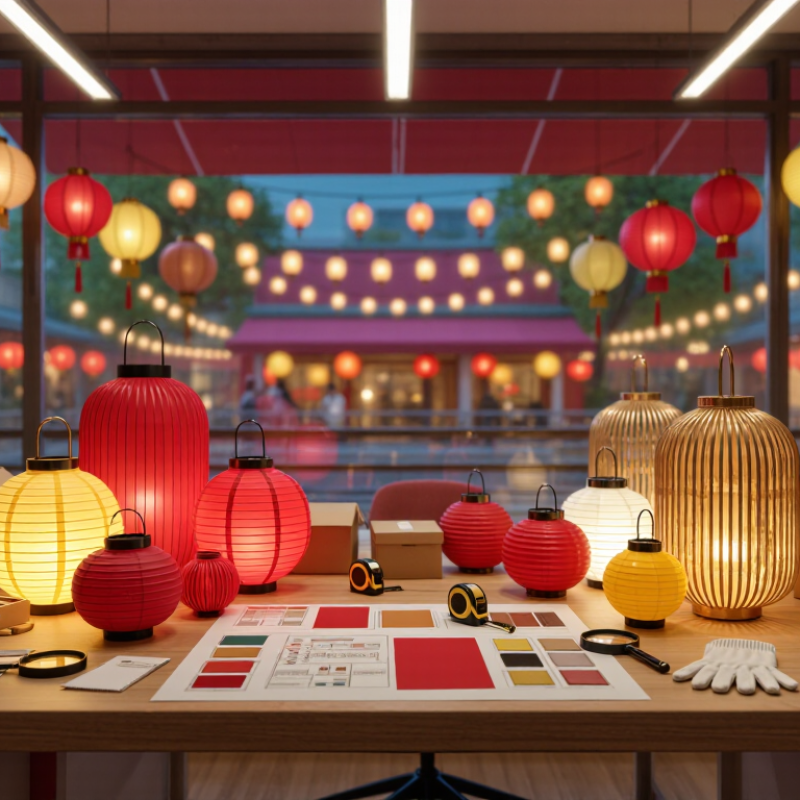
Define Festive Lantern Requirements for the 2026 Event
Define the lantern brief before requesting supplier quotes. Record the event date, venue, guest count, installation height, and display hours. Specify whether lanterns are indoor, outdoor, or mixed-use. A 30-centimeter paper lantern may suit a sheltered dining area, while a windy entrance needs a sturdier frame and secure hanging points. Measure twice. Set a target quantity, plus a small replacement allowance. Confirm colors, dimensions, packaging, lead time, and sample approval in writing.
Power and safety details need equal attention. Ask for the light source, battery or cable requirements, operating time, and replacement method. The U.S. Department of Energy’s Energy Saver guidance says LEDs use at least 75% less energy and last up to 25 times longer than incandescent lighting. That makes LEDs worth considering for displays running through long evenings, though the actual savings depend on the chosen setup. For outdoor use, request documented weather resistance and clear installation instructions; do not assume “outdoor” means suitable for heavy rain. Test it wet. A small, honest trial often exposes weak ties or uneven light before delivery. I would also specify a warm color temperature and dimming needs, then inspect a physical sample under the venue’s actual lighting. One detail is easy to miss: lanterns can look brighter in a supplier’s studio than in a crowded hall.
Identify Suitable Lantern Suppliers and Sourcing Channels
In 2026, source Festive Lanterns throughspecialist wholesale marketplaces, regional trade fairs, and verified local manufacturers. Each channel offers different advantages. Online listings make it easy to compare shapes, materials, and minimum order quantities. Trade fairs let you inspect stitching, frames, and finishes in person. Local suppliers may offer shorter delivery routes, while sourcing agents can help coordinate factory communication. Ask suppliers where production takes place and who handles quality checks.
Request samples before confirming a large order. Check whether the lantern stands evenly, folds without damage, and matches the color shown in your approved sample. Ask for a written quote covering packaging, shipping, lead time, customization, and replacement terms. Confirm that the proposed materials and lighting components meet the requirements of your intended market. A polished catalog is useful, but it cannot prove consistent production. Not enough.
Tips: Compare at least three suppliers using the same specification sheet. Ask for recent production photos and a sample from the current batch. Plan around seasonal capacity, and build in time for one delay. I once overlooked carton dimensions; storage became awkward. Small detail, real cost.
Assess Materials, Safety Standards, and Customization Options
When sourcing festive lanterns in 2026, request exact material specifications, not just “paper” or “fabric.” Ask whether the frame is steel, aluminum, or bamboo, and whether the shade uses coated paper, polyester, or another textile. Each choice affects weight, foldability, print quality, and end-of-season storage. Small details matter. For illuminated designs, request test documentation for the complete electrical assembly, including wires, connectors, and heat exposure—not only the bulb. Confirm that safety documentation matches the destination market and the finished product.
The National Fire Protection Association’s 2023 report estimates that decorations, excluding Christmas trees, were involved in an average of 790 U.S. home structure fires each year from 2017 to 2021. Those incidents caused an average of three deaths and 29 injuries annually. This is not a lantern-specific figure, but it makes material and lighting checks worth taking seriously. For LED-lit lanterns, the U.S. Department of Energy reports that LEDs use at least 75% less energy and last up to 25 times longer than incandescent lighting.
Customization should be checked against real production samples. Compare printed colors under warm and cool lighting, inspect seams, and test how quickly a collapsible frame opens. Specify dimensions, hanging points, packaging, and replacement parts in writing. Custom finishes can look excellent in a sample room, yet shift noticeably in outdoor light. That part is easy to overlook. Ask suppliers to document tolerances and sample approval steps before placing a bulk order.
Compare Samples, Pricing, and Supplier Reliability
When sourcing festive lanterns for 2026, request matching samples from at least three suppliers. Compare frame stability, seam finishing, color consistency, and how evenly the lantern glows. If the product uses battery lighting, check the compartment, switch, and wiring rather than judging brightness alone. Photograph each sample beside a ruler and under the same indoor light. Small details matter. I have sometimes favored the cleanest-looking sample too quickly; a beautiful finish does not prove the lantern will hold its shape after repeated handling.
Compare quotes on equal terms. Ask suppliers to separate unit price, packaging, sample fees, customization costs, and shipping estimates. A low quote can hide thinner material or less protective packing. Request a written specification and a production timeline, then check whether the supplier answers questions clearly and consistently. Ask for evidence. Recent production photos, inspection records, and references for similar orders can help, though none guarantees a smooth shipment. Notice how quickly corrections appear in revised documents. Silence is telling. I would also order a small pilot batch before committing to a large quantity, even when the deadline feels tight. Allow time to inspect cartons, count units, and test a few lanterns before approving the balance.
How to Source Festive Lanterns in 2026?
Compare samples, pricing, and supplier reliability
Illustrative 1–5 planning scores, not verified supplier ratings or live market quotes. Score samples against the approved design, compare like-for-like landed prices, and verify reliability using recent delivery records and quality checks before placing an order.
Plan Production, Shipping, and Delivery Timelines
For festive lanterns in 2026, plan backward from the date they must arrive, not the date you hope to order. A five-to-seven-month buffer can help with custom colors, printed packaging, or unusual shapes, though supplier capacity and materials affect timing. Approve a physical sample and written specifications before production begins. Set checkpoints for material approval, production start, and pre-shipment inspection. Leave room for change. A delayed sample can shift every later milestone.
Shipping needs its own schedule. Ask suppliers for realistic production and dispatch dates, then compare them with current freight estimates. Sea freight may suit larger orders, while air freight can help with urgent, smaller shipments at higher cost. Include time for port handling, customs processing, and delivery to your final address. Dates move. Track the shipment and confirm who will receive it, especially if deliveries arrive during a busy holiday period.
Tips: Request carton dimensions and gross weight early; they affect freight quotes and storage plans. Build a two-week delivery cushion where possible, and keep a small allowance for damaged units or inspection failures. I have seen tight schedules look workable on paper, then slip after one packaging change. Recheck the calendar whenever a specification changes.