
How to Choose the Best Car Perfume Diffuser?
Choosing a Car Perfume Diffuser is not only about finding a scent you like. It also means considering how the fragrance is released, how easily you can control it, and whether the device suits your vehicle. A sweet scent may seem pleasant in a shop, then feel overpowering in a warm cabin. Small details matter.
The U.S. Environmental Protection Agency reports that concentrations of some indoor pollutants can be two to five times higher indoors than outdoors. This finding is not specific to cars, so it should not be treated as a measurement of vehicle air quality. Still, it is a useful reminder: fragrance adds to the mix of substances in an enclosed space. A diffuser should complement the cabin, not overwhelm it. Start with a mild setting, keep ventilation in mind, and follow the product maker’s instructions.
This guide compares common diffuser styles, including vent clips, liquid bottles, and electric models. It looks at scent strength, refill costs, leakage risks, materials, and ease of adjustment. It also considers practical moments: a bottle tipping during a sharp turn, or a strong fragrance lingering after a short drive. No product is perfect. Some specifications can be vague, and personal preference is hard to measure. The aim is to help you ask better questions before buying—and choose a diffuser that feels comfortable on an ordinary commute, not just during a quick test.
Understanding How Car Perfume Diffusers Work
How to Choose the Best Car Perfume Diffuser?
Understanding How Car Perfume Diffusers Work
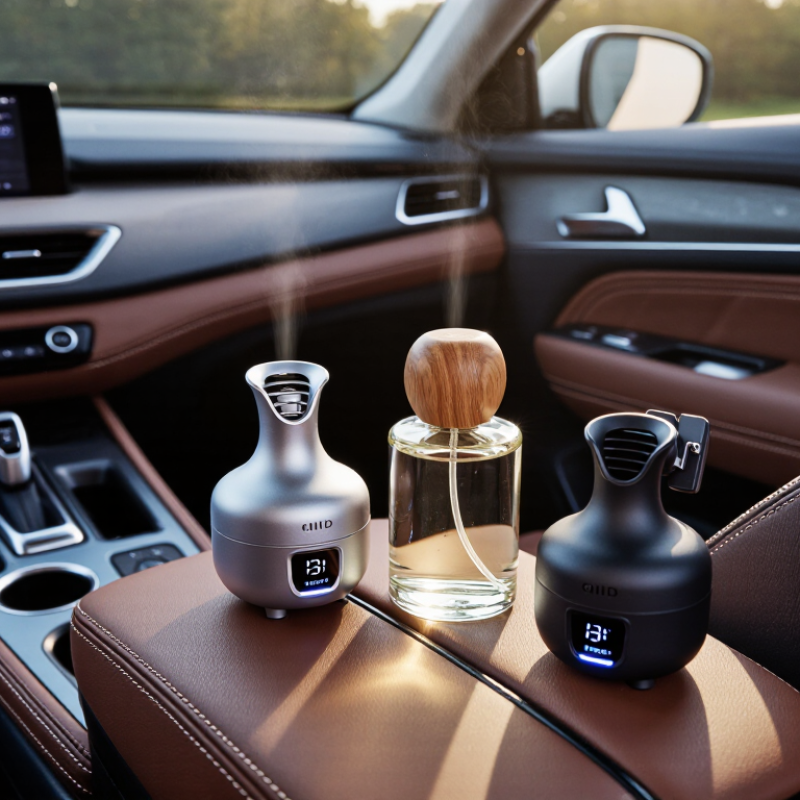
A car perfume diffuser releases fragrance into the cabin through airflow, gentle heat, or gradual evaporation. The method affects how quickly the scent spreads and how long it lasts. Vent-mounted models use air from the vehicle’s fan to carry fragrance across the dashboard. With the fan off, their scent may become faint. Heat-based diffusers warm a scented material, helping fragrance disperse without relying as much on moving air.
Evaporative diffusers work differently. Fragrance slowly leaves a porous surface, such as a felt pad or wooden piece, and mixes with cabin air. Temperature, sunlight, and ventilation can change the rate. A diffuser left in a hot car may fade faster than expected. That can be frustrating.
Liquid systems may use a wick to draw fragrance upward, while some electronic models release measured bursts. Check how the device is powered and whether its intensity can be adjusted. A scent that seems pleasant in a shop can feel overwhelming in a small cabin.
Placement matters too. Keep the diffuser away from controls, visibility-critical areas, and surfaces that could be damaged by spills or heat. Start with a low setting, then notice how the fragrance feels during a short drive. Airflow varies between vehicles, so the same diffuser may perform differently from one car to another. I would not assume a stronger scent means better performance. Sometimes less is more, though that depends on personal preference.
Identifying Your Fragrance Preferences and Needs
How to Choose the Best Car Perfume Diffuser?
Identifying Your Fragrance Preferences and Needs
Start with the scents you already enjoy at home or outdoors. Fresh citrus may feel bright on a short commute, while soft woody notes can seem calmer on a long drive. If strong smells bring on headaches or nausea, choose a subtle fragrance or skip scented products. Your comfort matters more than a scent’s popularity. Also consider who rides with you. Children, passengers with sensitivities, and pets may react differently to fragrances, so keep the scent light and ventilate the car.
Think about when and where you drive. A warm car can make a fragrance seem stronger, while an open window may quickly disperse it. If possible, sample a scent outside the car before using it in a small cabin. Notice whether it stays pleasant after several minutes; first impressions can be misleading. I would not assume that a “fresh” label means gentle. That is easy to get wrong.
Tips: Try one fragrance at a time, and begin with the lowest setting available. Place the diffuser where it will not block your view or interfere with driving. Check the instructions for refills and cleaning, since residue can collect around vents. If the scent feels distracting, switch it off and air out the cabin. A little restraint helps.
How to Choose the Best Car Perfume Diffuser? — Identifying Your Fragrance Preferences and Needs
| Your Preference or Need | Fragrance Direction | Diffuser Type to Consider | Why It May Suit You | Things to Check |
|---|---|---|---|---|
| You prefer a clean, light-smelling cabin | Citrus, green tea, light herbal, or subtle aquatic notes | Vent-clip diffuser with adjustable airflow | Air from the vehicle’s vents can help circulate fragrance, and adjustable designs let you reduce the output. | Start at the lowest setting; fragrance strength can increase when the fan is running. |
| You enjoy warm, cozy scents | Soft wood, amber, vanilla, or gentle spice | Refillable passive diffuser or a low-output vent diffuser | These scent profiles can create a warmer impression without requiring a strong, sharp fragrance. | Choose a mild formula if you drive for long periods or share the car with others. |
| You are sensitive to strong smells | Unscented, very light citrus, or a low-intensity single-note fragrance | Adjustable diffuser that can be closed or removed | Control over exposure makes it easier to stop or reduce fragrance when needed. | Try a small amount first. Stop using it if it causes discomfort, irritation, or nausea. |
| You want fragrance only when the car is in use | Any scent family at a moderate intensity | Vent-activated diffuser | Many vent designs release more fragrance as air passes through them, so output often decreases when the ventilation is off. | Actual performance depends on vent airflow, cabin temperature, and diffuser design. |
| You want a simple, power-free option | Fresh, floral, woody, or another preferred scent | Passive diffuser using a scented insert, pad, or solid refill | It does not need a cable or electrical connection and is generally straightforward to install. | Check how the refill is replaced and whether the scent output can be adjusted. |
| You prefer a more noticeable, adjustable scent | A fragrance with clearly defined top and base notes | Electronic diffuser with selectable output settings | Some electronic models allow you to change the release interval or intensity. | Check the power source, refill compatibility, operating instructions, and cleaning requirements. |
| You drive with passengers, children, or pets | Subtle fragrance or no added fragrance | Secure, low-output design that can be turned off or removed | A restrained scent level is less likely to overwhelm a shared, enclosed space. | Keep refills and small parts out of reach, and follow the product’s safety directions. |
| You want to avoid spills and residue | Any fragrance type in a non-liquid or well-sealed refill format | Solid, pad-based, or securely enclosed diffuser | These formats can reduce the chance of loose liquid leaking onto vehicle surfaces. | Do not place fragrance products where they can contact dashboards, trim, screens, or other surfaces. |
| You are unsure which scent you like | Begin with familiar notes, such as citrus, lavender, or light woods | Small refill or adjustable diffuser | A small trial makes it easier to decide whether the scent suits the cabin before committing to a larger refill. | Test one fragrance at a time; scent perception can change in a warm, enclosed vehicle. |
Selection tip: Choose a fragrance you enjoy at low intensity, then consider how the diffuser is powered, adjusted, refilled, and secured in your vehicle. Fragrance strength and longevity vary with the product, airflow, temperature, and use.
Comparing Diffuser Types and Power Sources
How to Choose the Best Car Perfume Diffuser?
Comparing Diffuser Types and Power Sources
Car diffusers generally use passive evaporation, heat, fans, or ultrasonic mist. Passive clips need no power, but airflow and cabin temperature affect how strongly they release fragrance. A vent clip may smell noticeable with the fan running, then fade when airflow stops. Heat-based models warm a fragrance pad, while fan-driven units spread scent without heating it. Ultrasonic models create a fine mist from liquid, but require water and careful placement. Spills are possible. These trade-offs matter more than flashy settings.
Power source changes convenience. Battery models avoid cables, though frequent use can mean regular recharging. USB-powered diffusers are easy to move between vehicles, but check the device’s rated input before plugging it in. USB-IF’s USB 2.0 specification allows up to 500 milliamps, while USB 3.0 allows up to 900 milliamps; not every car port supplies the same practical output. A 12-volt socket can suit higher-draw units, but may leave a cable across the console. For context, Grand View Research estimated the global air freshener market at about $13.3 billion in 2023; that broad category includes many products beyond car diffusers, so it cannot tell you which diffuser type performs best. Choose by cabin size, desired scent strength, and available power. Test gently. Too much fragrance can become tiring on a long drive.
Car Diffuser Power Sources: Typical Output Voltage
USB-A and USB-C provide 5 V in their standard baseline mode; USB-C may supply higher voltages when supported devices negotiate power. A car accessory socket is nominally 12 V. Check the diffuser’s voltage requirements and your vehicle’s outlet specifications before choosing.
Checking Vehicle Compatibility, Safety, and Maintenance
How to Choose the Best Car Perfume Diffuser?
Checking Vehicle Compatibility, Safety, and Maintenance
Start with the car’s power options and cabin layout. A USB diffuser may suit a console port, while a vent-mounted unit needs slats sturdy enough to hold it without rattling. Check that it does not block the driver’s view, controls, or airbag areas. The AAA Foundation for Traffic Safety reported that a parked vehicle’s cabin can reach 116°F after one hour when outdoor temperatures are 95°F. That heat can affect fragrance liquids and some plastic components. Check the diffuser’s stated temperature limits, and take it out of the car during extreme heat if its instructions recommend doing so. Small detail. A loose device can become a distraction on a sharp turn.
Safety depends on restrained use, too. Choose a unit with a stable mount and a clear shutoff method; avoid placing scented liquid where it could spill onto screens or trim. Fragrance sensitivity varies, so begin with a low setting and stop using it if occupants develop irritation or headaches. I have found that a scent that seems mild outside can feel much stronger in a closed cabin. That is easy to underestimate. For maintenance, follow the maker’s cleaning directions, wipe residue promptly, and inspect seals and clips for wear. Replace damaged parts rather than improvising a repair. Keep the cabin ventilated, especially after refilling, and never leave an open fragrance container rolling under a seat.
Choosing a Diffuser for Scent Strength and Budget
How to Choose the Best Car Perfume Diffuser?
Choosing a Diffuser for Scent Strength and Budget
Scent strength depends on more than the fragrance itself. A vent-mounted diffuser may spread aroma quickly when the fan runs, while a passive clip often releases it more gently. In hot weather, however, even a mild scent can feel overpowering inside a parked car. Start with a low setting, then adjust after several drives. Small cabins amplify scent. That detail is easy to underestimate.
Budget matters over time, not just at checkout. Grand View Research estimated the global car air freshener market at about US$2.3 billion in 2022, reflecting broad consumer demand, not proof that a particular diffuser performs well. Compare refill cost, expected use time, and whether intensity is adjustable. Manufacturer duration claims can vary with heat, airflow, and personal sensitivity. They are useful estimates, not guarantees. A cheaper unit may need frequent refills; a costlier one may still smell too strong. I would test cautiously rather than assume price predicts comfort.