
How to Choose a Theater Seating Manufacturer?
Choosing a Theater Seating Manufacturer is not simply a matter of comparing chair styles or unit prices. The right partner must understand how seats perform in a real auditorium: under warm stage lights, through long performances, and across years of daily use. Furniture designer Charles Eames observed, “The details are not the details. They make the design.” For theater seating, those details include seat width, row spacing, armrest shape, upholstery, and the movement of people through aisles. Small choices matter.
A reliable selection process starts with the venue. Measure the room, review sightlines, and consider audience needs, cleaning routines, and expected use. Ask manufacturers for product specifications, installation references, warranty terms, and material samples. Then compare how clearly they explain customization, delivery schedules, and after-sales support. If possible, inspect a finished installation or test a sample seat. Sit in it for more than a minute. That helps reveal pressure points a product photo cannot show.
Price still matters, of course. But a low quote may leave out installation details or long-term maintenance needs. A polished presentation is not proof of a good fit. Some decisions may remain uncertain until the seats are installed and used; acknowledge that, and ask what can be checked beforehand. This guide outlines the questions that help buyers assess comfort, durability, technical fit, and service. The goal is a choice grounded in evidence, not just a convincing catalog.
Define Your Theater Seating Requirements
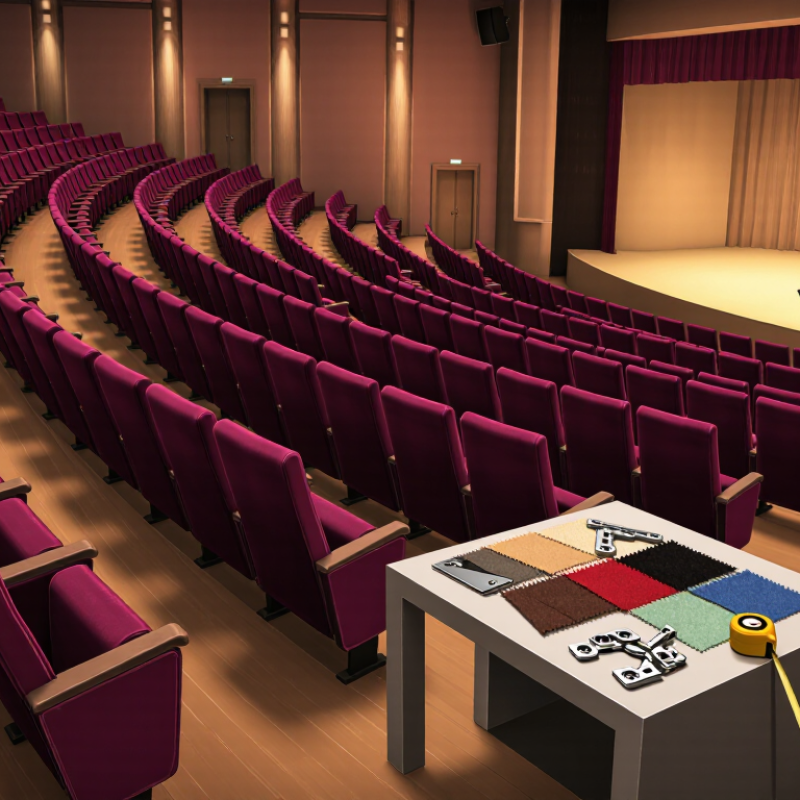
Before comparing theater seating manufacturers, describe how the room will be used. A lecture hall with brief sessions needs different support from a cinema with long screenings. Note audience size, event types, daily use, and whether people need space for bags or mobility devices. Measure the room, doorways, stage sightlines, and aisle widths. Small details matter.
Set practical seat dimensions before discussing finishes. Record the desired seat width, row spacing, armrest style, and floor-mounting method. Check sightlines from the back corners, not only the center. A full-size mock-up can reveal whether knees touch the row ahead or armrests feel cramped. It takes time. Worth it.
Think about cleaning, repairs, and future changes, too. Ask what upholstery suits your cleaning routine, how worn parts can be replaced, and what installation support is included. Compare the total project cost, not just the price per seat. A spreadsheet cannot capture every comfort issue, and early measurements may be off. Recheck them with the design team before approving drawings.
Compare Manufacturers’ Experience and Product Offerings
A manufacturer's experience is most useful when it matches your venue, not just its age. Ask about recent projects with similar room size, seating capacity, and operating needs. Request drawings or references showing how layouts, sightlines, and installation challenges were handled. Years alone prove little. See the details.
Compare the actual product range: fixed and retractable rows, chair widths, aisle-end options, and accessible seating configurations. Check whether upholstery, foam, frame finishes, and replacement parts suit daily use and local maintenance resources. Ask for material samples and written specifications, then compare them with your cleaning routine and expected traffic. A wide catalog can still have gaps.
A useful manufacturer explains trade-offs plainly, including lead times, customization limits, and which changes affect cost. Review production checks, installation support, warranty terms, and the process for ordering matching seats later. Comfort during a brief showroom visit may not predict support through a long event. Do not treat a polished brochure as proof; ask specific questions and record unanswered ones. Some answers may remain uncertain.
Assess Seat Design, Materials, Safety, and Compliance
Choosing a theater seating manufacturer starts with the room, not a catalog.
Ask for seat drawings that show width, row spacing, and sightlines from the back corners. A full-size sample can reveal whether armrests feel cramped and whether a seat returns quietly after use. Small details matter. Check how upholstery seams meet high-wear edges, and whether the seat pan can be cleaned without trapping crumbs. Ask for material data on abrasion resistance, cleaning methods, and fire performance. A low price may look attractive, but replacement labor can cost more over time.
Safety and compliance need specific evidence, not broad assurances.
Request current test reports for the proposed fabrics, foam, and structural components, then confirm they match the exact specification. Review anchoring details, load capacity, exposed edges, and moving parts that could pinch fingers. The venue’s local requirements may affect aisle widths, accessible seating locations, and clear exit routes, so involve the project’s qualified design or code professional early. It is easy to assume a standard seat layout will fit; it often will not. Compare the manufacturer’s drawings with the actual floor plan, including columns and floor slopes. Keep records of approvals and product changes, since a substitute material can alter performance.
Verify Customization, Production Capacity, and Installation Support
When comparing theater seating manufacturers, verify how customization is handled. Ask for dimensioned drawings showing row spacing, aisle widths, seat pitch, armrests, upholstery, and accessible positions. Request a physical sample or finish swatch before approving a large order. Check that revisions are documented, not just discussed by email. Small details matter.
Production capacity needs evidence. Ask for monthly output, current lead times, quality checks, and a realistic delivery schedule for your project’s seat count. McKinsey Global Institute’s 2017 Reinventing Construction report found construction labor productivity grew about 1% annually over two decades, compared with 2.8% across the global economy. That gap is a reminder to examine production planning closely. Request a sample schedule with manufacturing, packing, shipping, and contingency time; a confident promise is not the same as a workable plan.
Tips: Confirm who measures the venue, supervises installation, and resolves damaged or missing parts. Ask for installation drawings, crew requirements, and a named site contact. Clarify what support continues after handover. If the answers are vague, pause and ask again. I would not treat a polished showroom as proof that a project can run smoothly.
How to Choose a Theater Seating Manufacturer? — Verify Customization, Production Capacity, and Installation Support
| Evaluation area | What to verify | Useful evidence or questions | Planning benchmark | Risk signal |
|---|---|---|---|---|
| Seat customization | Available seat widths, row layouts, armrest options, upholstery, finishes, and accessibility configurations. | Request dimensioned drawings, finish samples, and a written list of standard versus custom options. | Confirm every option against the venue plan and applicable accessibility requirements; do not assume one layout fits all projects. | Customization is promised verbally but omitted from drawings or the quotation. |
| Acoustics and comfort | Seat-back profile, cushioning, operating noise, and suitability for the intended performance space. | Ask for a sample seat or demonstration, material specifications, and details of any noise-reduction features. | Assess comfort and movement noise in person where possible; acoustic performance depends on the room and installation. | No physical sample, test information, or clear description of seat operation is available. |
| Materials and durability | Frame construction, upholstery composition, finish durability, replaceable components, and maintenance needs. | Request product specifications, care instructions, warranty terms, and availability of replacement parts. | Compare like-for-like materials and warranty coverage; service life varies with use, care, and venue conditions. | Material descriptions are vague or replacement-part support is not defined. |
| Production capacity | Ability to manufacture the required quantity, manage project milestones, and maintain consistent specifications across batches. | Ask for a project-specific production schedule, current lead-time estimate, quality-control steps, and capacity confirmation in writing. | Compare the proposed schedule with the venue’s site-readiness and opening dates; lead times vary by quantity and customization. | Dates are given without a schedule, capacity basis, or plan for delays. |
| Quality assurance | Inspection procedures, sample approval, defect handling, and checks before dispatch. | Request inspection records or a sample checklist and clarify how nonconforming items are corrected or replaced. | Agree acceptance criteria and inspection responsibilities before production begins. | There is no defined approval process or documented response to defects. |
| Installation support | Whether installation is included, who supplies the crew, and how anchoring, layout, and site coordination are handled. | Request a scope of work, site-preparation checklist, installation sequence, and confirmation of local support availability. | Assign responsibility for floor conditions, access, storage, waste removal, and final inspection before delivery. | Installation is excluded or responsibilities are unclear in the contract. |
| Layout and documentation | Coordination of seating plans, row numbering, aisle clearances, fixing details, and final product schedules. | Provide venue drawings and ask for coordinated seating drawings for review before manufacture. | Have the design team verify sightlines, circulation, accessible seating, and local code requirements. | Manufacturing is scheduled before layout approval or site dimensions are confirmed. |
| Delivery and logistics | Packaging, shipment planning, delivery access, unloading arrangements, and responsibility for transit damage. | Confirm delivery terms, shipment tracking, packaging method, and the process for reporting damaged goods. | Check loading access, storage space, and delivery timing against the construction schedule. | The quotation does not specify delivery scope or damage-claim procedures. |
| After-sales service | Warranty coverage, response process, spare parts, and support after installation. | Request written warranty exclusions, service contact details, and expected parts-order procedures. | Compare coverage and support commitments in writing rather than relying on general assurances. | Warranty terms or the route for service requests are not provided before purchase. |
Note: Planning benchmarks are verification guidance, not universal industry standards. Confirm project requirements, local codes, lead times, and contractual responsibilities directly with the supplier and project team.
Review Warranty, After-Sales Service, and Total Cost of Ownership
A theater seat is a long-term asset, so compare the warranty beyond its headline duration. Ask whether coverage includes the frame, reclining mechanism, upholstery seams, and finish. Check exclusions for normal wear, cleaning products, freight, and labor. A five-year promise may be less useful if claims require costly shipping or lengthy paperwork. Get the claim steps and response targets in writing. That matters.
After-sales support becomes visible when a row squeaks, a control fails, or fabric is damaged. Ask how replacement parts are identified, stocked, and shipped, and whether technicians can guide local installers. Request typical lead times, not just assurances. Keep it practical. A supplier that provides seat drawings, maintenance instructions, and clear escalation contacts can help reduce downtime.
Estimate total cost of ownership using purchase price, installation, cleaning, routine repairs, replacement parts, and expected service life. Compare options over the same period and seating capacity. A lower quote can shift costs into frequent repairs or hard-to-match parts. Use realistic attendance and maintenance assumptions; perfect forecasts are rare. Review the numbers with facilities staff, then note what the estimate leaves out.
How to Choose a Theater Seating Manufacturer? Review Warranty, After-Sales Service, and Total Cost of Ownership
Use these suggested weights as a starting point when comparing theater seating proposals. They are a decision-making framework, not market-survey results. Compare the full ownership cost over the same period, check what the warranty covers and excludes, and confirm service response times and parts availability in writing.