
China Top Anti Glare Glass Manufacturers for Global Buyers
China has become a major sourcing base for architectural, automotive, display, and photovoltaic glass. Its manufacturers now offer Anti-Glare Glass with etched surfaces, chemical treatments, and multilayer coatings. These options can reduce distracting reflections while preserving image clarity, touch sensitivity, and daylight transmission.
Market estimates show strong demand, although definitions vary. Fortune Business Insights valued the global anti-reflective coatings market at approximately USD 4.4 billion in 2023. Grand View Research also identifies displays, eyewear, solar modules, and electronics as important growth applications. These reports do not measure Anti-Glare Glass identically. Buyers should examine the methodology carefully.
Dr. James F. Shackelford, a respected materials-science author, emphasizes that “materials determine performance.” His principle applies directly here. Glass thickness, surface texture, coating durability, and cleaning conditions can change real-world results. A panel that performs well in a laboratory may show fingerprints, haze, or uneven reflections beside a bright window.
China’s leading suppliers increasingly provide measurable specifications, including haze, gloss, visible-light transmittance, reflectance, hardness, and abrasion resistance. Some also support small prototype runs before mass production. That practical step matters.
Not every low-reflection product is equally reliable. Certification, batch consistency, edge quality, packaging, and export experience deserve equal attention. This guide examines China’s top Anti-Glare Glass manufacturers for global buyers, focusing on technical capability, customization, quality controls, and application fit. The ranking is useful, but not absolute. Product performance still depends on the buyer’s environment, testing standards, and installation details.
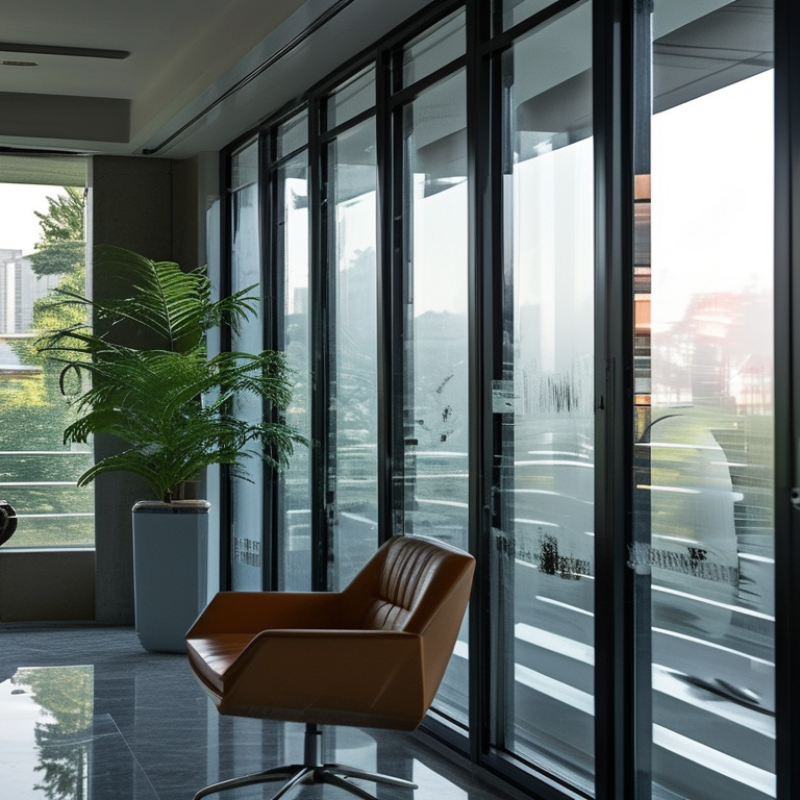
Anti-Glare Glass: Definition, Features, and Main Applications
Anti-glare glass is glass treated with a fine etched or coated surface that scatters incoming light. It reduces mirror-like reflections from lamps, windows, and overhead fixtures. Unlike anti-reflective glass, it does not mainly cancel reflected light through optical layers. Instead, it spreads that light across the surface. The image feels calmer.
Its main features include lower glare, improved viewing comfort, and better screen readability in bright spaces. Surface texture, haze, light transmission, and gloss level must match the application. A rougher finish can reduce reflections more strongly, but it may soften small text or detailed images.
No coating solves every reflection. This trade-off is often missed during early purchasing discussions. Reliable manufacturers should provide measured optical data, surface uniformity checks, adhesion tests, and abrasion results. Buyers should also request samples under real lighting, not only studio photographs.
Common applications include information displays, touch panels, control screens, museum cases, medical equipment, and architectural partitions.
In vehicles, anti-glare glass can improve instrument visibility, although optical distortion requires careful review. For outdoor displays, buyers should examine ultraviolet resistance, moisture performance, cleaning tolerance, and operating temperature. Chinese manufacturers serving global projects may offer cutting, drilling, tempering, and custom dimensions, but specifications must be confirmed in writing. A sample that performs well indoors may fail near direct sunlight. Small details matter.
Key Criteria for Evaluating Anti-Glare Glass Manufacturers
Selecting China’s top anti-glare glass manufacturers requires more than comparing online catalogs. Global buyers should examine technical performance, production controls, and communication quality. Start with measurable data: haze, visible light transmittance, gloss reduction, surface roughness, and distortion. These figures show how the glass performs under office lighting, sunlight, or retail display lamps.
Ask for production samples, not only polished photographs. View each sample from different angles. Check reflections, fingerprints, edge finishing, and color consistency. Small differences become obvious across a large façade or display panel. Reliable manufacturers can provide recent test reports, batch records, and clear explanations of their testing methods. Independent laboratory verification adds credibility, especially for large orders.
Durability also deserves close attention. Ask how the anti-glare surface resists cleaning, abrasion, humidity, and repeated handling. Confirm whether the treatment suits tempering, lamination, cutting, or CNC processing. A capable factory should explain its limits honestly. Vague answers are warning signs. Review equipment capacity, inspection checkpoints, packaging methods, and realistic lead times. Factory audits can reveal details that documents miss, such as dust control or uneven storage conditions.
No manufacturer is perfect. Even strong suppliers may show slight variation between batches. That is why buyers should approve a reference sample and define acceptance limits in writing. I have found that fast replies are useful, but consistent technical answers matter more. A lower quotation can hide higher rejection costs. Evaluate the whole supply process, not just the glass price.
Leading Chinese Anti-Glare Glass Manufacturers for Global Buyers
Leading Chinese anti-glare glass manufacturers serve display, retail, medical, and architectural projects worldwide. Their strength often lies in flexible production and practical engineering support. Buyers can request etched, coated, or chemically strengthened glass for different applications. Each option changes light diffusion, touch response, contrast, and surface durability.
A reliable supplier should provide clear technical data before production. Check haze, gloss, visible light transmission, thickness tolerance, and surface hardness. Sample testing under real lighting is essential. Laboratory figures alone can mislead. A panel may reduce reflections but weaken image clarity in a bright showroom. That trade-off needs discussion.
Experienced Chinese factories usually support custom sizes, edge finishing, protective packaging, and export documentation. Strong quality systems should include incoming material checks, coating inspections, dimensional testing, and batch records. Ask for inspection reports and production samples. Communication matters too. Technical drawings should use confirmed units and tolerances. Small misunderstandings become expensive later.
The process is not flawless. Even skilled manufacturers may face color variation between batches or slight haze differences. Buyers should approve a reference sample before mass production. Clear acceptance standards protect both sides. Site audits, third-party inspections, and staged payments can add practical control without slowing the project unnecessarily.
Manufacturing Standards, Customization, and Quality Control
For global buyers, anti-glare glass is not simply low-reflection glass. It must balance visible transmittance, haze, color neutrality, surface durability, and safety. IEA PVPS Trends 2024 reported that global photovoltaic capacity exceeded 1.6 terawatts in 2023. This expansion increases demand for controlled reflection on modules and building surfaces. Yet one coating formula rarely suits every climate or installation. Coastal projects need resistance to salt, humidity, and airborne particles. Urban façades need stable appearance under changing daylight.
Reliable manufacturers should connect every order with recognized standards. Flat glass dimensions and defects can be checked against ASTM C1036. Heat-treated products commonly follow ASTM C1048 or EN 12150. Optical testing should include reflectance, visible transmittance, haze, and color coordinates. A showroom sample is not enough. ISO 9211 testing principles can support coating durability evaluation. Factory records should show batch numbers, furnace temperatures, coating thickness, adhesion results, and inspection images. Small details matter.
Customization begins with drawings but ends with installation evidence. Buyers should request corner samples, edge-quality photographs, and test data after thermal cycling, abrasion, and humidity exposure. The IEA Buildings 2023 report notes that buildings consume about 30% of global final energy, making façade performance commercially important. Still, no factory gets every batch perfectly uniform. Minor color variation can appear across large panels. That uncomfortable detail deserves disclosure before purchase, not after installation.
Export Services, Pricing Factors, and Buyer Considerations
China’s top anti-glare glass manufacturers usually serve overseas buyers through export teams, technical support, and customized production. Reliable suppliers should provide clear quotations, product drawings, sample approval, and inspection records. Export services may include moisture-resistant packaging, container loading photos, commercial invoices, packing lists, and shipping coordination. Confirm the agreed Incoterm, port, insurance responsibility, and document schedule before production begins.
Pricing depends on glass thickness, dimensions, surface treatment, coating performance, edge processing, order volume, and packaging requirements. Large panels with tight tolerances often cost more. Special anti-glare levels may require additional testing. A low quote can mislead buyers if it excludes tooling, export packing, or replacement risk. Ask for a detailed cost breakdown. Compare equivalent specifications, not only unit prices. Lead time also matters, especially during peak production periods. No supplier is perfect, so verify capacity through samples and recent quality records.
Tips: Request a small trial order before committing to regular volumes. Check haze, gloss, light transmission, surface uniformity, and scratch resistance under real lighting. Confirm whether test reports match the supplied batch. Keep written approval records for color, dimensions, and packaging. I have found that vague specifications create more disputes than high prices. A careful buyer should also review local import rules and arrange independent inspection when the order value is significant.