7 Best Stainless Steel Shackles for Global Buyers
Choosing the right Stainless Steel Shackles is not a cosmetic decision. It affects load security, corrosion resistance, inspection time, and long-term operating costs.
Marine hardware specialist David J. Lewis explains, “A shackle is only reliable when its material, pin, working load, and application match.” This practical view matters for global buyers. A polished surface may look impressive, yet it cannot replace verified manufacturing quality. Buyers should examine stainless steel grade, working load limit, proof-testing records, pin design, and supplier traceability. Grade 316 is often preferred for saltwater environments, while grade 304 may suit less aggressive conditions. The difference becomes visible around dock fittings, where salt residue gathers inside threads and beneath the pin head.
Small details matter.
This guide reviews seven Stainless Steel Shackles selected for different international purchasing needs. Some favor compact construction. Others offer stronger load ratings, smoother pin operation, or better resistance against marine exposure. Product selection should also consider temperature, movement, installation angle, and repeated loading. A shackle used for lifting demands stricter verification than one used for light rigging or architectural cable work.
There is no perfect model for every buyer. That point is easy to overlook. A cheaper shackle may create higher replacement costs when corrosion begins early. Conversely, an oversized model can add unnecessary weight and expense. The recommendations below balance performance, documentation, durability, and practical value. Buyers should still confirm current specifications with manufacturers before placing large orders. Supplier data can change, and even careful comparisons may miss a field condition.
Stainless Steel Shackle Basics and Key Performance Standards
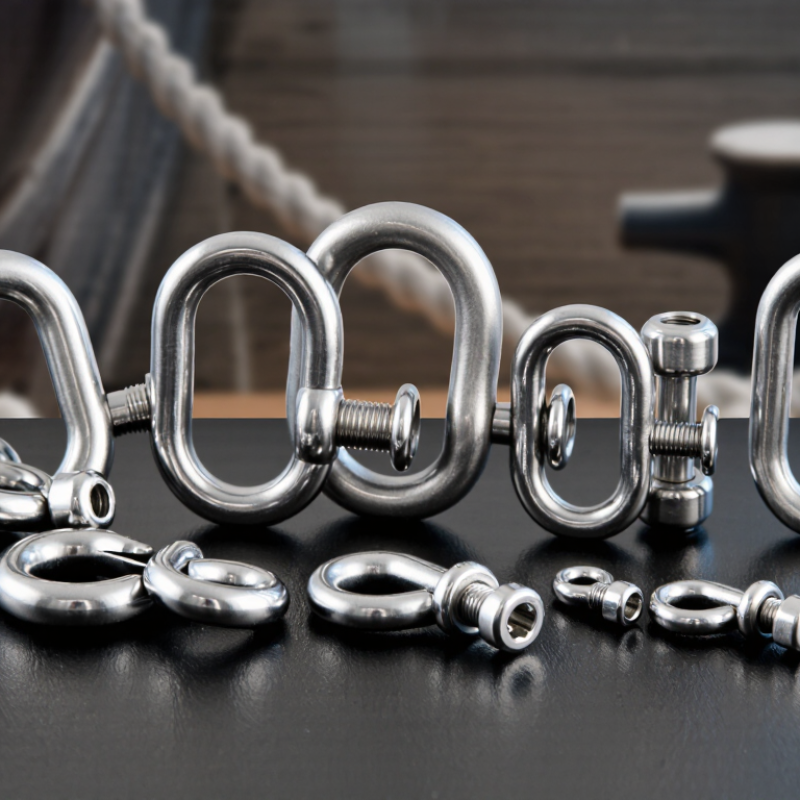
Stainless steel shackles look simple, but their performance depends on geometry, alloy, heat treatment, and testing. The seven practical choices include anchor, dee, screw-pin, bolt-type, chain, wide-body, and compact shackles. Each suits a different load path. A wide body may spread contact better, while a dee shackle usually handles more direct loading. Never select by appearance alone.
Material selection starts with the environment. Grade 316 generally offers better resistance to chlorides than grade 304, but it is not immune to pitting. World Stainless reported approximately 58.4 million tonnes of global crude stainless steel production in 2023, showing the material’s broad industrial importance. That figure does not prove every shackle is suitable for marine service. It only provides market context. Surface finish, crevices, and poor rinsing still matter.
For lifting applications, check markings, working load limit, proof-test records, and manufacturer traceability. EN 13889 covers forged steel shackles for general lifting, while ASME B30.26 addresses below-the-hook hardware requirements. ISO 2415 also provides guidance for forged shackles and testing expectations. The working load limit is not the breaking load. Never confuse them. Inspect pins for bending, threads for damage, and bodies for cracks or deep corrosion. A shackle can pass a visual check and still deserve replacement. I would avoid calling any model “best” without knowing the load angle, temperature, corrosion exposure, and inspection history.
How to Compare Strength, Size, Shape, and Load Capacity
Choosing the best stainless steel shackle starts with load capacity, not appearance. Working Load Limit (WLL) is the usable rating, while Minimum Breaking Load describes failure strength. They are not interchangeable. ISO 2415:2022 and ASME B30.26 require clear marking, traceability, and controlled testing for lifting hardware. Compare WLL at the same loading angle and connection method. A bow shackle suits multiple-leg slings because its wider body allows movement. A dee shackle offers better alignment for straight pulls. It is less forgiving under side loading.
Size must match the sling, eye, and pin clearance. A 10 mm pin does not automatically mean a 10-ton capacity. Check the manufacturer’s certified table, material grade, proof-test record, and corrosion allowance. For marine applications, inspect threads and pin shoulders after salt exposure. Small red-brown marks can hide deeper damage. Stainless steel resists corrosion, but it is not corrosion-proof.
Shape also changes force distribution. Avoid sharp bending over the bow, uneven loading, and contact with narrow edges. ASME B30.26 inspection guidance emphasizes deformation, cracks, excessive wear, and unreadable markings. Use the lowest-rated component as the system limit. A strong shackle cannot upgrade a weak sling. My practical mistake was comparing only WLL and pin diameter; the angle and connection geometry mattered more. Standards help, but field measurements can still be imperfect. Recheck every assumption.
7 Best Stainless Steel Shackles for Global Buyers - How to Compare Strength, Size, Shape, and Load Capacity
| Rank | Shackle Configuration | Typical Material | Nominal Size | Pin Diameter | Inside Length × Width | Indicative WLL* | Approx. Breaking Load* | Best Application | Key Buying Check |
| 1 | Mini D-Type Screw-Pin Shackle | 316 stainless steel | 3 mm | 3 mm | 14 × 6 mm | 80 kg / 176 lb | 400 kg / 882 lb | Light-duty marine, cable, and rigging connections | Check that the pin cannot rotate loose under vibration. |
| 2 | Small D-Type Screw-Pin Shackle | 316 stainless steel | 4 mm | 4 mm | 19 × 8 mm | 150 kg / 331 lb | 750 kg / 1,653 lb | Sailboat hardware, awnings, and general utility work | Compare thread quality, pin head diameter, and jaw clearance. |
| 3 | Medium D-Type Screw-Pin Shackle | 316 stainless steel | 5 mm | 5 mm | 24 × 10 mm | 250 kg / 551 lb | 1,250 kg / 2,756 lb | Moderate-duty marine and industrial fastening | Confirm the load is straight-line; side loading reduces capacity. |
| 4 | Medium Bow-Type Screw-Pin Shackle | 316 stainless steel | 6 mm | 6 mm | 31 × 16 mm | 350 kg / 772 lb | 1,750 kg / 3,858 lb | Multi-directional connections and mooring accessories | Choose the bow shape when several components must share the eye. |
| 5 | Large D-Type Screw-Pin Shackle | 316 stainless steel | 8 mm | 8 mm | 38 × 19 mm | 550 kg / 1,213 lb | 2,750 kg / 6,063 lb | Heavier marine fittings and outdoor structural connections | Inspect the pin-to-body fit and allow room for full articulation. |
| 6 | Large Bow-Type Screw-Pin Shackle | 316 stainless steel | 10 mm | 10 mm | 48 × 25 mm | 850 kg / 1,874 lb | 4,250 kg / 9,370 lb | Mooring, lifting accessories, and broad-link connections | Verify that the wider bow does not contact an edge under load. |
| 7 | Heavy-Duty Bow-Type Bolt, Nut and Cotter Shackle | 316 stainless steel | 12 mm | 12 mm | 58 × 30 mm | 1,200 kg / 2,646 lb | 6,000 kg / 13,228 lb | Permanent or security-sensitive heavy connections | Use only with documented certification and an installed cotter pin. |
*Important: Dimensions and load figures are representative reference values for common stainless-steel shackle configurations, not a substitute for a product certificate. Actual working load limits vary with design, heat treatment, pin construction, safety factor, loading angle, and applicable standards. Do not use an unmarked stainless-steel shackle for overhead lifting; confirm the manufacturer’s rated WLL, proof-test documentation, and corrosion condition before use.
Seven Recommended Stainless Steel Shackles for Global Buyers
For global buyers, stainless steel shackles should match the job, environment, and lifting plan. Seven practical choices cover most professional applications: D shackles, bow shackles, screw-pin shackles, bolt-type shackles, captive-pin shackles, safety shackles, and long-D shackles. Each design behaves differently under load.
D shackles suit straight-line connections because their narrow shape limits side movement. Bow shackles offer more room for multiple slings or changing angles. Screw-pin shackles are quick to install, while bolt-type shackles provide stronger security for permanent assemblies. Captive-pin models reduce the risk of losing the pin during field work. Safety shackles add a locking feature for vibration-prone equipment. Long-D shackles provide extra clearance in tight lifting points.
Material quality matters as much as shape. Look for marine-grade stainless steel, clear working-load information, and traceable inspection documents. A polished surface can resist staining, but it does not prove structural strength. Check threads, pin alignment, and visible deformation before every use. Never exceed the marked working load, especially when the load angle changes. I still prefer a larger shackle when the connection feels crowded. It may look excessive, but cramped hardware can create unexpected side loading. Temperature, salt spray, and repeated movement also deserve attention. A shackle that fits perfectly on paper may perform poorly in a wet, vibrating installation. Inspecting the actual connection remains essential.
7 Best Stainless Steel Shackles for Global Buyers
Comparison of commonly specified 316 stainless steel shackle sizes by indicative working load limit. Larger pin diameters generally provide higher capacity, while the final selection must follow certified working load limits, applicable standards, and the supplier’s technical documentation.
The figures shown are typical engineering reference values for commonly used marine and rigging configurations, expressed in metric tonnes. Actual capacity can vary with shackle geometry, thread design, safety factor, loading direction, and certification requirements.