
Skip to content

Top 10 Smart Downlights for Global Buyers

Choosing a Smart Downlight is not simply about brightness or a polished mobile app. Global buyers must examine performance, compatibility, safety, and long-term value. A beautiful fitting can still disappoint when its colors look weak or its connection fails.

Dr. Mariana Figueiro, a respected lighting researcher, has said, “Light is the most powerful synchronizer of our circadian rhythms.” Her observation adds an important dimension to smart lighting decisions. Color temperature, dimming stability, glare control, and evening light levels can influence how a room feels and functions. Yet not every product supports reliable circadian scheduling. Marketing claims are sometimes broader than the evidence.

This Top 10 Smart Downlights for Global Buyers guide evaluates models through practical, measurable details. We consider lumen output, color rendering, beam angle, trim design, flicker performance, and adjustable white light. Connectivity also matters. Wi-Fi, Bluetooth, Zigbee, and Matter support can affect installation and international usability. Buyers should check voltage ranges, ceiling depth, insulation contact ratings, IP protection, and regional certifications before ordering.

Small details matter.

A downlight that fits one ceiling may fail in another. Some apps are intuitive, but others feel unfinished. Firmware updates can improve performance, although they may also create new frustrations. We have therefore balanced technical specifications with real installation concerns, user control, and expected maintenance. The rankings are not absolute. Room size, climate, network quality, and local electrical requirements can change the outcome. Use this guide as a practical comparison, not a substitute for professional electrical advice.
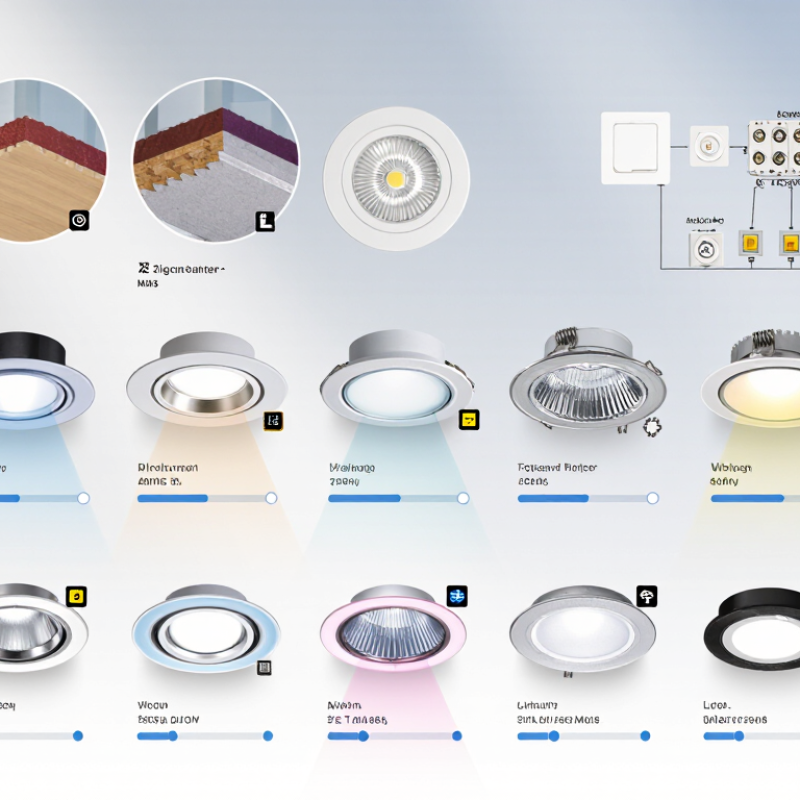
Top 10 Smart Downlights for Global Buyers

Understanding Smart Downlights and Their Key Features

Top 10 Smart Downlights for Global Buyers

Understanding Smart Downlights and Their Key Features

Smart downlights combine LED illumination with wireless control, dimming, scheduling, and sensor functions. A typical unit fits into a ceiling cutout and responds through an app, wall control, or voice command. The U.S. Department of Energy reports that LED products use at least 75% less energy and last up to 25 times longer than incandescent lamps. That matters in kitchens, hotels, and retail spaces where lights operate for many hours.

Key specifications deserve close attention. Check lumens before watts, because brightness depends on optical design and diffuser quality. Choose a color temperature that suits the room: 2700K feels warm, while 4000K appears cleaner and sharper. A color rendering index above 90 can improve food, fabric, and artwork appearance. Dimming should remain smooth at low levels. Cheap drivers may flicker or buzz.

Connectivity is useful, but it is not automatically better. Buyers should verify wireless compatibility, local control, data security, and operation during internet failure. Occupancy sensors can reduce wasted lighting, although poor placement may trigger unwanted switching. The International Energy Agency identifies efficient lighting as an important energy-saving opportunity, yet smart electronics still consume standby power. I once underestimated ceiling depth during a retrofit. The fitting looked perfect online, but the driver needed extra space. Always check cutout size, driver dimensions, IP rating, voltage range, and regional certification before ordering.

How to Compare the Top 10 Smart Downlights

Comparing the top 10 smart downlights requires more than checking app ratings. Start with measured performance. The U.S. Department of Energy reports that LED lighting can use up to 75% less energy than incandescent lighting. The International Energy Agency estimates lighting represents about 15% of global electricity consumption. Small differences matter across a whole ceiling.

Check luminous efficacy, color rendering, and dimming behavior. A practical benchmark is 80+ lumens per watt and a CRI of 90 or higher for kitchens, galleries, and workspaces. Verify the stated color temperature range. Warm 2700K light feels comfortable, while 4000K supports clearer task lighting. Flicker data is often missing. That is a weakness worth questioning.

Then compare connectivity and installation details. Confirm whether the downlight supports local control, voice platforms, firmware updates, and failure recovery after Wi-Fi loss. Matter-based products may improve interoperability, but compatibility still depends on the hub and network. Review standby power, ceiling clearance, insulation contact rating, IP protection, warranty length, and replacement availability. The DOE’s Solid-State Lighting reports also stress thermal management because heat reduces LED performance over time. A beautifully bright fixture can disappoint in a shallow ceiling. I would rank reliability above decorative scenes, although that choice is not exciting. Look for independent test results, not only laboratory claims supplied by the seller.

Top 10 Smart Downlights for Global Buyers - How to Compare the Top 10 Smart Downlights

Rank Anonymous Product Profile Best Use Case Cut-Out Size Power Light Output Color Temperature Color Quality Beam Angle Smart Connectivity Input Voltage Protection Dimming Typical Service Life
1 Matter-Compatible Tunable White Downlight Multi-platform smart homes 90–95 mm 9 W 700–800 lm 2700–6500 K CRI ≥90 100–110° Matter over Wi-Fi; 2.4 GHz 100–240 V AC Indoor; IP20–IP44 1–100%; app and voice control 25,000–50,000 hours
2 High-CRI Color-Tunable Downlight Kitchens, studios and retail interiors 70–75 mm 8 W 550–650 lm 2700–5000 K CRI ≥95 36–60° Wi-Fi; 2.4 GHz 100–240 V AC Indoor; IP20 1–100%; app, voice and schedules 30,000–50,000 hours
3 Zigbee Mesh Downlight Large installations requiring reliable mesh control 90–95 mm 10 W 800–900 lm 2700–6500 K CRI ≥90 100–120° Zigbee 3.0; hub required 100–240 V AC Indoor; IP20–IP44 1–100%; group and scene control 25,000–50,000 hours
4 Low-Profile Wi-Fi Downlight Retrofit projects with limited ceiling space 75–85 mm 7 W 500–600 lm 2700–6500 K CRI ≥80 100–120° Wi-Fi; 2.4 GHz; no hub 100–240 V AC Indoor; IP20 1–100%; app and voice control 25,000–30,000 hours
5 Wet-Rated Smart Downlight Bathrooms, covered patios and humid areas 90–100 mm 9–10 W 700–900 lm 2700–6500 K CRI ≥90 100–120° Wi-Fi or Bluetooth Mesh 100–240 V AC IP44–IP65, location dependent 1–100%; app and voice control 30,000–50,000 hours
6 RGBW Accent Downlight Entertainment rooms and decorative lighting 70–90 mm 8–10 W 500–800 lm in white mode 2200–6500 K plus RGB CRI ≥80 in white mode 100–120° Wi-Fi; 2.4 GHz 100–240 V AC Indoor; IP20 1–100%; color scenes and music modes 20,000–30,000 hours
7 GU10 Smart Spotlight Directional accent lighting and easy lamp replacement Fixture-dependent; GU10 lamp base 4.5–6 W 350–500 lm 2700–6500 K CRI ≥80 36–60° Wi-Fi, Bluetooth or Zigbee 100–240 V AC fixture supply Indoor; IP20–IP44 1–100%; lamp replacement possible 15,000–25,000 hours
8 DALI-2 and Matter Hybrid Downlight Commercial projects and building automation 95–110 mm 10–12 W 850–1100 lm 2700–6500 K CRI ≥90 60–100° DALI-2 wired; Matter wireless option 220–240 V AC, driver dependent Indoor; IP20–IP44 DALI dimming; 1–100% 50,000 hours typical
9 Emergency-Battery Smart Downlight Public buildings and evacuation routes 90–110 mm 8–12 W normal mode 600–1000 lm normal mode 3000–6500 K CRI ≥80 or ≥90 90–120° Wi-Fi or Zigbee; monitoring capable 100–240 V AC IP20–IP44; code dependent App control plus emergency override 25,000–50,000 hours; battery service required
10 Recessed Outdoor Smart Downlight Eaves, soffits and sheltered outdoor spaces 75–100 mm 8–12 W 600–1000 lm 2700–6500 K CRI ≥80 or ≥90 90–120° Wi-Fi or Zigbee; 2.4 GHz 100–240 V AC IP54–IP65 when correctly installed 1–100%; app, schedules and scenes 30,000–50,000 hours
Comparison note: Values shown are representative specification ranges for commercially available smart-downlight configurations. Actual performance depends on the selected model, driver, installation method, local electrical standards and certification requirements. Lumens refer to delivered light output where stated; service life is normally an LED manufacturer's rated lifetime rather than a guaranteed replacement period.

Smart Downlights for Different Global Market Needs

Smart Downlights for Different Global Market Needs

A useful top-ten list should reflect local conditions, not only bright specifications. In North America, buyers often need 100–120V compatibility and familiar ceiling cutouts. Many European projects require 220–240V support, efficient drivers, and documented safety testing. Always confirm the local electrical standard before ordering.

Bathrooms and coastal homes need stronger moisture protection. An IP44 rating may suit some indoor zones, while damp locations can require higher protection. In hot regions, aluminum heat sinks help reduce LED and driver stress. In colder markets, stable dimming at low temperatures matters. These details affect service life more than colorful app features.

Connectivity also changes by market. Wi-Fi models suit apartments with reliable internet access. Bluetooth or local-control models can work better in large buildings with weak networks. Lighting scenes, occupancy sensors, and adjustable color temperature add practical value. A warm 2700K setting feels comfortable in bedrooms, while 4000K may support kitchens and work areas. High color rendering improves the appearance of wood, food, and artwork.

I would also check flicker performance, reset behavior, warranty terms, and replacement parts. Small details matter. A top-ten ranking can still mislead if it ignores ceiling depth or cutout size. A 90mm opening is not interchangeable with a 75mm one. My own selection criteria would benefit from more regional testing, especially in humid and high-temperature environments.

Installation, Compatibility, and Safety Considerations

Top 10 Smart Downlights for Global Buyers

Installation, Compatibility, and Safety Considerations

A reliable smart downlight starts with the ceiling, not the app. Check the cut-out diameter, ceiling depth, insulation contact rating, and driver clearance before ordering. Many retrofit failures come from shallow housings or incompatible transformers. The International Energy Agency reported that LED products exceeded half of global lighting sales in 2022, but efficiency alone does not guarantee safe installation. Follow the fixture’s rated voltage and use a qualified electrician for fixed wiring.

Compatibility deserves equal attention. Confirm whether the downlight supports your local voltage, dimming method, wireless frequency, and control platform. A device designed for 120 volts may not suit a 230-volt circuit. Also check neutral-wire requirements and minimum load limits. The U.S. Department of Energy notes that connected lighting can improve savings through controls, yet poor configuration may reduce those benefits. Test one unit first. Ten matching boxes can still create ten matching problems.

Tips: Measure twice. Photograph the existing wiring. Keep ventilation paths clear. Select models tested against IEC 60598-1 or equivalent safety requirements, and verify fire-rating documentation for enclosed ceilings. IP ratings matter in bathrooms, but an IP44 label does not replace proper sealing. I have found that app features often receive more attention than heat management. That is a mistake. Firmware support can also be unclear across regions, so record the return policy and installation guide before purchase.

Choosing the Right Smart Downlight for Your Project

Choosing the right smart downlight starts with the project, not the product ranking. Measure the ceiling cutout, plenum depth, and available wiring before comparing features. A light that fits a showroom may fail in a shallow residential ceiling.

Check voltage compatibility and required safety certifications for the installation country. Confirm dimming performance with the selected driver, switch, and control platform. Some lights dim smoothly at full brightness but flicker near ten percent. Test this in person. Color temperature also matters. Warm white suits bedrooms, while neutral white often supports kitchens, offices, and retail spaces. For artwork or food displays, aim for a high color rendering index.

Moisture protection deserves careful attention. Use an appropriate ingress rating in bathrooms or covered outdoor areas, but do not confuse water resistance with complete weather protection. Review heat management, replacement access, warranty terms, and software support. These details affect operating cost after installation. A sample installation can reveal glare, shadows, and poor app response before a large purchase.

I have seen projects overvalue voice control and undervalue maintenance. That choice becomes expensive. Ask whether the downlight can operate manually during network failure. Confirm data privacy practices and compatibility with local systems. Global buyers should compare documentation, spare-part availability, and installer support. The cheapest option is not always the practical one. Sometimes, a simpler control system performs better.