7 Best Montessori Low Chairs for Classrooms
A Montessori Low Chair is more than a small seat. Its height can shape how easily a child sits down, stands up, and reaches a nearby table. In a busy classroom, those small movements matter. Look for stable legs, smooth edges, a wipe-clean surface, and a seat height that lets children place their feet on the floor. Fit matters.
The CDC’s growth charts document how much children’s stature can vary, even at the same age. That makes age labels alone a weak guide to chair sizing. Measure the child and compare the seat height with the table; check that knees bend comfortably and feet rest steadily. Maria Montessori’s prepared-environment principle offers useful context: “The environment must be rich in motives which lend interest to activity and invite the child to conduct his own experiences.” She wrote about the learning environment, not chair specifications, so the quote should not be treated as product guidance. Still, it points to a practical question: does the chair help children act independently?
This guide reviews seven classroom options, comparing dimensions, materials, stability, and everyday care. Some chairs look sturdy online but feel bulky in a small room. Others are light, yet may slide when a child climbs onto them. No single model fits every classroom. Check the measurements against your own tables and children before buying. A low chair is only useful when it fits the child and the work.
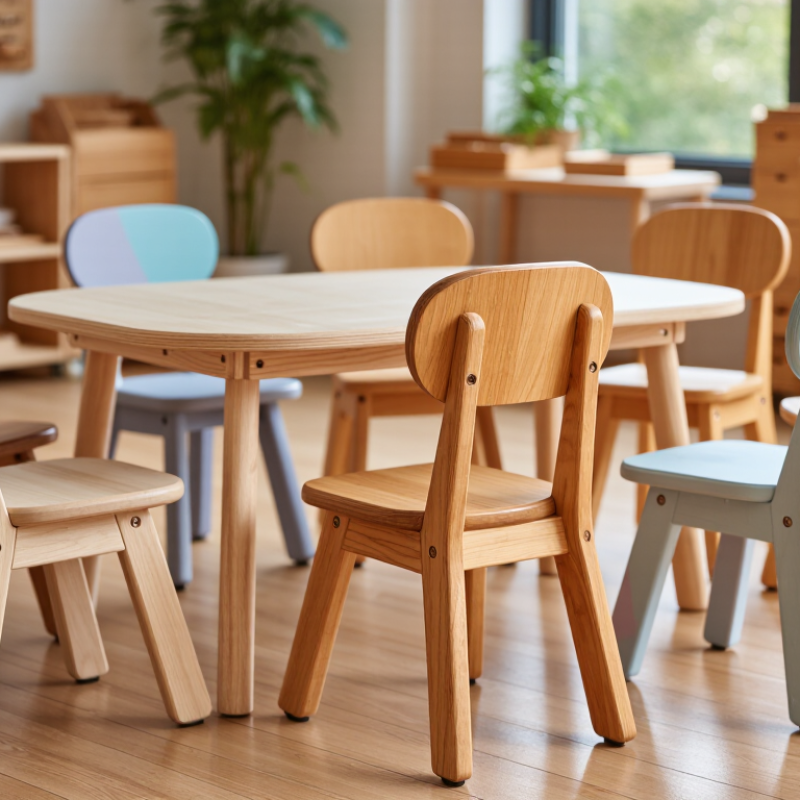
Understanding the Role of Low Chairs in Montessori Classrooms
Low chairs are more than smaller seats. They let many children sit down and stand up with less adult help. That small choice can support independence during reading, drawing, or a quiet conversation. Look for a seat height that lets a child place both feet on the floor. Stable legs matter, especially when children shift or turn to reach a nearby shelf. Comfort is practical, not decorative.
A broad, smooth seat may work for short activities, but no chair suits every child or task. Teachers can notice whether children perch, slump, or move a chair often. These behaviors may point to a mismatch in size, placement, or routine. It is easy to assume lower is always better; that is not quite right. Low chairs should be easy to approach without crowding walking paths or blocking materials. Keep clear pathways. Since children grow quickly, a chair that fits today may feel cramped later. Checking the fit over time is easy to overlook.
Essential Features of Montessori Classroom Chairs
Montessori classroom chairs should fit a child’s body, not merely match the table. A suitable seat lets both feet rest on the floor, with knees comfortably bent and thighs supported. Fit matters. Since children in one classroom can differ greatly in height, offer more than one chair size where possible. The World Health Organization’s 2019 guidelines recommend at least 180 minutes of varied daily physical activity for children aged 3–4, including 60 minutes at moderate to vigorous intensity. That guidance supports making movement easy; it does not prescribe a chair design.
Look for a broad, stable base, smooth edges, and a finish that can withstand frequent cleaning. The chair should be light enough for a child to move, but not so flimsy that it shifts during use. Check the maker’s age and weight guidance, then inspect joints and surfaces regularly. One trade-off is easy to miss: a very light chair can be convenient, yet less steady on a smooth floor.
Tips: Let children try a sample chair at the classroom table. Watch whether their feet reach the floor and whether they can sit down and stand up without help. Recheck fit as they grow.
Montessori Classroom Chair Seat Heights
Standard classroom chair sizes provide a practical reference when choosing low chairs for children. The chart shows seat height by EN 1729 size; the stature ranges overlap, so measure children rather than relying on age alone.
Reference dimensions: EN 1729 classroom furniture size marks. Seat height is measured from the floor to the top of the seat.
How to Evaluate Low Chairs for Children and Learning Spaces
7 Best Montessori Low Chairs for Classrooms
Choosing a low chair starts with fit, not appearance. Measure each child’s lower leg from floor to the crease behind the knee; the seat should let both feet rest on the floor without pressure beneath the thighs. The CDC’s 2000 growth charts use age- and sex-specific percentiles, including the 5th, 50th, and 95th, to show how widely children’s body measurements vary. These are health references, not furniture specifications, so use them as a reminder: one chair size will not fit every classroom. Check seat height, depth, back support, and stability with children seated, not just against a catalog chart.
Look closely at the classroom, too. A chair should slide beneath a child-sized table, stay steady on the actual floor, and be light enough for children to move safely. Rounded edges and wipe-clean surfaces help with daily use. “Montessori” alone does not prove ergonomic fit or durability. It’s worth questioning tidy age labels; children of the same age can have very different leg lengths.
Tips: Measure seated children at the start of the year. Test several chairs on your classroom floor, and watch for dangling feet, slouching, or knees pressing into the seat edge. Recheck fit as children grow.
Seven Montessori Low Chairs Worth Considering
Seven Montessori low chairs worth considering differ in how they support real classroom routines. A solid-wood chair offers a steady feel and a simple surface to inspect for rough edges. A lightweight stackable chair saves floor space, though frequent stacking can become noisy. Fit matters. A molded chair is quick to wipe after snack time, while an arm-supported design may help some children settle during quiet work.
A wide-seat chair gives children room to shift position without tipping easily. An adjustable-height chair can suit a changing group, but check that its lowest setting still lets a child place both feet securely. A chair paired with a child-sized table creates a ready work spot; measure the table and chair together, not separately. These are different strengths, not a single ranking. Classroom age, floor type, and daily cleaning habits all affect the better choice.
Before choosing, check seat height, weight, stability, and any moving parts. Ask whether children can move the chair independently without scraping loudly or catching fingers. A smooth finish helps with cleaning, but it should not feel slippery. I would not assume that the prettiest chair is the most practical; that is an easy mistake to make. A short in-room trial can reveal awkward fits that product photos miss.
7 Best Montessori Low Chairs for Classrooms — Seven Montessori Low Chairs Worth Considering | Chair Style | Suggested Seat Height | Best Classroom Use | Useful Features | Things to Check |
| Compact toddler chair | 8–9 in (20–23 cm) | Low tables and floor-level activities for smaller children | Lightweight frame; supportive back; easy-to-grip sides | Check that children can sit with feet supported and stand up independently. |
| Standard low classroom chair | 10–11 in (25–28 cm) | Everyday classroom seating for low tables | Stable four-leg base; smooth, rounded edges; wipe-clean surface | Match the seat height to the classroom table and the children’s leg length. |
| Wider-seat low chair | 10–12 in (25–30 cm) | Shared reading, art, and longer seated activities | Roomier seat; broad base; back support | Allow enough space between chairs so children can move in and out safely. |
| Stackable low chair | 11–12 in (28–30 cm) | Multi-purpose rooms that need flexible seating and storage | Stackable design; lightweight construction; protective feet | Confirm the stack is stable and follow the maker’s stacking limit. |
| Wooden low chair | 10–12 in (25–30 cm) | Practical-life areas and calm, natural-material classroom settings | Rigid frame; repairable construction; smooth finished surfaces | Inspect joints and finish regularly; avoid splinters and sharp corners. |
| Adjustable-height low chair | About 9–13 in (23–33 cm), depending on setting | Classrooms serving children of different sizes or changing age groups | Multiple height settings; secure locking mechanism | Ensure every adjustment locks firmly and cannot be changed accidentally. |
| Low chair with arm supports | 10–12 in (25–30 cm) | Quiet reading corners or children who benefit from extra side support | Arm supports; stable base; supportive backrest | Check that arm supports do not obstruct independent entry and exit. |
Selection note: These are chair styles and suggested classroom specifications, not measurements for particular products. Seat height should suit the child and table: when seated, the child’s feet should be supported and the knees should bend comfortably. Confirm actual dimensions, materials, stability, and applicable safety requirements before purchasing.
Choosing the Right Chair for Classroom Activities and Ages
Choosing a Montessori low chair means matching the seat to children’s bodies and classroom tasks, not just their ages. A child should sit with feet resting firmly on the floor, knees near a right angle, and the seat edge clear of the backs of the knees. This stable position helps during reading, sorting beads, or working at a child-height table. The CDC’s 2000 growth charts track height percentiles for children ages 2–20, a reminder that children of the same age can differ substantially in size. Measure the children who will use the chairs, and check seat height alongside table height.
Consider how each chair will be used. A lightweight chair is easier for a child to move independently, while a wider base can feel steadier during active classroom routines. Smooth edges and a wipe-clean surface matter when paint, snack crumbs, and glue appear. NAEYC’s developmentally appropriate practice guidance emphasizes adapting environments to children’s abilities; in practice, that means checking whether children can sit down and stand up without adult help. Age labels help, but they are not a fit test.
Tips: Measure floor-to-knee height while children wear typical classroom shoes, then compare it with the seat height. Let a few children try the chair at the actual table. Watch their feet, posture, and ease of movement. Recheck fit as the group grows; a chair that works beautifully in September may feel cramped by spring.