
What Is the Best Laminate Plank Flooring in 2026?
Choosing flooring can feel simple until samples meet real rooms, pets, spills, and afternoon sunlight. In 2026, the best Laminate Plank flooring is not one universal product. The right choice depends on room use, subfloor condition, budget, and the look you want. Small details matter. A textured surface may hide everyday dust, while a glossy finish can show footprints. Water-resistant labeling also deserves careful reading; warranties and installation limits differ by brand. A product claim is not a guarantee.
This guide compares options using practical factors: wear resistance, locking systems, plank thickness, edge design, and manufacturer moisture guidance. It also considers comfort underfoot, sound, maintenance, and repair. Some points are easy to overlook. A thicker plank does not automatically perform better, and an attractive sample may feel different across a full room. A sample beside a sunny window may also look unlike one under warm evening lights. That difference can change your decision.
We’ll separate useful specifications from marketing language and explain what to check before ordering. When product details vary, follow the manufacturer’s current instructions. There is no perfect shortlist. Your best match may be an affordable option with dependable installation support, not the most expensive design. Use the comparisons ahead to narrow your choices, then test samples at home—ideally near a doorway, a sunny wall, and the furniture you use every day.
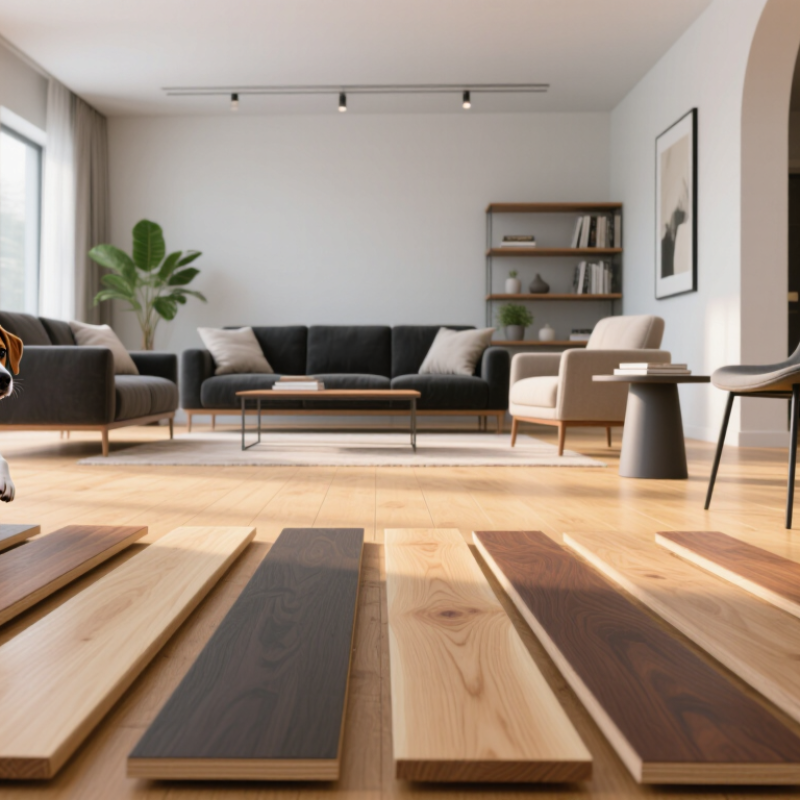
What Laminate Plank Flooring Is and How It Is Made
What Is the Best Laminate Plank Flooring in 2026?
What Laminate Plank Flooring Is and How It Is Made
Laminate plank flooring is a layered product, not a solid piece of wood. Its central layer is usually a dense fiberboard core, topped with a printed image that reproduces wood grain or stone. A clear, resin-treated wear layer protects that image. A balancing layer beneath helps the plank stay flat. A simple layered sandwich.
Manufacturers press these layers together with heat and pressure, then cut the boards and form their locking edges. Core density, edge precision, and surface treatment affect how planks handle daily wear. The North American Laminate Flooring Association’s certification standard assesses performance areas such as abrasion, impact, and dimensional stability. Those tests help, but they cannot guarantee that every floor will suit every room.
Industry scale is substantial: the European Producers of Laminate Flooring reported approximately 352 million square meters of European production in 2023, down 7.8% from 2022. That figure describes output, not product quality. One detail is easy to underestimate: a water-resistant surface does not necessarily mean water-tight joints. Inspect the locking edges and installation guidance, especially for kitchens or entryways where wet shoes leave small puddles.
What Is Laminate Plank Flooring and How Is It Made?
Common Nominal Laminate Plank Thicknesses
Laminate planks are made by bonding layers: a protective wear layer, a printed décor layer, a dense fiberboard core, and a balancing backing layer. The bars show representative nominal plank thickness options commonly sold, not market shares or a ranking of quality. Actual availability and specifications vary by product.
How to Compare Durability, Water Resistance, and Appearance
The best laminate plank is not automatically the one with the highest AC rating. Under the EN 13329 classification system, AC3 and AC4 describe abrasion performance, not total floor durability. NALFA’s LF-01 certification program also evaluates properties such as impact, staining, and water resistance. Check which tests a product has passed, rather than trusting “scratch-proof” claims. No floor is invincible.
Water resistance depends on more than the surface. Seams, edges, and installation details can let spills reach the core, so read the warranty’s limits on standing water and wet rooms. Look for test results or certification, and ask how quickly spills must be cleaned. That detail matters. A leaking plant pot left beside a sunny window can reveal weaknesses that a quick showroom demo will not.
Appearance deserves a hands-on check. Bring a sample home and view it beside your cabinets in morning and evening light; gray undertones can shift noticeably. Compare plank-to-plank pattern repetition, bevel depth, and texture under bare feet. I would not choose from a screen alone. Even realistic wood grain can feel artificial when every few planks repeat the same knot.
Which Laminate Plank Features Matter Most in 2026
In 2026, the best laminate plank is not simply the one with the highest wear rating. Match its abrasion class to the room: busy entryways need tougher surfaces than spare bedrooms. NALFA’s LF-01 certification tests properties such as abrasion, impact, stain resistance, and thickness swelling. Check the actual test results, not just a bold “durable” claim. AC ratings do not measure water resistance.
Water protection depends on more than the plank’s surface. Look for clear limits on standing water, sealed edges, and how quickly spills must be wiped up. A tight locking joint helps, but it cannot make every installation waterproof. Small print matters. Also check that the subfloor is flat and that the recommended underlayment suits the room; poor preparation can leave clicks and gaps.
Indoor emissions deserve attention, too. The U.S. EPA’s TEAM studies found concentrations of several common organic pollutants were often 2–5 times higher indoors than outdoors. That finding is not specific to laminate, but it makes low-emission documentation worth checking. I would compare independent test certificates and installation instructions before choosing. A thicker plank may feel more solid, yet it is not automatically quieter or longer-lasting. I still find water claims hard to compare unless the test conditions are plainly stated.
How Room Conditions and Installation Affect Your Choice
Room conditions often matter more than a plank’s printed wear rating. In a sunny living room, dark boards can show dust and fading more clearly. Near an entry, grit acts like fine sandpaper, so textured surfaces may disguise small scuffs. Keep moisture in view. Laminate can handle routine spills when wiped promptly, but standing water may swell exposed edges. Bathrooms and laundry areas need extra caution unless the flooring is rated for those conditions.
Check the subfloor before choosing a product. A slight dip beneath a long plank can cause flexing, clicking, or separated joints. Concrete should be dry and level; wood flooring should feel firm, not springy. Use the specified underlayment, and follow guidance on moisture barriers over concrete. Small details matter. Leave the required expansion gap at walls and fixed cabinets, then cover it with trim. Skipping acclimation may be acceptable for some products, but only when the installation instructions allow it.
Plan transitions at doorways and stairs, where height changes can look awkward. For a do-it-yourself installation, dry-fit several rows near the brightest window; daylight makes alignment easier to judge. That detail is easy to miss. A quiet bedroom has different needs from a busy kitchen or a home with pets. Consider the actual room’s light, moisture, traffic, and subfloor before comparing plank styles.
| Room or Condition | What to Look For | Installation Considerations | Main Trade-Off |
|---|---|---|---|
| Living rooms and bedrooms | Choose a wear rating suited to the expected foot traffic, a surface texture that fits the room, and a design that works with the lighting and décor. An AC3-rated product is commonly intended for residential use; check the product’s stated application. | Use the underlay specified for the flooring and subfloor. Keep the subfloor clean, dry, and flat within the manufacturer’s stated tolerance. | A thicker or more textured plank may feel more substantial, but thickness alone does not establish scratch resistance or overall quality. |
| Kitchens and areas with occasional splashes | Look for clearly stated water-resistance claims and instructions for promptly cleaning spills. Check whether the product is approved for kitchens and whether seams or edges have specific care requirements. | Follow the required perimeter and doorway details. Sealants or other edge treatments should be used only when the installation instructions call for them. | Water-resistant laminate can tolerate some exposure as specified, but it is not automatically waterproof. Standing water or leaks can damage many laminate floors. |
| Bathrooms, laundry rooms, and other wet areas | Verify that the flooring is specifically approved for the room and expected water exposure. For areas with frequent standing water, consider whether another flooring type is more suitable. | Follow the room-specific installation instructions carefully, including guidance for edges, fixtures, and transitions. Do not assume a floating floor can be installed beneath fixed cabinets. | Even products marketed as waterproof have installation limits, and water can still enter through unprotected edges or openings. |
| Entryways and high-traffic hallways | Consider a wear class appropriate to the anticipated traffic, plus a surface that is easy to clean. AC4 is commonly associated with heavier-use applications, but confirm the manufacturer’s stated suitability. | Remove grit with mats and regular cleaning. Make sure transition strips and door clearances are compatible with the chosen floor system. | A higher abrasion rating does not by itself guarantee resistance to dents, moisture, or damage from dragged objects. |
| Homes with pets or children | Review the product’s care guidance and claims for stain, scratch, and impact resistance. A textured finish may make small marks less noticeable than a very glossy surface. | Use suitable furniture pads and trim pets’ nails. Clean spills and pet accidents promptly according to the flooring instructions. | Laminate surfaces can resist everyday wear, but sharp impacts, abrasive grit, and prolonged moisture may still cause damage. |
| Rooms with strong direct sunlight | Check the stated light and fading guidance, and consider how the floor color may look under the room’s natural and artificial lighting. | Use window coverings where appropriate and follow the product’s temperature and exposure limits. | Lightfastness varies by product; prolonged sunlight can affect flooring and furnishings, so do not rely on color choice alone to prevent fading. |
| Concrete subfloors or ground-level rooms | Confirm the flooring is suitable for the subfloor type and that any required moisture-control system is specified for the site conditions. | Check subfloor moisture using the method required by the flooring instructions. Install the specified vapor retarder or underlay when required; do not install over a damp or unprepared surface. | Moisture testing and preparation add time, but ignoring them can lead to swelling, joint problems, or other failures. |
| Uneven subfloors | Choose a floor only after checking that the existing surface can meet its flatness requirements. | Measure and correct high and low areas within the stated tolerance before installation. Underlay is not a substitute for leveling an uneven subfloor. | Skipping preparation can cause movement, noise, or stress at the locking joints, regardless of plank price or thickness. |
| Seasonal temperature or humidity changes | Review the permitted indoor temperature and humidity range and any instructions for acclimation before installation. | Follow the product-specific acclimation guidance. Leave the required expansion space at walls and fixed objects, and use appropriate transitions for larger continuous areas. | Expansion requirements vary by product and installation conditions; using a generic gap instead of the stated instructions can cause problems. |
| Underfloor heating | Use only laminate and underlay approved for the heating system, and check the stated surface-temperature limits. | Follow the flooring and heating-system instructions for startup, temperature changes, and installation over the heated subfloor. | Not every laminate product is approved for every heating system; compatibility and temperature limits matter more than appearance alone. |
Selection tip: Compare the product’s stated room suitability, wear classification, moisture limitations, and installation instructions. Ratings and performance claims are not interchangeable, and the installation guide for the specific product should take priority.
How to Care for Laminate Plank Flooring Over Time
Laminate plank flooring can stay attractive for years with steady, gentle care. Sweep or vacuum often, using a hard-floor setting so grit does not scratch the surface. A soft microfiber mop works well for routine cleaning. Use a lightly damp cloth, not a soaking wet one, and dry spills promptly.
Water is the real risk. It can seep into plank joints and cause swelling, especially near sinks, entryways, and dishwashers. Avoid steam cleaners and abrasive scrubbers unless the flooring instructions specifically allow them.
Place mats at busy entrances to catch grit and damp shoes, but lift them regularly so moisture does not linger underneath. Add felt pads beneath chair and table legs, and lift furniture rather than dragging it across the floor.
Keep pet nails trimmed; tiny scratches can become noticeable in sunlight. For stubborn marks, test a small, hidden area with a cleaner approved for laminate. Not every “gentle” cleaner is suitable. Check the care instructions for your specific floor, since finishes and installation details vary.
Even a careful routine can miss a spill—check the floor after wet weather.