
Skip to content

What Is the Best Football Fake Turf in 2026?

Choosing the best Football Fake Turf in 2026 is not a color-chart decision. It is a performance decision made under real boots, changing weather, and repeated play. Grand View Research valued the global artificial turf market at about $4.23 billion in 2023 and projected 6.4% annual growth from 2024 to 2030. That figure covers multiple uses, not football turf alone, so it signals market momentum rather than proving which pitch performs best.

Look closer.

FIFA’s Quality Programme evaluates football turf through tests including ball roll, shock absorption, vertical deformation, and rotational resistance. These measurements matter on the field: a pass should not race away unpredictably, and a planted boot should not feel locked in place. Penn State turfgrass researcher Dr. Andrew McNitt’s published work offers a useful reminder: assess synthetic surfaces through measured performance, not appearance alone. That is a paraphrase of his research, not a direct quotation.

For buyers, the details are tangible. Check fiber shape and height, infill consistency, backing strength, drainage, and the system’s test results. Ask how the surface performs after heavy use, not just when it is newly installed. A plush sample under showroom lights can still play too fast or feel unforgiving. No turf system is perfect. Even a FIFA-tested product may suit one climate and budget better than another, and test results do not replace careful installation or maintenance. This guide compares the evidence and practical trade-offs behind the leading options for 2026.
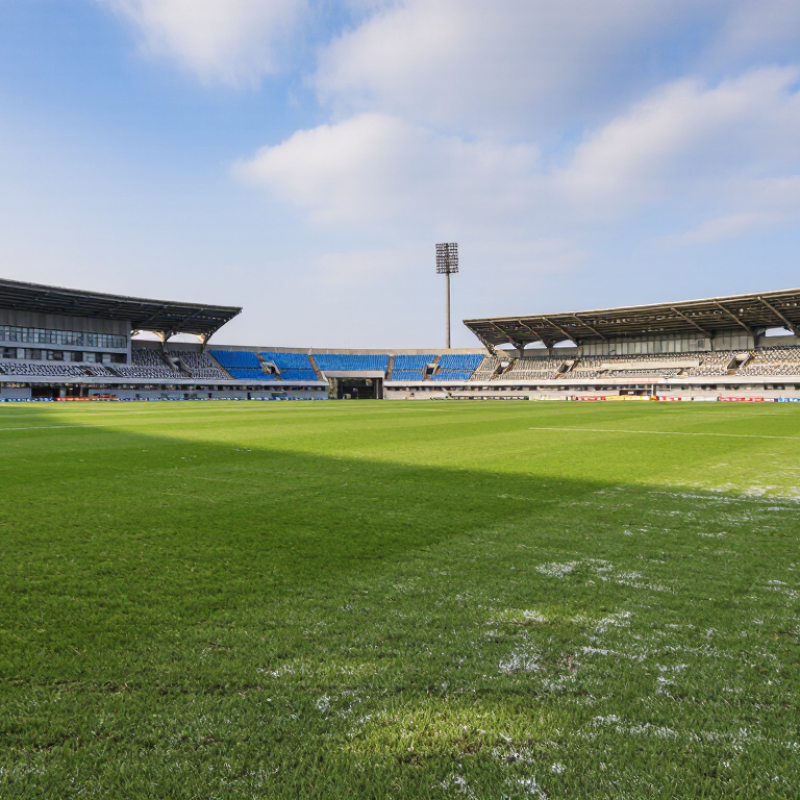
What Is the Best Football Fake Turf in 2026?

What Football Fake Turf Is and How It Differs from Natural Grass

Football fake turf is a manufactured playing surface, not a carpet laid over dirt. Synthetic fibers are fixed into backing, with infill and often a shock-absorbing base beneath them. Natural grass is a living system: blades grow from soil, roots anchor the surface, and moisture affects its firmness.

The difference shows up underfoot. Turf can stay more consistent with frequent use, while grass may become muddy, uneven, or thin near goal mouths. Still, consistency is not the same as realism.

FIFA’s Quality Programme evaluates football turf using ball-roll, ball-rebound, shock-absorption, and rotational-resistance tests. Its technical requirements include ball-roll distances of 4–8 metres and vertical ball rebound of 0.6–1.0 metres (FIFA Quality Programme, Football Turf Handbook).

Natural grass has no single factory-set response; mowing height, soil compaction, drainage, and weather all matter. On a wet evening, a boot may cut into soft sod; on dry ground, the same grass can feel hard.

Turf can offer predictable ball movement, but infill may shift and fibers wear. That detail gets missed. Choosing between surfaces means weighing maintenance and playing feel, not assuming synthetic turf is automatically superior.

Key Materials and Construction Features of Football Turf

Football turf performs as a layered system, not just a green carpet. The pile usually uses polyethylene yarn, chosen for its softer feel and resilience. Yarn shape, thickness, and stitch density affect how the surface grips a boot and how quickly it springs back. A dense pile can look convincing, but it may trap infill or feel overly firm if the backing and base are poorly matched.

The FIFA Quality Programme for Football Turf test manual measures ball roll, shock absorption, vertical deformation, and rotational resistance. Its ball-roll criteria use a 4–10 metre range, helping assess whether passes move consistently across the surface. That figure is useful, but it does not describe every match condition. Wet weather, infill depth, and wear can change the feel underfoot. Small details matter. A practical inspection should include seams, pile direction, and areas near goalmouths, where repeated play can expose weak construction.

Beneath the fibers, a stable backing holds the tufts, while infill supports the pile and helps shape traction. Sand and performance infill are common components, though the right combination depends on the system and climate. A shock pad may add cushioning, but it cannot correct a badly prepared base. I would still question any specification that lists materials without explaining installation tolerances and maintenance. Ask for independent test results, then inspect a sample underfoot; a neat showroom patch can be misleading.

How to Evaluate Football Turf for Safety, Performance, and Durability

Choosing the best football fake turf in 2026 starts with the players and climate, not a product label. Check current test results for impact attenuation, vertical deformation, and rotational traction. These measures show how a surface responds when players land, cut, and change direction. Ask who performed the tests, when they were completed, and whether they cover the full installed system. A loose sample can mislead.

Safety also depends on installation and upkeep. Walk the field after rain and look for standing water, lifted seams, or uneven infill. Check that the surface drains at a practical rate and that its shock pad suits the expected level of play. No turf removes injury risk. That is worth remembering. I have seen buyers focus on softness alone, although excessive softness can affect footing and ball response.

For performance, test ball roll and bounce across several areas, not just near the sideline. For durability, review fiber wear, UV resistance, seam strength, and the maintenance schedule. Ask how often infill needs leveling and what repairs involve. A lower purchase price may mean more frequent service. Compare realistic care costs, and inspect a field that has been in use for several seasons. The worn goalmouth often tells a clearer story than a fresh showroom sample.

Which Types of Football Turf Best Suit Different Fields in 2026

What Is the Best Football Fake Turf in 2026?

The best football turf depends on the field, not just the product label. For full-size pitches with frequent matches, a long-pile, infilled 3G system is a common choice. Its fibres and infill help provide cushioning and ball response. A shockpad beneath the turf can add impact absorption, but the full system needs independent testing.

Small-sided pitches often benefit from durable, football-specific turf designed for quick play and heavy foot traffic. Shorter-pile systems may suit compact training areas, though some are too firm for regular tackling. Check the system’s tested performance rather than relying on terms like “4G,” which can mean different things. Details matter.

For school grounds or multi-use fields, prioritise resilient fibres, reliable drainage, and a surface that handles varied activity. In wet climates, poor drainage can leave standing water; in hot, sunny locations, surface temperature deserves attention. Ask for evidence on traction, shock absorption, and maintenance needs. I would not assume the most expensive build is automatically the safest. Even good specifications can disappoint if installation or upkeep is rushed. A local site assessment helps match the turf, infill, and base to real use.

Installation, Maintenance, and Long-Term Costs of Football Turf

For a 2026 football fake-turf project, the installation quote is only the opening figure. Ask whether it includes excavation, a compacted stone base, drainage, shock pad, infill, line markings, and field testing. A low bid can omit work beneath the turf, where poor drainage may leave puddles after heavy rain. Compare quotes using the same field dimensions and specifications. Local soil, access for machinery, and existing drainage can change costs substantially. No single price fits every site.

Maintenance keeps performance more consistent, but it is not optional. Sports Turf Managers Association guidance recommends routine brushing, debris removal, infill checks, and inspection of seams and high-wear areas. Watch the goalmouths closely; fibers there can flatten faster than those near the touchlines. FIFA’s Football Turf quality-testing schedule calls for annual retesting of FIFA Quality Pro fields and retesting every three years for FIFA Quality fields. These tests assess playing-surface performance, not just appearance. One budget line is easy to miss: repairs and eventual surface replacement. Set aside a reserve, then review it yearly. Replacement timing varies with use and care, so published lifespan estimates need local checking.