What Is the Best Embossed Fabric Supplier in China?
Choosing the best Embossed Fabric supplier in China requires more than comparing prices on a product page. A dependable supplier should demonstrate practical manufacturing experience, stable quality control, and clear communication from sampling to shipment. Embossed fabric may look simple, yet its raised patterns depend on pressure, temperature, material composition, and finishing accuracy. Small differences can affect softness, color depth, durability, and the final appearance of garments or home textiles.
Look closely at the details. Ask for physical samples, production photos, technical specifications, and recent quality records. A professional supplier should explain whether the fabric uses polyester, cotton, viscose, or blended fibers. They should also clarify embossing methods, pattern limitations, minimum order quantities, lead times, and inspection procedures. Reliable manufacturers usually welcome reasonable questions instead of offering vague promises. That matters.
Real purchasing experience also reveals an important limitation: the cheapest quotation is rarely the complete answer. A low price may exclude testing, packaging, pattern development, or corrective production. Even an experienced supplier can make mistakes when specifications remain unclear. Therefore, buyers should compare samples under natural light, test washing performance, and confirm measurements before placing a larger order.
China has many capable textile manufacturers, but quality varies between factories, workshops, and trading companies. The strongest choice is not always the largest name. It is the supplier that provides evidence, responds accurately, and accepts responsibility when something needs improvement. Careful evaluation creates a more reliable partnership and reduces unpleasant surprises during production.
What Is Embossed Fabric and How Is It Used?
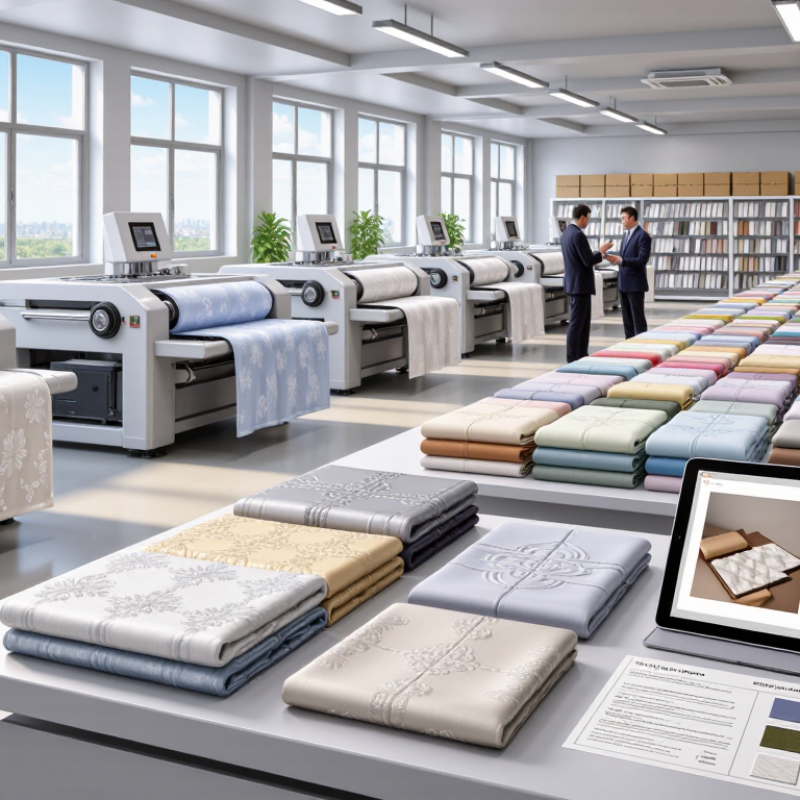
Embossed fabric is a textile with raised or recessed patterns pressed into its surface. Heat, pressure, engraved rollers, or chemical treatments can create the texture. The result may resemble leaves, honeycomb, leather grain, or fine geometric lines. Unlike printed fabric, embossing adds physical dimension that fingers can clearly feel.
In factory inspections, I check the pattern under direct light and rub the surface gently. Uneven pressure can produce dull areas, broken lines, or inconsistent depth. Fabric structure also matters. Polyester often holds sharp designs, while cotton may offer a softer hand but lose definition after washing. A dependable Chinese supplier should provide composition details, sample approval, washing tests, and production inspection records. Certificates alone are not enough.
Embossed fabric appears in curtains, sofa covers, fashion panels, bedding, handbags, and decorative packaging. Designers use it when a flat color needs more visual weight. A raised floral surface can make a simple cushion feel richer without extra embroidery. It can also hide minor marks, although this benefit is easy to overstate. I once assumed deeper embossing always meant better quality. It did not. Excessive pressure weakened the backing and made the fabric uncomfortable. Buyers should compare recovery, color fastness, shrinkage, and pattern consistency before placing a large order. Small samples reveal more than attractive photographs.
How to Evaluate Embossed Fabric Suppliers in China
What Is the Best Embossed Fabric Supplier in China?
How to Evaluate Embossed Fabric Suppliers in China
The best supplier is not always the one offering the lowest quotation. Begin by requesting physical samples with clear specifications. Check fabric composition, width, weight, stretch, and embossing depth. Rub the raised pattern with a dry cloth. Then wash the sample according to its care label. The surface should remain sharp, without excessive flattening, cracking, or color loss. Small differences can matter.
Ask how the supplier controls production. Reliable factories should explain their inspection points, from greige fabric preparation to final packing. Request recent test reports for colorfastness, shrinkage, pilling, and formaldehyde, when relevant to your market. Verify whether testing comes from an independent laboratory. Photos help, but they are not proof. A video call can reveal machines, storage conditions, and actual workflow.
Review the supplier’s communication as carefully as its equipment. Can the team answer technical questions clearly? Does it record sample revisions and approve changes in writing? Confirm minimum order quantities, lead times, replacement policies, and packaging details before placing an order. A pilot order is safer than immediate mass production. Even experienced buyers miss details, especially when embossing looks different under warehouse lighting. I would also keep a signed sample for comparison during bulk inspection. That extra step feels slow, but it can prevent expensive disagreement later.
What Is the Best Embossed Fabric Supplier in China?
Use this 100-point scorecard to evaluate embossed fabric suppliers in China. The criteria focus on measurable quality, sourcing, production, and compliance factors rather than company or brand names.
How to use it: Request documented test reports, sample approvals, production records, lead-time commitments, and compliance certificates. Score each supplier from 0 to 10 for every criterion, multiply the score by the indicated weight, and compare the final weighted results.
Which Manufacturing Standards Define Supplier Quality?
Choosing the best embossed fabric supplier in China requires more than attractive samples. Manufacturing standards reveal how consistently a factory controls quality. ISO 9001 is a useful starting point because it requires documented procedures, corrective actions, and traceable production records. However, certification alone is not enough. A certificate can show systems, not daily discipline.
Look closely at fabric controls. Reliable suppliers inspect yarn, base cloth, embossing temperature, roller pressure, fabric weight, and pattern depth. Each batch should have a production code and inspection record. Testing should cover color fastness, rubbing resistance, shrinkage, tear strength, and surface adhesion. Independent laboratory reports add credibility, especially when specifications are clearly stated. Ask for recent records, not only polished sample books.
Factory audits also matter. Check calibration labels on weighing scales and testing equipment. Watch how workers isolate defective rolls. Ask whether complaints receive root-cause analysis within a defined period. Environmental and workplace management standards can support responsible production, but they require practical evidence, such as waste records and training logs. Standards reduce risk; they do not remove it. I have seen excellent samples fail during bulk production because pressure changed between machines. That uncomfortable gap deserves attention. A dependable supplier welcomes trial orders, third-party testing, and honest discussion when results are imperfect.
How to Select the Best Supplier for Your Project
What Is the Best Embossed Fabric Supplier in China?
How to Select the Best Supplier for Your Project
The best supplier is not always the cheapest factory. It should match your fabric structure, volume, finish, and delivery risk. Textile Exchange’s Materials Market Report 2023 recorded 116 million tonnes of global fiber production in 2022. This figure may reach 147 million tonnes by 2030. Responsible sourcing and stable production now matter more than attractive samples.
Ask for a physical sample with your exact embossing depth, base fabric, weight, and color. Check the surface under angled light. Uneven pressure can create weak patterns or crushed fibers. Request test results for colorfastness, abrasion, shrinkage, and seam performance. An independent laboratory adds credibility. Confirm production capacity, minimum order quantity, lead time, and replacement terms in writing.
I have learned that factory photographs prove very little. A polished sample can still hide inconsistent rolls. Request three production-stage samples, not one showroom piece. Review the supplier’s quality records and traceability documents. Verify whether the factory controls embossing internally or subcontracts it. Subcontracting is not automatically poor, but it increases communication risk. A site audit helps, though it cannot replace testing. Small mistakes in my own evaluations included trusting fast replies too much. Performance data deserves more weight.