
2026 Best Outdoor Giant Pole Flag Banner for Advertising?
Choosing the 2026 Best Outdoor Giant Pole Flag Banner for Advertising requires more than picking the tallest display. It demands practical judgment. A banner must attract attention, remain readable, and survive changing outdoor conditions. Wind, rain, sunlight, viewing distance, and installation height can affect every result. A design that looks impressive on a computer may appear weak beside a busy road.
David Ogilvy, a respected advertising expert, said, “You cannot bore people into buying your product; you can only interest them in buying it.” His principle remains useful for every Outdoor Giant Pole Flag Banner campaign. Large size creates visibility, but clear messaging creates action. Strong contrast, short wording, and recognizable brand colors often work better than crowded graphics. Drivers may see the flag for only three seconds. That is not much time.
This guide examines the features that matter in 2026. It considers fabric quality, pole strength, printing methods, base stability, weather resistance, and maintenance needs. It also compares advertising goals, including retail promotions, event branding, property launches, and roadside visibility. Experience shows that the cheapest option is rarely the most economical. Yet premium materials do not guarantee success either. Poor placement can waste an excellent banner. That uncomfortable point deserves attention. Measurements, local conditions, and audience behavior should guide the final decision. A reliable Outdoor Giant Pole Flag Banner should look bold, remain safe, and communicate one clear idea. There is no perfect banner for every location. The best choice balances visibility, durability, budget, and honest practical expectations.
What Is an Outdoor Giant Pole Flag Banner?
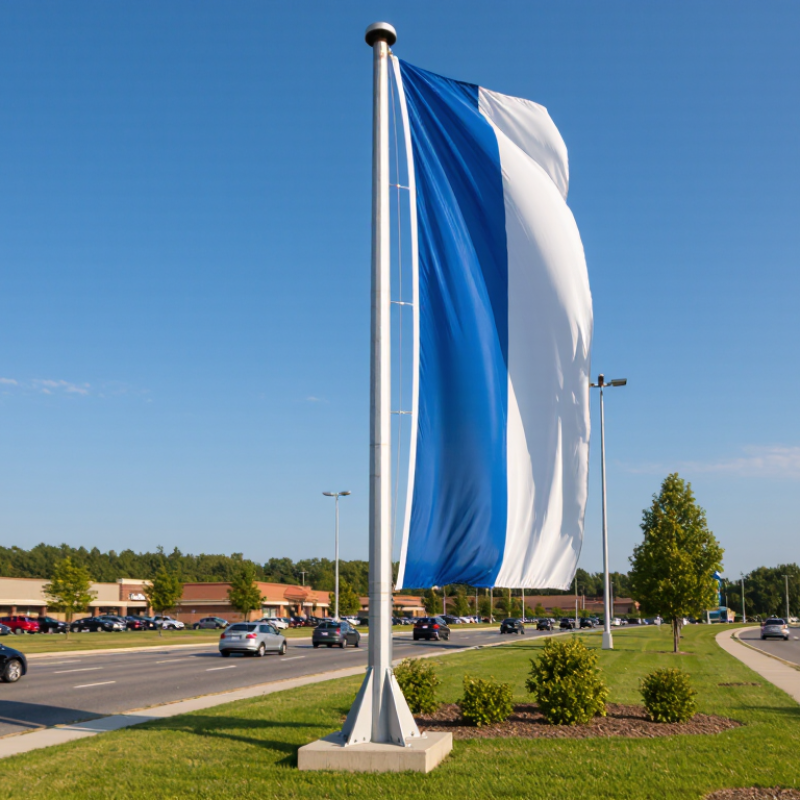
An outdoor giant pole flag banner is a large fabric sign fixed to a tall vertical pole. It displays advertising messages where people can see them from a distance. Unlike a standard roadside sign, the fabric moves with the wind and creates noticeable motion. The banner usually includes a sleeve, reinforced edges, and secure fasteners. These details reduce tearing during repeated outdoor use. In 2026, advertisers may choose this format for entrances, sports grounds, shopping areas, and temporary events. However, “giant” should describe visibility, not careless size. A banner that blocks paths or becomes unstable is poorly planned.
Tips: Measure the installation area before ordering. Check wind exposure, pole strength, fabric weight, and ground conditions. Use bold lettering, strong contrast, and one clear message. Small text disappears quickly. Ask an experienced installer to inspect the base and fixings. Local display rules may also apply.
From practical setup experience, placement affects performance more than size alone. A banner beside a busy entrance needs a different height from one beside a wide road. Weather-resistant fabric helps, but no material lasts forever. Colors can fade, seams can loosen, and poles can bend under severe wind. That part is easy to underestimate. Inspect the banner regularly, especially after storms, and replace damaged components before public use. A reliable design balances visibility, safety, maintenance, and honest advertising claims.
Key Features of the Best Giant Pole Flags for 2026
2026 Best Outdoor Giant Pole Flag Banner for Advertising?
Key Features of the Best Giant Pole Flags for 2026
For a 2026 outdoor advertising flag, size alone does not guarantee visibility. A strong choice combines a clear, high-contrast design with fabric suited to repeated outdoor use. In practical setups, a message that reads quickly from across a parking lot can work better than one crowded with small text. Keep the main message brief. Leave open space around it.
Material and construction matter. Look for outdoor-rated fabric, reinforced edges, and a sleeve that fits the pole securely. These details can help the flag hold its shape through regular use, though no fabric stays crisp in every condition. Check the pole’s height, mounting method, and recommended wind limits before ordering. A flag that is too large for its support may twist, strain, or become difficult to read. Color samples can also look different in bright sun, so review the final artwork at full size.
Tips: Inspect seams and fittings before each display. After strong winds, check for loose stitching or bent hardware. If the site is especially exposed, a smaller flag may be the more dependable choice.
Choosing Materials, Sizes, Colors, and Advertising Designs
A giant pole flag should be chosen for its actual viewing conditions, not just its printed dimensions. Measure the pole and check the usable display height before ordering; a banner that sits too low may disappear behind parked vehicles or landscaping. Fabric matters, too. Lightweight polyester can move clearly in a breeze, while reinforced edges and secure stitching help reduce wear. No fabric is immune to strong wind, so inspect it regularly and lower it when conditions become severe.
Visibility matters. High-contrast colors, such as dark lettering on a light field, are easier to read from a distance. Use a short headline and one clear message rather than filling the fabric with small details. Keep essential text away from seams and edges, where folds can distort it. Details matter, too. A phone number or web address may be useful nearby, but it can become unreadable on a moving flag.
Choose the size with both viewing distance and local surroundings in mind. A taller banner can attract attention across a wide parking area, yet may overwhelm a small storefront or compete with nearby signs. That balance is not always obvious. Review a full-size layout, or at least a scaled proof, before printing. Check color contrast in daylight and consider how the design looks when the fabric curls. A design that reads beautifully on a screen may need simplifying outdoors.
2026 Best Outdoor Giant Pole Flag Banner for Advertising? — Choosing Materials, Sizes, Colors, and Advertising Designs
| Decision Area | Practical Options | Best Fit | Advertising Guidance |
|---|---|---|---|
| Flag fabric | Lightweight knitted polyester, commonly around 110–130 g/m²; heavier woven polyester is also available. | Knitted polyester is a widely used outdoor flag fabric because its construction allows air to pass through the material. Heavier fabric can provide a more substantial appearance but may place more load on the pole. | Ask the supplier for fabric weight, finishing details, and outdoor-use recommendations. Choose construction based on local wind exposure and the pole system. |
| Single-sided printing | Artwork is printed on one face; the image may show through to the reverse, often with reduced color intensity. | Suitable when the flag is mainly viewed from one direction and low weight is a priority. | Use large, bold text and a simple graphic. Confirm the expected reverse-side appearance before ordering. |
| Double-sided construction | Two printed panels with a light-blocking layer between them are commonly used to keep separate designs readable from both sides. | Useful for locations where people approach from either direction. It is generally heavier than a single-layer flag. | Specify whether both sides should display the same design or mirrored/reversed artwork, and check the finished flag’s weight against the pole system. |
| Compact size | 3 × 5 ft (0.91 × 1.52 m) | Small storefronts, short poles, and locations where the viewing distance is limited. | Limit the design to one main message and a simple symbol. Fine print is difficult to read outdoors. |
| Large size | 4 × 6 ft (1.22 × 1.83 m) or 5 × 8 ft (1.52 × 2.44 m) | Prominent entrances, event grounds, and open sites with a suitable pole and clear viewing distance. | Use a short headline, a recognizable visual, and strong separation between the foreground and background. |
| Extra-large size | 6 × 10 ft (1.83 × 3.05 m) | Large open areas where the flag can be seen from farther away and the pole system is designed for the flag’s dimensions. | Check pole height, fabric weight, mounting hardware, and site conditions together. A larger flag can catch more wind. |
| Color selection | High-contrast combinations, such as dark text on a light field or light text on a dark field. | Outdoor viewing, changing light conditions, and quick-glance messages. | Use a limited palette and avoid placing similarly colored text and background areas together. Request a print proof because fabric and printing can affect how colors appear. |
| Typography and message | One short headline, a large readable typeface, and only essential supporting information. | People viewing the flag while walking or passing by. | Prioritize the main offer or action. Keep contact details and long explanations for nearby signs or a website. |
| Artwork and file preparation | High-resolution raster artwork or vector artwork supplied at the printer’s requested size and color format. | Custom logos, illustrations, and text-based designs. | Request the production template, safe-area guidance, and proofing requirements before preparing final artwork. Keep key text away from seams and edges. |
| Pole and installation | Pole height, diameter, mounting hardware, and base should be selected to suit the flag dimensions and installation surface. | Ground-mounted, wall-mounted, or other approved outdoor installations. | Follow the pole and hardware manufacturer’s installation guidance. Consider wind exposure and local conditions; take the flag down when conditions exceed the system’s recommendations. |
| Care and maintenance | Follow the fabric supplier’s cleaning and storage instructions; inspect stitching, edges, and attachment points regularly. | Flags used repeatedly or left outdoors for extended periods. | Remove and store the flag when practical during severe weather. Replace damaged fabric or hardware rather than continuing to use it. |
Size conversions are approximate. Suitability and service life depend on fabric, printing, construction, installation, and local weather conditions; confirm final specifications with the flag and pole suppliers.
Installation, Safety, and Maintenance Requirements
2026 Best Outdoor Giant Pole Flag Banner for Advertising?
Installation, Safety, and Maintenance Requirements
A giant pole flag can attract attention, but its structure deserves more attention than its artwork. The Outdoor Advertising Association of America reported approximately $9.1 billion in U.S. out-of-home advertising revenue during 2023. That growth increases demand for large, highly visible displays. It also increases installation pressure. Before lifting a banner, inspect the pole, anchor bolts, brackets, ropes, and nearby trees. Confirm the banner’s finished weight and projected wind area. A quick visual check is not enough.
Wind remains the difficult variable. ASCE 7-22 provides recognized procedures for calculating wind loads on outdoor structures. Use the local basic wind speed, exposure category, mounting height, and banner permeability. Never rely on a generic “heavy-duty” label. OSHA requires specific clearance from energized power lines during equipment operations; the 20-foot rule may apply near lines up to 350 kV. A qualified person should verify the site before installation. Keep pedestrians outside the lifting zone. Small mistakes become large hazards.
Maintenance should follow a written inspection schedule. Check stitching, grommets, webbing, poles, and ground hardware after storms and at least monthly during active campaigns. The U.S. Bureau of Labor Statistics recorded 885 fatal workplace falls, slips, and trips in 2023. That figure is sobering. Use rated access equipment, not improvised ladders or unsecured lifts. Replace fabric showing torn seams, brittle coating, or stretched attachment points. I would also record wind conditions and repair dates, because memory becomes unreliable after several campaigns.
Outdoor Giant Pole Flags: Beaufort Wind-Speed Reference
Wind conditions affect flag and pole loads. The ranges below follow the Beaufort scale and are shown in km/h; they are not product wind ratings. Follow the pole manufacturer’s installation and operating guidance, inspect fixings regularly, and lower or remove the flag when conditions exceed the equipment’s rated limits.
Comparing Giant Pole Flag Banners for Advertising Value
2026 Best Outdoor Giant Pole Flag Banner for Advertising?
Comparing Giant Pole Flag Banners for Advertising Value
A giant pole flag banner can turn an empty roadside into a visible advertising point. Its value depends on more than size. Visibility, fabric quality, installation time, and reuse should be compared together. In practical event settings, tall banners attract attention from passing vehicles and pedestrians. However, a larger flag is not always better. Wind movement can improve noticeability, but excessive movement may reduce message clarity. A simple design with strong contrast usually performs better than crowded artwork. Cost per exposure matters too. A reusable banner may deliver better long-term value than a cheaper single-use option.
Tips: Choose weather-resistant fabric, reinforced stitching, and secure hardware. Check the viewing distance before selecting letter height. Leave enough space around the logo and call to action. Inspect poles after strong wind or heavy rain. Small maintenance costs can prevent early replacement.
Advertising results still require honest measurement. Track foot traffic, inquiries, QR scans, or event attendance before and after installation. Placement can matter more than printing quality. A banner near a busy entrance may outperform one placed higher but farther away. This comparison is not perfect, because weather, season, and audience behavior change constantly. I would also avoid promising guaranteed sales from visual exposure alone. The banner supports recognition; it does not replace a clear offer or reliable service.